One Story. Many Angles.
Every outlet reported the same Ukrainian account of a Russian strike on a civilian grain ship without counter-claims or Russian responses.
Coverage across Turkey, Bulgaria, Romania, Azerbaijan and Saudi Arabia converged on the same core facts from Ukrainian sources: a Russian missile hit on the Golden Leo killed ten people aboard a grain-laden civilian ship. The unanimity is telling. Turkish outlets Hurriyet and APA stressed the vessel’s ownership and crew nationalities, underscoring Ankara’s direct exposure in Black Sea trade. Bulgaria’s Novinite framed the incident around grain exports and regional maritime security, a practical concern for a littoral state. Romania’s Ziare and Azerbaijan’s APA tracked casualty updates and Ukrainian accusations of war crimes. Arab News stayed with the concise Kyiv-attributed tally of five deaths without adding nationality emphasis. No outlet introduced Russian denials or alternative accounts; all treated Ukrainian statements as the operative record. The shared emphasis on civilian grain transport and foreign crew reveals how the strike registers as an immediate threat to food corridors and neutral shipping rather than a distant battlefield event.
Perspective Analysis
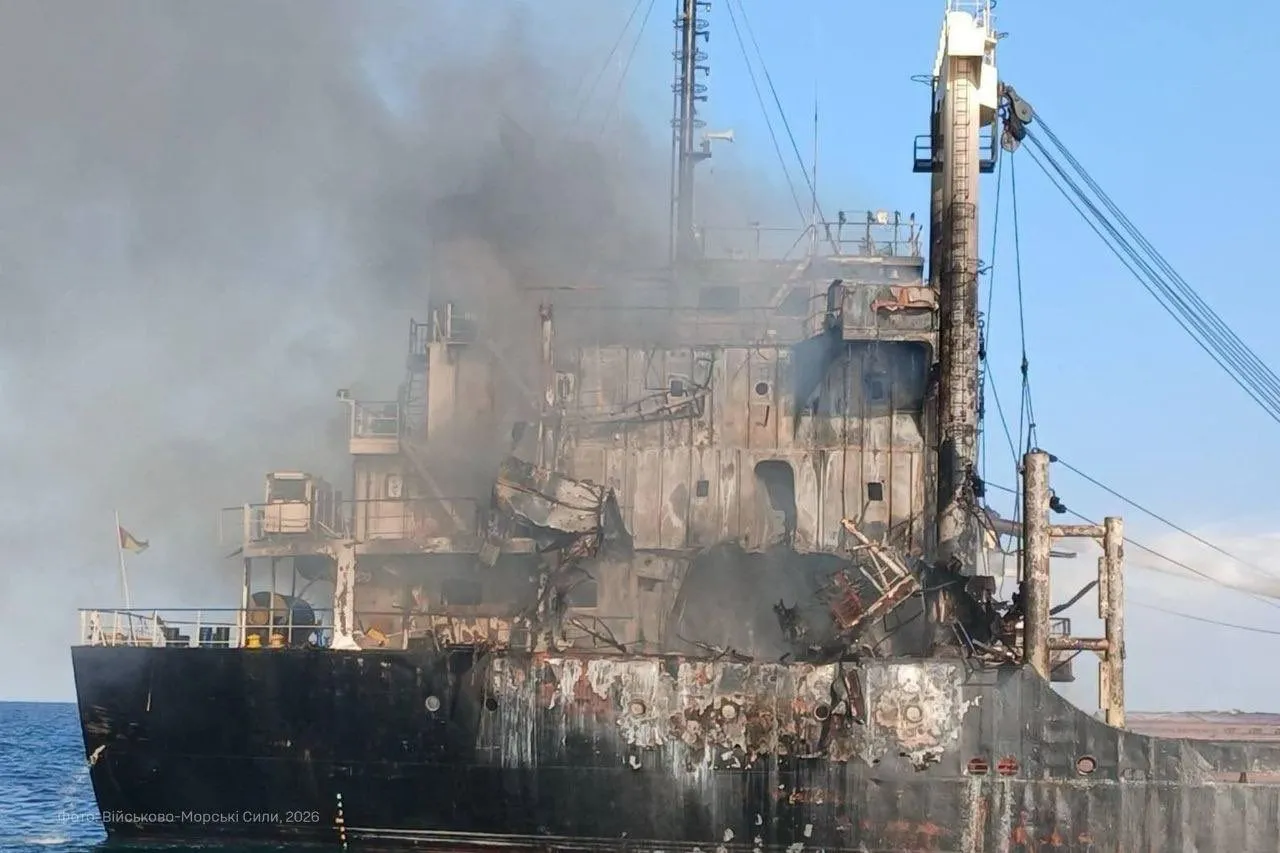
The strike on the Turkish-owned bulk carrier Golden Leo off Odesa on July 19 exposed how attacks on Black Sea grain routes now register as direct threats to neutral shipping and food exports rather than isolated military actions. Ukrainian authorities reported that Russian forces fired three Kh-59 or Kh-69 cruise missiles at the vessel as it departed with a cargo of corn, killing ten people including a Ukrainian port pilot and nine crew members from Syria and India. Eight sailors were rescued and taken to hospitals in Odesa, while others remained missing at the time of initial reports. The Guinea-Bissau-flagged ship carried a crew of 17 foreign nationals plus the pilot. All five outlets examined drew these core details from Ukrainian statements without introducing Russian denials or alternative accounts.
Turkish coverage in Hurriyet Daily News placed the vessel’s ownership and crew composition at the center of the story. The report detailed the fire on the starboard side, the cargo of corn, and the nationalities of those killed, framing the deaths as a matter requiring Ankara’s attention amid ongoing mediation efforts. Foreign Minister Hakan Fidan’s recent visit to Kyiv, where he stated Turkey did not want the war to spread further into the Black Sea, received explicit mention. This emphasis turned the incident into a domestic foreign-policy concern tied to Turkey’s role in protecting its flagged or owned vessels and maintaining trade lanes.
Bulgarian reporting from Novinite stressed the grain cargo and the implications for regional maritime security. The account noted the ship’s departure after loading corn and quoted Ukrainian Sea Ports Authority statements on the continued search operation and the final death toll of ten. As a Black Sea littoral state, Bulgaria’s focus aligned with practical worries over disrupted export routes that carry agricultural products vital to regional economies. The piece treated the strike as another blow to civilian commercial traffic rather than a narrow Ukrainian military loss.
Romanian outlet Ziare connected the attack to reciprocal strikes on port infrastructure. It reported Ukrainian accusations of a war crime against a civilian vessel, noted the crew’s Syrian and Indian composition, and placed the incident within the broader pattern of Russian bombardment of Odesa-region ports alongside Ukrainian actions against Russian-linked shipping in the Sea of Azov. The account highlighted the legal framing of targeting unarmed vessels under foreign flags, reflecting EU-adjacent concern over Black Sea stability and freedom of navigation.
Azerbaijani coverage from APA tracked the casualty figures as they rose. Early reports mentioned at least six deaths including a Ukrainian citizen, with later updates confirming ten total fatalities—nine foreign crew and one Ukrainian pilot—plus seven injured. The outlet described the Golden Leo as a Turkish-owned civilian cargo ship struck while leaving the combat zone and relayed Ukrainian Navy characterizations of the strike as a terrorist act. Its incremental updates stayed within verified details from Odesa prosecutors without expanding into geopolitical commentary.
Saudi-based Arab News delivered the most concise international summary, attributing the strike to Russian forces based on Kyiv’s statements and listing the crew nationalities and the corn cargo. It noted eight rescues, five missing at the time of writing, and quoted acting Foreign Minister Andrii Sybiha’s comment that the attack showed Russia does not care whom it kills. The piece also referenced prior strikes on Odesa port infrastructure, including one on a vessel under another foreign flag, but avoided nationality emphasis beyond the basic facts.
The pattern across these outlets reveals a shared assessment that the attack endangers international grain corridors more than it alters battlefield positions. Turkish and Bulgarian reports foreground ownership and cargo because those elements directly affect their national interests in shipping and exports. Romanian and Azerbaijani accounts add legal or casualty-tracking angles suited to their positions as neighbors or CIS-linked observers. Arab News keeps the focus on verified claims from the conflict zone, consistent with a Gulf perspective less tied to immediate Black Sea trade. None of the pieces introduced counter-narratives from Moscow, treating Ukrainian statements as the operative record on this specific incident.
What to Watch
This convergence matters because sustained pressure on these routes raises global food prices and tests the durability of any remaining safe-passage arrangements. Turkey’s mediation role gains added weight when its own commercial interests are hit, while littoral states like Bulgaria and Romania face direct economic spillovers. The absence of alternative accounts in the coverage examined here indicates that the civilian character of the vessel and its cargo now dominates how the strike is recorded outside the immediate warring parties. Further escalation against port facilities and merchant traffic appears likely to follow, tightening constraints on Ukrainian grain exports and forcing repeated diplomatic interventions to keep the lanes open.
That’s how the world told the story.
Get tomorrow’s bulletin by email — one briefing, up to six stories.
Subscribe freeNo spam. One-click unsubscribe. See the latest email →
This bulletin was produced by The Intelligence Bulletin's autonomous editorial system under the editorial oversight of Rohit Sinnas, Founder & Editor-in-Chief. How it works →