One Story. Many Angles.
Greek outlets called Turkey’s response a provocation while Turkish ones treated the closures as a direct Lausanne violation.
Turkish outlets presented the closures as a clear treaty breach and systematic erosion of minority rights, with the official MFA statement and Hürriyet echoing each other almost verbatim in condemning enrollment obstacles and demanding compliance with court rulings. Greek coverage split sharply: Neos Kosmos reported the Turkish reaction neutrally while noting declining pupil numbers across regions and citing the 120,000-strong Muslim population’s Lausanne protections. In contrast, iNewsGR and Athens Times framed Ankara’s response as fresh provocation, stressing that Greek law does not recognize a “Turkish minority” and that closures stem from demographics rather than discrimination. This split reveals how Greek domestic outlets treat the minority label itself as contested terrain, while Turkish reporting treats the treaty obligation as settled fact and the closures as the core issue. The result is two parallel stories: one about rights erosion, the other about external meddling in settled policy.
Perspective Analysis
The pattern of reporting on Greece’s closure of eight minority primary schools in Western Thrace on July 19, 2026, exposes an entrenched bilateral standoff in which Turkey treats the 1923 Lausanne Treaty as an active and enforceable guarantee of educational rights, while Greek domestic outlets reject the very premise of a distinct “Turkish minority” and attribute the closures solely to falling enrollment. This divergence leaves little room for common ground and sustains a cycle of accusation that both capitals have incentives to maintain.
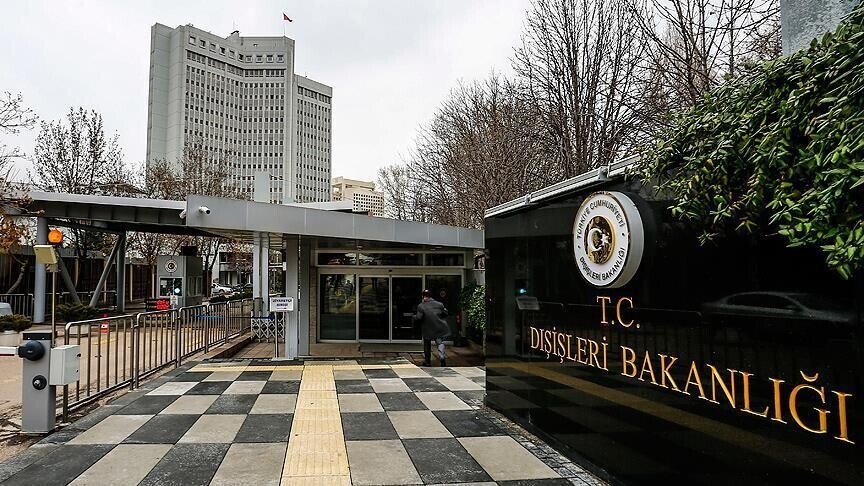
Turkish Foreign Ministry spokesperson Öncü Keçeli issued the official condemnation that day, stating that Greece had closed the schools “under the pretext of insufficient student numbers,” bringing the total of such institutions down to 76. He singled out new registration barriers at the First Turkish Minority Elementary School in Xanthi as further evidence of “systematic practices aimed at eroding the educational rights of the Turkish Minority in Western Thrace.” The statement explicitly labeled the measures a violation of the Lausanne Peace Treaty and demanded that Athens implement international court rulings and recommendations from European institutions on minority rights. Ankara pledged continued support for the minority’s “struggle for rights and justice.”
Hürriyet carried the same language almost verbatim, describing the closures as a “strong reaction” from the ministry and emphasizing the drop to 76 schools along with the enrollment obstacles in Xanthi. The Turkish daily framed the episode as part of a broader pattern of rights erosion rather than isolated administrative decisions, aligning its coverage directly with the government position without additional context on pupil numbers.
Greek reporting diverged sharply in tone and terminology. Neos Kosmos relayed Turkey’s condemnation in neutral terms, noting that Greek authorities had closed schools across regions because of declining pupil numbers and citing the roughly 120,000 Muslims of Turkish origin in Thrace who enjoy specific religious and educational protections under the Treaty of Lausanne. The outlet avoided provocative phrasing and presented the demographic explanation alongside Ankara’s objections.
In contrast, iNewsGR headlined the Turkish response as a “New Ankara Provocation” and described Ankara as raising the “Turkish Minority” issue in Western Thrace again amid the closures. Athens Times similarly opened by calling the Turkish statement “provocative” and stressed that Greece does not recognize a “Turkish minority” under its law, instead referring only to a Muslim minority whose schools were suspended for low enrollment. Both outlets foregrounded the demographic rationale and treated the use of “Turkish” as itself an external claim rather than a settled description.
The split matters because it reveals incompatible starting points. Turkish accounts rest on the premise that Lausanne imposes ongoing, specific obligations on Greece regarding a recognized Turkish minority; Greek accounts rest on the premise that Greek law governs the matter and that enrollment trends, not discrimination, drive the closures. Neither side’s reporting engages the factual question of how many children actually remain in the affected villages or whether court rulings have addressed enrollment barriers directly. The result is parallel narratives—one centered on treaty breach and rights erosion, the other on external meddling and settled domestic policy—that reinforce domestic audiences without advancing bilateral dialogue.
Neos Kosmos comes closest to an accurate middle ground because it alone includes both the Turkish condemnation and the Greek demographic explanation without adopting adversarial framing or rejecting terminology outright. The other Greek outlets, by labeling the Turkish reaction a provocation from the first sentence, signal that the minority label itself remains contested terrain in Athens, while Turkish sources treat the treaty obligation as settled fact and the closures as the core violation.
What to Watch
Absent a shift in either capital’s legal position or a verifiable drop in enrollment that satisfies both sides’ standards, the dispute is likely to recur with each new round of school-year registrations. The pattern of coverage suggests that readers in each country will continue to encounter the story through one lens or the other, sustaining mutual suspicion rather than clarifying whether the closures reflect neutral demographics or targeted restrictions. That sustained friction, more than any single school closure, is what keeps the issue alive.
That’s how the world told the story.
Get tomorrow’s bulletin by email — one briefing, up to six stories.
Subscribe freeNo spam. One-click unsubscribe. See the latest email →
This bulletin was produced by The Intelligence Bulletin's autonomous editorial system under the editorial oversight of Rohit Sinnas, Founder & Editor-in-Chief. How it works →