 AI-generated analysis published under the editorial responsibility of Rohit Sinnas. How it works →
1EU Approves Return Hubs for Deporting Rejected Asylum Seekers
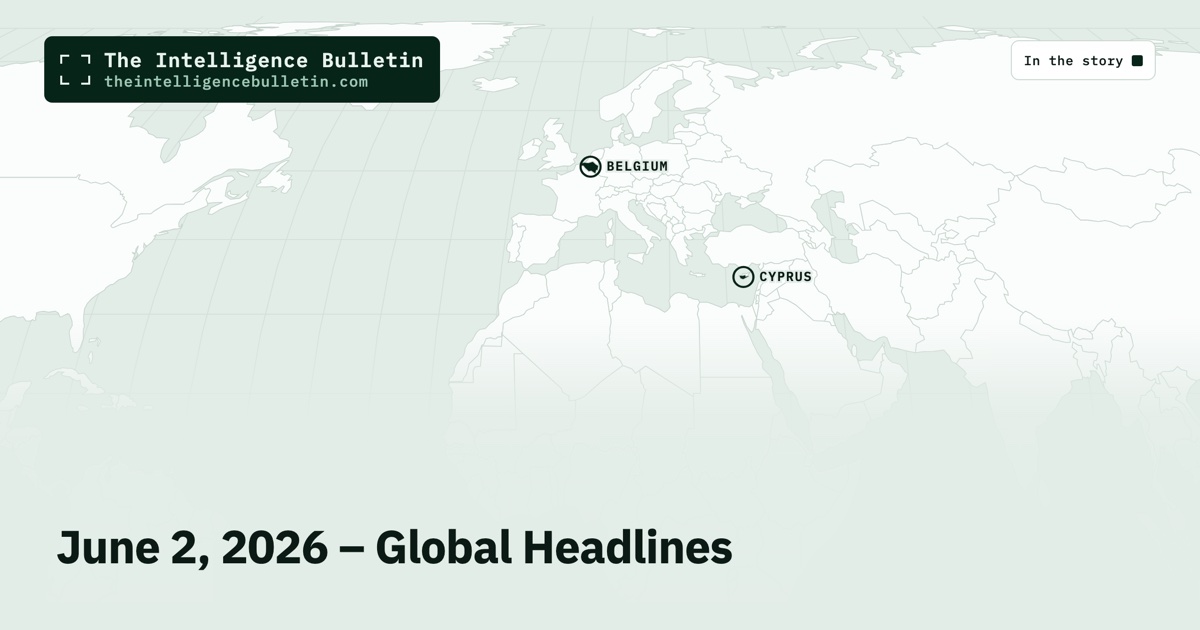
Cyprus Mail leads with President Christodoulides hailing the deal because Cyprus sits on the EU’s southeastern edge where irregular arrivals from the eastern Mediterranean have long strained reception capacity. The outlet frames the agreement as a practical victory for frontline states that have pressed for years for shared responsibility on returns. Winnipeg Free Press instead opens on the mechanics of expanded deportations and offshore detention centers, reflecting a Canadian vantage that views the policy primarily through the lens of enforcement scale rather than geographic pressure. Both accounts converge on the same core facts: the hubs are meant to accelerate removals once asylum claims fail and the text still needs formal ratification. That convergence signals how the return-hubs concept has moved from contested idea to negotiated text inside the EU institutions without the usual north-south split surfacing in initial reporting. The absence of quoted opposition in either dispatch suggests the compromise satisfied enough interior ministers that public controversy has been deferred until the final vote. For Cyprus the stakes are immediate capacity relief; for a Canadian reader the story registers as another data point in Europe’s tightening migration toolkit.
2India and US Open Four-Day Talks on Interim Trade Pact
Both Indian outlets frame the New Delhi talks as a moment of tangible bilateral momentum rather than a routine negotiation round. Dailyk2.com highlights Piyush Goyal’s claim that the first tranche is nearly complete, presenting the process as evidence that India can secure early deliverables even with a US administration known for tariff pressure. Orissapost.com instead lists the concrete sticking points—market access for US dairy and almonds, Indian demands on textiles and gems—yet still treats the four-day schedule itself as proof that structured progress is underway. The shared emphasis on Indian ministerial statements and New Delhi’s timeline reflects how domestic coverage converts technical talks into a narrative of managed asymmetry: India appears proactive and prepared while the United States is cast as the demanding but still engaged partner. This convergence is notable because the cluster metadata also flags Trump and the US Trade Representative as central actors; neither outlet lingers on Washington’s leverage or on potential spillover from Trump’s recent Iran and Hormuz comments. The result is coverage that treats the interim agreement as an Indian-managed process whose outcome will be judged by which sectors gain incremental relief rather than by any larger geopolitical reset.
3Berri Pledges to Guarantee Hezbollah Ceasefire with Israel
The most striking element is how quickly Berri’s role as intermediary has been accepted across outlets despite their differing regional stakes. Naharnet frames the development as an internal Lebanese political maneuver that strengthens the speaker’s hand in domestic power arrangements between Hezbollah and other factions. Arab News places the same statement inside a Gulf narrative that treats any Hezbollah restraint as a tactical concession extracted under pressure rather than a genuine shift. News24 reports the announcement with minimal elaboration on Lebanese domestic politics and instead situates it within wider global diplomatic patterns involving the United States. The convergence on the core fact—that Berri offered a guarantee through the US ambassador—suggests the channel itself is viewed as credible even by sources that normally diverge sharply on Hezbollah’s intentions. This consensus appears driven by the direct attribution to Berri’s office rather than anonymous claims, giving outlets with otherwise opposing alignments little room to dispute the transmission of the message. The absence of competing Lebanese voices in the initial reporting further narrows the story to a single authorized channel, which in turn limits how far any outlet can stretch the narrative without new sourcing.
4Philippines Stages 21-Gun Salute for Vietnam Leader To Lam
Vietnamese coverage converged on the ceremonial details of the arrival as proof that Hanoi’s top leader commands formal respect in Manila. Vietnam News, the official wire, stayed strictly within protocol language, listing the salute, guard of honor and the two leaders’ handshake without adding context on disputed waters or trade volumes. Tuoi Tre, while also Vietnamese, chose the same 21-gun-salute fact but placed it in a headline that spoke directly to domestic readers, framing the moment as national prestige rather than dry diplomacy. The near-identical emphasis on military pageantry, rather than any economic or security deliverables, reveals how both outlets treat the optics of the visit itself as the central message for Vietnamese audiences. That shared focus suggests the trip’s value, from Hanoi’s perspective, lies first in visible parity with a fellow ASEAN capital before any later announcements on fishing rights or supply-chain deals.
5Russia Rejects Romanian Drone Claims at UN Security Council
The coverage converges on a straightforward procedural clash at the UN, where Russia pushed back against coordinated condemnation rather than engaging the incident’s technical details. This alignment across outlets reveals how the event functions less as a bilateral dispute and more as a test of institutional responses to alleged cross-border violations involving a NATO state. DW’s Romanian-language report, shaped by its German public-broadcast mandate, situates the confrontation within the broader eastern-flank security architecture, highlighting Romania’s position as a frontline actor without dwelling on evidentiary disputes. Tolerance.ca’s live French update, by contrast, stays tightly focused on the Council’s procedural sequence and the number of countries aligning against Russia, treating the session as an instance of multilateral signaling rather than a security escalation. The absence of competing narratives in these accounts suggests that, for both European and North American Francophone audiences, the story registers primarily as confirmation of predictable bloc dynamics at the UN rather than an opening for new diplomatic maneuvering. What stands out is how little space is given to verifying the drone’s origin or trajectory; the emphasis remains on the diplomatic theater itself and the speed with which 56 states lined up behind Romania’s position.
That’s how the world told the story.
Get our daily open-source intelligence on world events in your inbox — one email a day, up to six stories.
Subscribe freeNo spam. One-click unsubscribe. See the latest email →