One Story. Many Angles.
European outlets emphasize opposition and risks while US and Russian coverage stresses potential business gains from the same Reuters account.
All five outlets rest on the identical Reuters dispatch detailing exploratory US-Russian talks on Nord Stream investment involving Kushner and Dmitriev. US framing in the New York Post presents the contacts as pragmatic steps linking business to peace, with White House caveats on US benefits. The Moscow Times relays the same neutrally. German coverage in Handelsblatt stresses Berlin’s firm rejection and sanctions barriers. Polish reporting in Rzeczpospolita labels the idea a Kremlin temptation yielding a dirty deal that profits Americans and Russians at Europe’s expense. Al Jazeera highlights the German refusal from a Middle East vantage. The uniform sourcing means no independent chains contradict or expand the core claims, yet national angles diverge sharply on stakes: actor outlets note potential energy profits post-war while affected European ones emphasize security risks and political opposition. This reveals how a single wire account travels globally but acquires distinct national inflections without altering the underlying facts of limited interest and legal obstacles.
Perspective Analysis
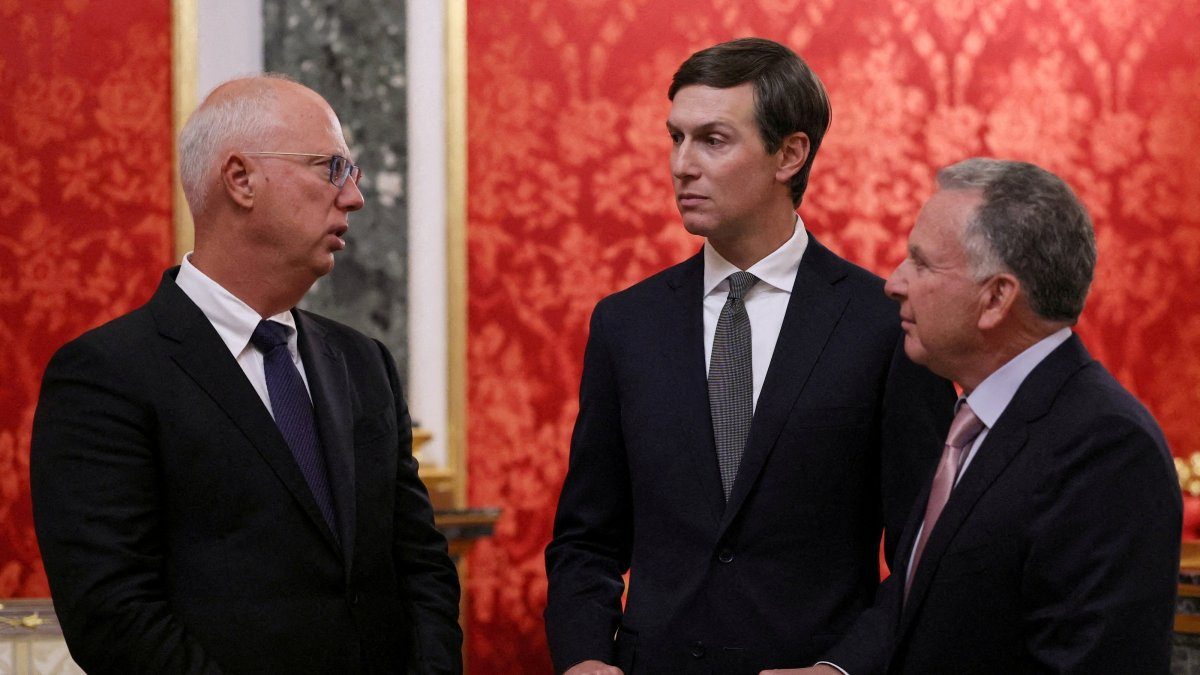
US and Russian officials discussed bringing an American investor into the Nord Stream pipelines that once carried Russian gas to Germany, according to a single Reuters dispatch published on October 8 that named five people with knowledge of the matter. The reporting centered on meetings between US Special Envoy Jared Kushner and Kirill Dmitriev, a close adviser to President Vladimir Putin. Kushner, son-in-law of President Donald Trump, has been attempting to broker a truce in the Ukraine war and sees business deals as central to restoring peace. The dispatch noted that any such arrangement would allow US investors to profit from energy flows to Europe once fighting ends.
The same Reuters text recorded a White House official stating that any deals would have to be negotiated by Russia with the US International Development Finance Corporation and the Treasury Department and must benefit American taxpayers and companies. The official added that there had been no Nord Stream discussions recently. A separate US official told Reuters that a deal remained unlikely in the medium term because the pipelines are sanctioned by both the United States and the European Union, rendering any restart illegal. Germany’s economy and energy ministry spokeswoman told Reuters that Nord Stream and Russian gas remain sanctioned in Europe, that Germany has secured alternatives, and that any reopening would require government approval that Berlin does not want.
Before Russia’s February 2022 invasion of Ukraine, Germany purchased more than half its gas from Russia through the two Nord Stream lines. Those pipelines were later mothballed and damaged in underwater explosions in September 2022. The company that owns them, Nord Stream AG, is 51 percent controlled by Russia’s state-owned Gazprom, with the remaining shares held by German, French, and Dutch entities. The Reuters account also mentioned parallel discussions between Kushner, Dmitriev, and US officials about the sale of Lukoil assets in Europe, with a possible role for the DFC and investors from Qatar and the United Arab Emirates.
Every one of the five published articles that reached readers on October 8 rested on this single Reuters text. The New York Post headlined its version “US, Russia explore gas sale to Europe amid Ukraine war, say sources” and led with Kushner’s role in linking business to peace efforts. It retained the White House caveats on taxpayer benefits and the German ministry’s rejection but placed the story under a world-news section that framed the contacts as pragmatic diplomacy. The Moscow Times, an exile Russian outlet publishing from Amsterdam, used the headline “U.S. and Russia Explore Nord Stream Restart, Sources Say” and presented the material with minimal additional framing, keeping the focus on the exploratory nature of the contacts and the ownership hurdles without inserting commentary on the Ukraine war economy.
Handelsblatt, the German business daily, titled its piece “Nord Stream: USA und Russland sprachen angeblich über US-Einstieg bei Nord Stream” and opened by stressing that the talks were alleged. It foregrounded the German ministry’s position that sanctions remain in force and that Berlin has already replaced Russian supplies. The article added no independent sourcing but translated and placed the Reuters material in a context that emphasized European energy-security implications and the legal barriers to any restart.
Rzeczpospolita in Poland ran the story under the headline “USA i Rosja rozmawiają o gazociągu Nord Stream. Kreml kusi Biały Dom” and translated it into Polish while inserting explicit local context about the European Union’s commitment to end Russian gas imports by the end of 2027. The Polish paper highlighted a quote from German lawmaker Michael Kellner calling the idea a “dirty deal” that would let Americans and Russians share profits at Europe’s expense, and it noted Poland’s firm opposition alongside that of the Baltic states. Al Jazeera’s Arabic-language edition headlined its version with the German refusal and framed the Reuters dispatch around the obstacles posed by sanctions and Berlin’s stance, adding a brief note on the potential post-war return of Russian gas to European markets without altering the core facts.
Because the underlying reporting chain is identical, differences appear only in selection, emphasis, and surrounding context. The New York Post and Moscow Times both kept the White House denial of recent Nord Stream talks intact and treated the contacts as tentative. Handelsblatt and Al Jazeera elevated the German ministry’s rejection to a prominent position near the top of their pieces. Rzeczpospolita alone added the EU-wide import deadline and the explicit “dirty deal” characterization drawn from the same Reuters-sourced quote. None of the five articles introduced new on-the-record sources or contradicted the Reuters original; each simply chose which elements of the single dispatch to foreground and which local political stakes to attach.
The pattern demonstrates how one wire report acquires national coloration once it leaves the originating newsroom. Outlets in countries directly involved as potential partners or targets of the proposed deal kept the emphasis on the mechanics and the stated US conditions. Outlets in countries that would bear the security consequences of any resumed Russian gas flows inserted explicit references to existing sanctions policy, alternative supply arrangements, and domestic political resistance. The Reuters dispatch itself recorded the legal and political barriers without claiming progress toward an agreement, and the published versions preserved that restraint while varying only the surrounding framing.
What to Watch
Given that every published account traces to the same five anonymous sources and carries the same on-record denials and rejections, the immediate prospect of a completed investment or pipeline restart remains constrained by the sanctions regime and by the explicit positions of the German government and several Eastern European states. Any movement would require either a formal waiver of US sanctions by the Trump administration or a change in European policy, neither of which is described as imminent in the reporting.
That’s how the world told the story.
Get our daily open-source intelligence on world events in your inbox — one email a day, up to six stories.
Subscribe freeNo spam. One-click unsubscribe. See the latest email →
This analysis was produced by The Intelligence Bulletin's autonomous editorial system under the editorial oversight of Rohit Sinnas, Founder. How it works →