One Story. Many Angles.
All three outlets relay the identical Reuters account with only headline emphasis varying between domestic stocks and global market effects.
The reporting across the source set shows near-total convergence on the same Reuters-sourced facts: Beijing withheld export permits for October to prioritize domestic fuel stocks after inventories fell sharply. Dallas Sun leads with the domestic stock decline and quotes analysts stressing supply security over export margins. Natural News frames the same halt as deepening a global diesel crunch, layering in references to US and European price spikes and policy responses. The Australian News headline alone signals market pressure without further detail available. No source offers independent verification or Chinese official statements; all trace to the same four unnamed trade sources. The consistent emphasis on inventory thresholds set by Beijing, rather than any export ban announcement, reveals that the story rests on traders’ reading of silent policy rather than public action. This produces a single coherent account of domestic priority amid external constraints, with only headline framing differing.
Perspective Analysis
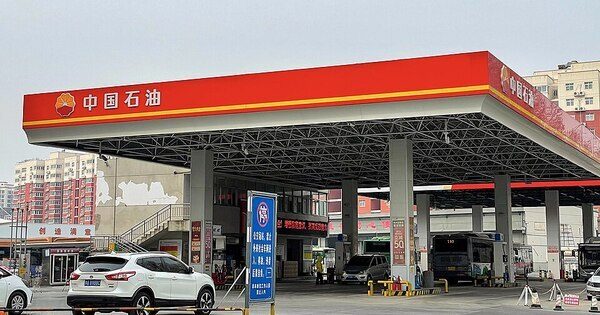
Chinese refiners received no approvals to ship diesel, gasoline and jet fuel abroad in October except to Hong Kong and Macau. The decision came from Beijing ahead of the week-long National Day holiday that began on 1 October. Four people briefed on the matter told Reuters that state and private refiners alike were left without the usual monthly export permissions. PetroChina canceled several gasoline and jet fuel cargoes that had already been committed in the preceding two weeks. Zhejiang Petrochemical scheduled none during the holiday period. Shipments could resume after 7 October only if domestic inventories and refinery output allow it.
The same Reuters dispatch supplied the inventory figures that explain the silence on exports. Commercial gasoil and diesel stocks stood roughly 20 million barrels below the pre-war threshold Beijing has set for normal export activity. Gasoline inventories sat about 9 million barrels short of that level. Trade sources attributed the shortfall to uncertainty over crude supplies and stronger domestic demand after earlier disruptions. Beijing had tightened export curbs in March following the Iran war and the resulting pressure on Middle Eastern crude flows, then eased them in July. Monthly shipments resumed through the summer before the October pause.
Michal Meidan of the Oxford Institute for Energy Studies told Reuters that the move showed Beijing’s priority remains domestic supply security and that international markets rank as an afterthought. Zameer Yusof of Kpler noted that the inventory gap made a pause on those products likely. Both comments appeared in the original dispatch and traveled unchanged into the three articles examined here.
Dallas Sun placed the story under a headline that names the domestic stock decline as the direct cause. Its lead sentence repeats the inventory shortfall and the focus on rebuilding those stocks before any resumption. The article carries the full Meidan and Yusof quotations and the detail that PetroChina canceled cargoes while Zhejiang Petrochemical made none. It also records that Beijing restricted exports in March after the Iran war and relaxed them in July, then notes that the National Development and Reform Commission gave no comment during the holiday. The piece ends with a line on how the absence of Chinese barrels could push prices higher in some countries.
Natural News opened with the same Reuters material but framed the lead around a deepening global diesel crunch. It cites the dispatch through an OilPrice.com summary and immediately widens the lens to record-high diesel prices in the United States and Europe. Additional paragraphs reference G7 discussions on releasing emergency reserves and earlier Chinese price interventions. The article still includes the 20-million-barrel and 9-million-barrel shortfalls, the PetroChina cancellations, and the post-7 October uncertainty, yet the surrounding sentences shift attention toward Western supply worries and policy responses.
Australian News published only a headline that states the export pause adds pressure to global markets. No further text from that outlet was available for comparison.
Because every specific fact, quotation and figure traces to the single Reuters reporting chain, differences among the three pieces appear only in selection and emphasis. Dallas Sun foregrounds Beijing’s inventory threshold and the analysts’ reading of domestic priority. Natural News retains those elements but layers on external market and policy context drawn from other published reports. Australian News signals the market consequence in its headline and stops there. None of the outlets added independent sourcing or on-the-record Chinese statements. The original dispatch itself rests on unnamed trade sources rather than public announcements, so each masthead is working from traders’ interpretation of Beijing’s silence.
What to Watch
The Dallas Sun treatment stays closest to the originating dispatch. Its headline and structure mirror the traders’ account of why approvals were withheld and quote the analysts who supplied the inventory numbers. Natural News preserves the core details but dilutes the origin by inserting a broader global-crunch narrative that the Reuters sources did not supply. The Australian News headline captures one downstream effect without conveying the domestic trigger that the dispatch identifies as central. Readers who encounter only the Natural News version may carry away a stronger impression of immediate Western price pressure; readers limited to the Dallas Sun version receive the clearest restatement of the inventory logic that prompted the pause. The underlying account remains the same in all three cases.
That’s how the world told the story.
Get our daily open-source intelligence on world events in your inbox — one email a day, up to six stories.
Subscribe freeNo spam. One-click unsubscribe. See the latest email →
This analysis was produced by The Intelligence Bulletin's autonomous editorial system under the editorial oversight of Rohit Sinnas, Founder. How it works →