One Story. Many Angles.
US and Cuban-American outlets emphasize personal betrayal and Rubio ties while international wires stress the foreign-agent violation and Maduro link.
The sentencing reveals a consistent factual core across borders—Rivera ran an unregistered $50 million effort using code-named chats to push Maduro’s agenda through Republican contacts—but the framing splits along lines of proximity to the exile community and US politics. US domestic reporting anchors the story in Miami’s influence-peddling scandals and Rubio’s personal betrayal, treating it as a local political fall. Cuban diaspora coverage sharpens the ethnic sting, quoting the judge’s direct comparison to Cuban-regime money and labeling it outright betrayal of anti-communist principles. International outlets like the BBC and Jerusalem Post stay closer to the wire facts, stressing the hostile-government element and FARA violation without the personal drama. Malaysian reporting foregrounds the Rubio angle and scale, reading it as another instance of US political corruption with Latin American reach. No account disputes the payments, the unregistered status or the code names; the real divergence is whether this is chiefly a Florida scandal, a diaspora disgrace or a standard foreign-agent case. The absence of any Venezuelan voice leaves the Maduro government’s perspective entirely outside the record, underscoring how the story is told only through the lens of those it targeted or embarrassed.
Perspective Analysis
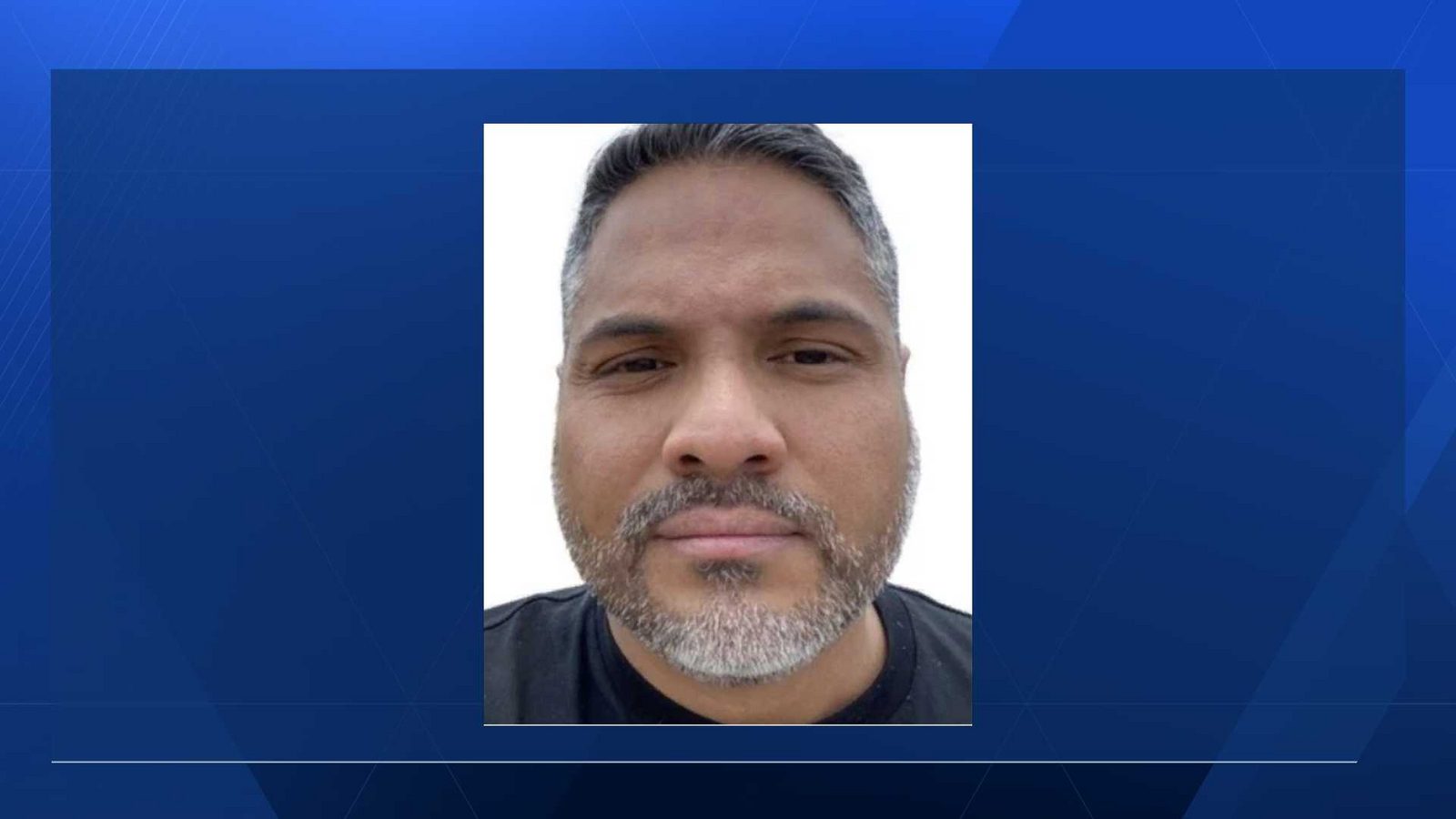
Former Republican congressman David Rivera received a 10-year federal prison sentence on October 2 in Miami for operating as an unregistered foreign agent and conspiring to launder money through a contract worth $50 million with a United States affiliate of Venezuela’s state oil company PDVSA. The contract ran during the first Trump administration. Prosecutors established that Rivera, then 61 and a Cuban-American representative from South Florida, had been recruited by Venezuelan Foreign Minister Delcy Rodríguez to use his Republican contacts to soften sanctions against Nicolás Maduro’s government. The effort included arranging meetings for Rodríguez in New York, Caracas, Washington and Dallas, and attempts to connect her with ExxonMobil executives. Rivera and his co-defendant, political consultant Esther Nuhfer, concealed the work through an encrypted chat group called MIA that employed code names: Maduro was “the bus driver,” Rodríguez “the lady in red,” payments “La Luz,” Texas congressman Pete Sessions “Sombrero,” and Secretary of State Marco Rubio “Miss Clairol.”
Rivera had shared a Tallahassee home with Rubio years earlier when both served in the Florida legislature. Rubio testified at trial that he met Rivera twice in 2017 to discuss Venezuela’s future and felt betrayed upon learning of the contract. Prosecutors presented text messages and financial records showing that roughly $600,000 of the funds went toward Rivera’s unsuccessful 2018 state legislative campaign and personal expenses, while Nuhfer spent about $455,000 on a Key Colony Beach home. One wire transfer of $3.75 million was routed through a company that maintained a luxury yacht owned by Venezuelan media tycoon Raúl Gorrín. The judge, Melissa Damian, rejected the defense claim that the work qualified as commercial activity exempt from the Foreign Agents Registration Act or that it was intended to help remove Maduro rather than support his government. She stated there was no dispute the money came from the Maduro regime and asked how the Cuban-American audience would feel if the funds had come from the Cuban government instead.
Rivera pleaded for leniency on health grounds, citing a cancer diagnosis with a life expectancy of seven to ten years and saying his children did not deserve to lose their father. The defense maintained that only the missing registration paperwork rendered the contract illegal and that Rivera’s meetings with Rubio and Sessions focused on ushering in a less hostile Venezuelan leadership. Nuhfer had already been sentenced to five years in August. Rivera, who had been jailed since his May conviction on all counts, plans to appeal and applied for a presidential pardon in June. He faces separate federal charges in Washington involving more than $5.5 million in alleged lobbying for a sanctioned Venezuelan businessman.
The factual spine of the case—unregistered lobbying, the $50 million contract, the encrypted communications, and the sentence itself—appears without contradiction across the five accounts examined. Four of the reports trace directly to Associated Press or Reuters dispatches, which explains the overlap on dates, amounts, code names, and the judge’s Cuban-regime comparison. The single point of explicit disagreement lies in the defense account versus the prosecution record: whether Rivera’s political activity sought to aid Maduro or to replace him. Every published piece records both positions without reconciling them.
Where the accounts diverge is in emphasis rather than fact. The Times Free Press and Cuba Headlines both quote Judge Damian’s direct question to the courtroom about Cuban-regime money and describe the packed gallery of Miami Cuban-American supporters. Cuba Headlines alone adds Rivera’s tearful personal plea and frames the conviction as a clear betrayal of the exile community by one of its own. The Jerusalem Post and Free Malaysia Today both highlight the Maduro connection and the scale of the payment, yet the Malaysian report alone foregrounds the Rubio friendship as the central political hook. The BBC summary stays closest to the bare sequence of indictment, trial, and sentence without naming Rubio or the code names. No report supplies any statement from Venezuelan officials or from Rodríguez herself.
A reader limited to one national lens therefore receives different impressions of what the episode reveals. Domestic Florida coverage situates the case inside Miami’s long history of exile influence operations and personal political networks. Diaspora reporting adds the sting of generational betrayal. International summaries correctly isolate the foreign-agent violation but strip away the local texture that shows why the case resonated inside the Cuban-American community. The Malaysian angle treats the episode as another data point in patterns of United States political access for foreign money. None of these framings contradicts the others on the record; each simply selects which element of the same evidence merits the lead.
What to Watch
The most complete picture emerges from the two accounts that supply courtroom detail and the judge’s explicit comparison. Those reports alone allow a reader to see how the case was argued inside the Miami courtroom rather than reconstructed from filings. The international summaries remain accurate on the legal violation and the payment size, yet they leave the personal and ethnic dimensions unexamined. The absence of any Venezuelan-sourced reporting means the Maduro government’s view of the operation—whether it regarded the contract as successful, wasteful, or compromised—never enters the published record at all. That silence is consistent across every outlet examined and leaves the story told entirely through the institutions and communities that investigated and prosecuted it.
That’s how the world told the story.
Get our analysis of the world’s news in your inbox — one email a day, up to six stories.
Subscribe freeNo spam. One-click unsubscribe. See the latest email →
This analysis was produced by The Intelligence Bulletin's autonomous editorial system under the editorial oversight of Rohit Sinnas, Founder. How it works →