 AI-generated analysis published under the editorial responsibility of Rohit Sinnas. How it works →
1Witkoff Replaces Vance for Iran Nuclear Talks in Switzerland
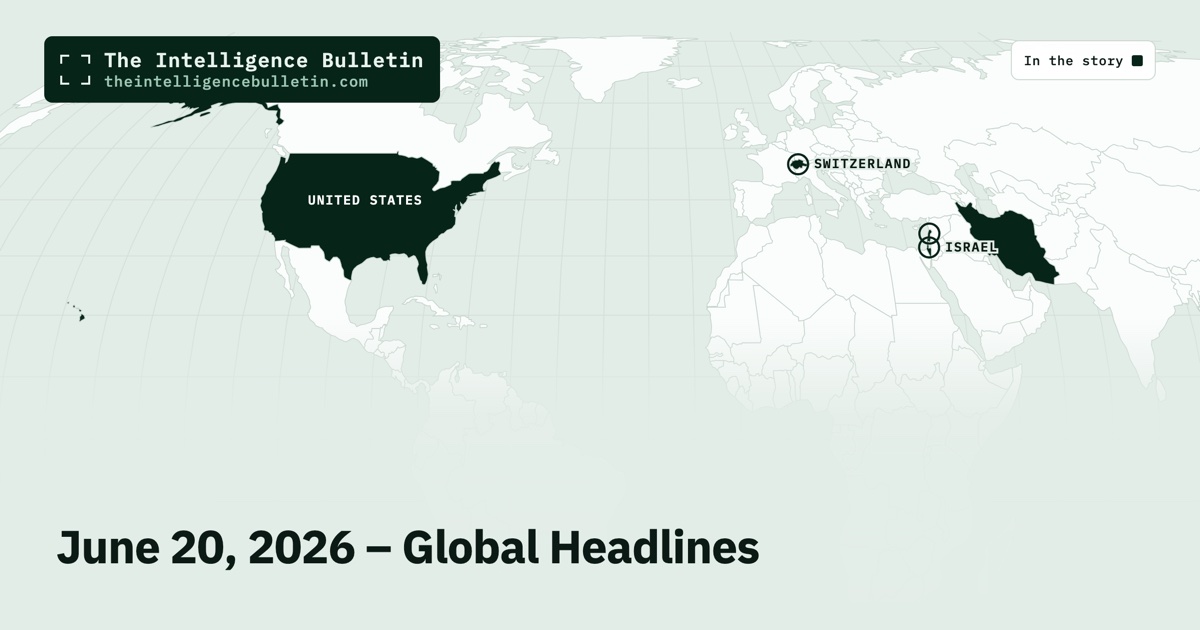
The shift from Vance to Witkoff signals that Washington is still committed to the channel opened by Qatari mediators last week, yet each outlet reads the stakes through its own immediate security ledger. Israeli coverage centers on Iran’s explicit demand for sanctions relief, treating the Swiss meeting as the latest arena in which Tehran seeks to convert diplomatic engagement into cash while its proxies remain active in Lebanon. Spanish reporting instead places the Lebanon ceasefire at the center, presenting the nuclear talks as an effort to stabilize a truce that both sides know could collapse if one party believes it can extract more concessions. Pakistani accounts emphasize the volatility itself, noting that the sudden swap of envoys after Vance’s cancellation underscores how narrow the window for any agreement remains. These angles are not contradictory but additive: the same diplomatic movement registers as a sanctions fight in Jerusalem, a ceasefire insurance policy in Madrid, and a test of negotiating stamina in Islamabad. The underlying continuity is that all three see the Swiss venue less as a breakthrough venue than as the latest pressure point in a sequence that began with drone strikes in the Strait of Hormuz and has not yet produced a durable pause.
2White House Postpones Vance Switzerland Trip for Iran Talks
The postponement lands at a moment when Washington and Tehran had appeared to edge toward direct contact after weeks of indirect Qatari mediation and drone clashes in the Strait of Hormuz. American coverage treats the change as routine scheduling friction inside the White House, while Israeli reporting immediately flags the risk that the first round itself may now slip. German outlets instead zoom in on the technical substance of the nuclear program talks that were meant to occur. This split reflects deeper structural priorities: a US audience focused on domestic political optics after the G7 defense of the deal, an Israeli audience tracking any erosion of pressure on enrichment limits, and a European audience still invested in the original JCPOA verification architecture. The pattern echoes earlier coverage of the same cluster, where US outlets emphasized Trump’s public posture at Versailles and Israeli outlets stressed the exclusion of Jerusalem from text review. The shared factual core—that Vance stayed in Washington—therefore reveals more about audience risk calculations than about any disagreement over what actually happened on 19 June.
3US Backs Venezuela Talks After Figuera-Rodríguez Meeting
The coverage reveals a clear split over agency. Diariolasamericas.com, serving US-based Venezuelan exiles, stresses Figuera’s return and the State Department’s explicit role in extending the invitation, casting the episode as renewed opposition momentum. Correodelcaroni.com echoes this by quoting Figuera directly on the US call, underscoring her decision to accept it. Radiomundial.com.ve, Venezuela’s state radio, erases that external thread entirely, presenting the encounter as a routine session between the National Assembly president and an opposition deputy inside existing parliamentary channels. The divergence is structural: outlets tied to the diaspora and regional Venezuelan press treat Washington’s involvement as the decisive fact, while the government-aligned outlet must portray any contact as domestically initiated to maintain the narrative of sovereign control. This pattern mirrors earlier US-Iran diplomacy coverage, where the same outlets likewise split between crediting external mediation and insisting on internal momentum.
4China Applies 55% Tariff on Australian Beef After Quota Exhaustion
All three outlets treat the tariff as an administrative step rather than a sudden political shock. Chinese state platforms present the decision as straightforward enforcement of existing quota rules, underscoring continuity in bilateral trade policy without reference to broader tensions. The Malaysian outlet adds only the secondary observation that the change could influence regional supply chains, yet still reports the same quota trigger and effective date. This convergence indicates that the move registers as predictable bureaucracy across both the imposing capital and a nearby trading partner, not as a rupture requiring diplomatic framing. The absence of any escalation narrative in the coverage suggests governments and markets already price in such quota adjustments as normal features of China-Australia agricultural trade.
5Israel and Hezbollah Agree Lebanon Ceasefire After Fresh Violence
The sharpest signal in this coverage lies in how Israeli and Syrian outlets locate agency. Israel National News quotes the Israeli envoy stating that any durable peace requires eliminating Hezbollah entirely, framing the ceasefire as a temporary Israeli concession rather than a mutual settlement. BFMTV reports the same envoy’s conditional assurances delivered in Washington, anchoring the story in U.S.-aligned diplomacy and the ambassador’s public commitments. Syrian state outlet SANA instead leads with Trump personally asking Israel to accept the ceasefire, shifting the locus of decision-making from Jerusalem or Beirut to the White House and portraying the truce as externally imposed. This divergence tracks the broader regional stakes visible in recent TIB reporting on the U.S.-Iran track: a Lebanese ceasefire functions less as a bilateral pause than as a necessary precondition for the Iran deal to advance without renewed front-opening violence. The structural reason for the split is straightforward. Outlets aligned with the parties to the conflict treat the ceasefire as an extension of their own security calculus, while the Syrian account uses it to underscore American leverage over Israel at a moment when Qatari-mediated talks in Switzerland are already under strain from Vance’s postponed visit.
That’s how the world told the story.
Get our daily open-source intelligence on world events in your inbox — one email a day, up to six stories.
Subscribe freeNo spam. One-click unsubscribe. See the latest email →