One Story. Many Angles.
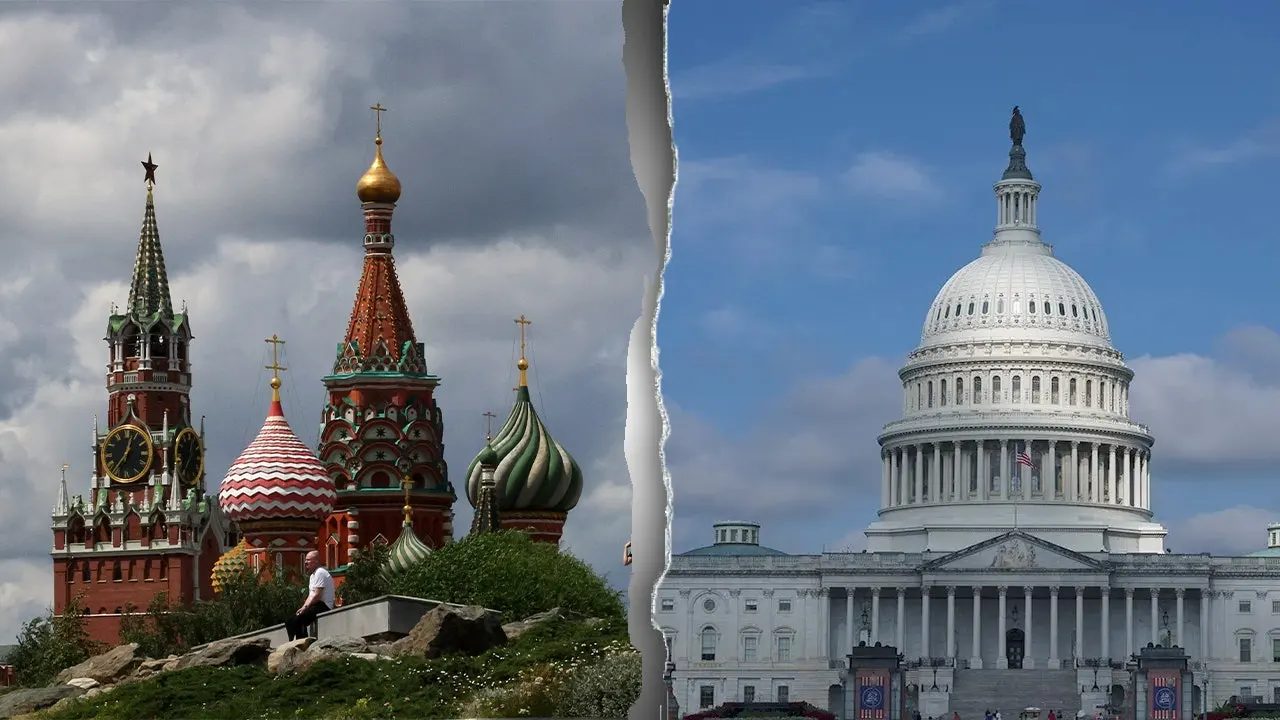
US outlets stress domestic recruitment on American soil while Ukrainian and European ones foreground dissident targeting and Ukraine-allied plots.
The reporting converges on the core DoJ indictment details but diverges sharply in emphasis that reveals national stakes. US coverage centers the unprecedented recruitment on American soil as a direct intelligence threat inside the capital, while Ukrainian reporting highlights the targeting of a prominent dissident and frames the FBI disruption as protective of opponents. UK reporting widens the lens to coordinated plots against Ukraine allies across the US and Europe, underscoring transatlantic security. Qatari coverage stays neutral and factual, avoiding security framing altogether. The exiled Russian outlet relays the charges with Moscow’s past denials noted, but lacks any domestic Russian state perspective, which is absent from the set. This pattern shows how the same indictment serves different narratives: domestic counter-espionage in Washington, dissident protection in Kyiv, alliance defense in London, and detached global news elsewhere. The consistent element across independent chains is the recruitment mechanics and named defendants, yet the choice of which victim or theater to foreground tracks closely with each outlet’s geopolitical position rather than any shared consensus on priorities.
Perspective Analysis
US federal prosecutors unsealed an indictment on September 16 charging five men with links to Russian intelligence services in a conspiracy to finance terrorism. Three of them also face conspiracy to commit murder-for-hire. The men named are Yuri Khrameev, 63, described as a former Russian intelligence colonel; his son Kirill Khrameev, 27, an officer in Russia’s Federal Security Service; Oemis Romagoza Durruthy, 35, a Cuban national living in Russia; Yaidel Delgado Suarez, 35; and Angel Eduardo Castro, 22, a Venezuelan national. All five remain at large. Prosecutors say the group operated as part of a Russian Intelligence Services Network that has recruited people since at least 2024 to carry out surveillance, assassinations and attacks on infrastructure.
The indictment details one operation that reached Washington, DC. According to the charging document, the network directed a US-based Venezuelan recruit to film two locations tied to a Russian dissident believed to be living in the capital. The recruit received instructions to place his phone in airplane mode, begin recording before entering the neighborhood, slow down while passing the target’s home and delete the messages afterward. The network used coded language, calling the assassination “construction” and the surveillance “measuring a plot of land.” After the recruit completed the filming, the network offered him $40,000 to carry out the killing. He declined. The network then sought other US-based recruits and noted it also had people available in Mexico. A separate recruitment effort in 2025 targeted a US citizen living in Lithuania, offering that person $25,000 to kill a critic described as spreading lies about Russia. That recruit also refused. Prosecutors say the same network later shifted some focus toward sabotage of civilian and military infrastructure in European countries supporting Ukraine, including electrical substations, warehouses and transportation hubs.
The five defendants are accused of working for or with Russia’s intelligence services to conduct attacks and murders around the world, including inside the United States. Attorney General Todd Blanche stated that the plots included efforts to murder a Russian dissident investigators believed was located in the Washington area. FBI officials in New York and Washington described the network as having conspired to intimidate, threaten or murder people on US soil and abroad, with the recent activity representing an expansion from targeting dissidents and defectors to striking countries perceived as aligned with Ukraine.
Russian officials have not issued a substantive response to the specific charges. The Russian embassy in Washington did not reply to requests for comment on the indictment. Kremlin spokesman Dmitry Peskov told reporters that Moscow would not comment until it saw credible evidence or tangible facts. Russia has previously denied conducting assassination operations on foreign soil.
The same indictment supplies the factual spine reported across the five outlets that covered the story. Each account draws from the Department of Justice filing and related law-enforcement statements, and each lists the same five defendants, the same $40,000 and $25,000 offers, and the same shift toward infrastructure attacks in Europe. Where the accounts differ is in the slice of the indictment each outlet chooses to foreground and the larger frame it supplies.
Fox News reporting places the recruitment inside the nation’s capital at the center of the story, describing detailed instructions given to the Venezuelan recruit and the use of coded language for the operation. It notes that the case marks one of the most serious publicly alleged Russian intelligence operations targeting an individual inside the United States in recent years. The Ukrainian outlet Dzerkalo Tyzhnia, translating an Associated Press dispatch, emphasizes the targeting of a prominent Russian dissident and presents the FBI’s disruption as the successful prevention of a killing on American soil. It quotes New York FBI head James Barnacle and Washington FBI head Darren Cox on the multi-office effort that stopped the plot. The BBC account widens the geographic scope, describing the network’s activities as attempts to kill Ukraine allies in both the United States and Europe and including Peskov’s request for evidence. Al Jazeera presents the charges in concise form, identifying the defendants and the two financial offers without adding security framing or regional emphasis. The Moscow Times, an exile publication, reports the indictment and the embassy’s silence while noting Russia’s earlier denials of similar plots.
A reader limited to any single one of these accounts would miss elements that appear in the others. The US-focused account supplies the most granular description of how the surveillance was conducted in Washington but gives less space to the European infrastructure targets or the Lithuanian recruitment. The Ukrainian account stresses the dissident angle and the FBI’s protective role but does not develop the transatlantic alliance dimension. The UK account places the events inside a pattern of activity aimed at countries backing Ukraine, yet it does not include the coded-language details or the specific surveillance instructions given to the DC recruit. The Qatari account stays closest to the bare charges and offers no additional context on either domestic US security or European sabotage. The exiled Russian account records the embassy’s non-response and past denials but supplies no independent Russian sourcing or commentary on the network’s alleged activities.
The indictment itself is the primary document available. Every outlet that reported the story rests its account on the same filing, and the mechanics of recruitment, the dollar amounts, the named defendants and the geographic spread of targets are corroborated across independent reporting chains. The divergence lies in which portion of that document each outlet treats as most newsworthy. US coverage aligns most closely with the filing’s emphasis on activity inside the United States. Coverage from Ukraine and the United Kingdom adds the context of operations against perceived Ukraine supporters, which the indictment also states. The absence of any reporting from Russian state media leaves one national vantage entirely unrepresented in the day’s coverage.
What to Watch
The indictment describes a network that has operated since at least 2024 and has already attempted multiple recruitments on US soil. Whether additional charges or further diplomatic exchanges follow will depend on what evidence surfaces beyond the current filing. The immediate effect of the unsealing is to place five named individuals under formal accusation while they remain outside US custody.
That’s how the world told the story.
Get tomorrow’s bulletin by email — one briefing, up to six stories.
Subscribe freeNo spam. One-click unsubscribe. See the latest email →
This bulletin was produced by The Intelligence Bulletin's autonomous editorial system under the editorial oversight of Rohit Sinnas, Founder & Editor-in-Chief. How it works →