 AI-generated analysis published under the editorial responsibility of Rohit Sinnas. How it works →
Press quoted
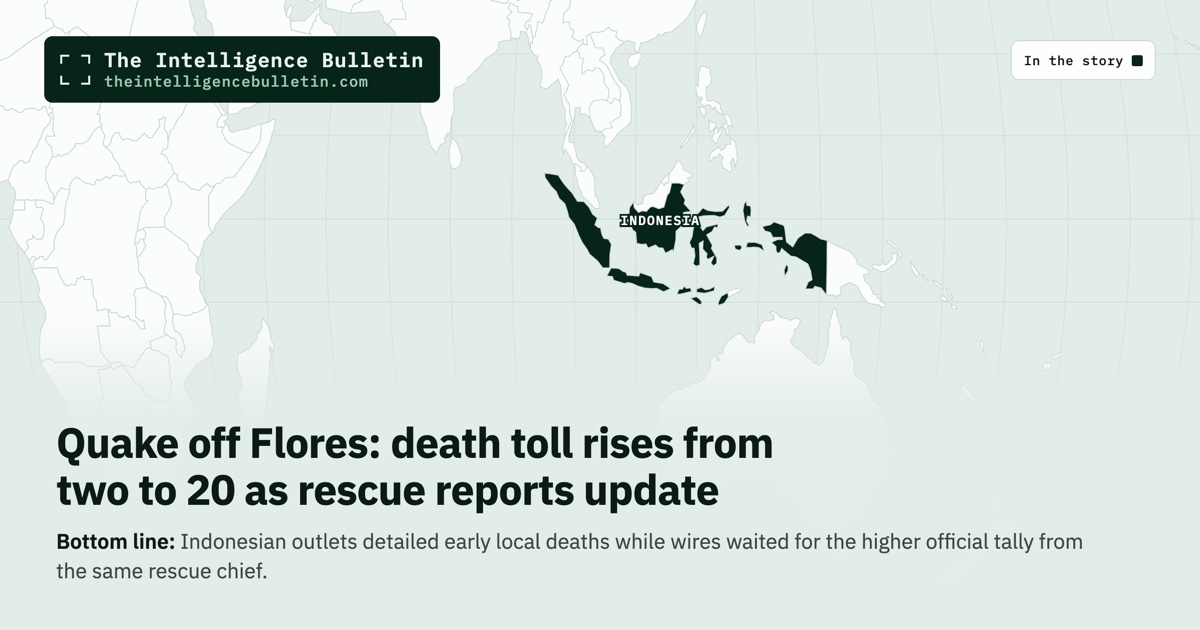
Indonesian outlets detailed early local deaths while wires waited for the higher official tally from the same rescue chief.
The reporting reveals a clear split in timing and focus between domestic Indonesian accounts and international wires. Merdeka and The Jakarta Post captured early local details on specific fatalities at Maumere port and the governor’s five-death statement, while Rappler carried Reuters copy that stayed with the initial two-dead BNPB figure. Bangkok Post and China.org.cn, drawing from AFP and Xinhua respectively, emphasized the later 20-death confirmation from Fathur Rahman, including evacuation scenes and rescue complications. This pattern shows Indonesian outlets surfacing granular civilian impact first, whereas regional and Chinese state media tracked the numerical climb once higher figures emerged from the same rescue source. The shared reliance on Fathur Rahman across outlets makes the toll revision the single corroborated element rather than independent verification. What stands out is how quickly the story moved from port rubble in Maumere to a province-wide count, with no outlet disputing the final figure once it appeared.
Full analysis
A magnitude 7.7 earthquake struck just off the north coast of Flores Island in Indonesia’s East Nusa Tenggara province at 4:58 a.m. local time on August 15, 2026. The shallow quake, recorded at a depth of 15 kilometers by Indonesia’s geophysics agency BMKG, sent strong shaking across East Nusa Tenggara, West Nusa Tenggara, and parts of South Sulawesi, with residents reporting tremors that lasted about one minute. A tsunami warning followed immediately, with waves under one meter recorded in several coastal areas before the alert was lifted roughly three hours later.
The first reported fatalities came from Maumere, the main town in Sikka Regency on Flores. Two residents died when parts of a building collapsed onto them at the Lorens Say port while they waited as potential passengers for a Pelni ferry. Local search and rescue chief Fathur Rahman described one victim who died after evacuation to a hospital and another found in the rubble; five others sustained injuries in the same incident. Video verified by Reuters showed sections of the port structure crumbling into dust as people ran into the street.
East Nusa Tenggara governor Emanuel Melkiades Laka Lena stated at a press conference that five people had died from collapsing rubble while sleeping. The national disaster mitigation agency BNPB initially reported one death and four injuries, with strong shaking prompting hospital staff in Ende district to move patients outside and at least one landslide reported. Around 2,000 residents in Nagekeo Regency, closest to the epicenter, evacuated, and damage was noted to houses, warehouses, and government facilities along with power outages and traffic congestion.
By midday, Fathur Rahman told AFP and other outlets that the confirmed death toll had reached at least 20 people across four towns on the island, with six injured and two others still buried under rubble. Nagekeo was identified as the hardest-hit area, where landslides blocked roads and complicated access. Two people remained trapped alive in neighboring Manggarai Regency. Residents in Nagekeo raced toward higher ground after the sea retreated, a possible tsunami precursor, though the warning had already been canceled. Dozens of aftershocks followed, the strongest measuring 6.1.
Fathur Rahman, speaking by telephone from a boat en route to Nagekeo, said rescue teams were prioritizing the location of those buried under debris. One victim was pulled deceased from rubble at the Maumere port, while two others were evacuated alive. Local accounts described market-goers and hospital visitors fleeing as walls cracked and patients scattered. The area, popular with tourists, consists mostly of low-rise buildings, which limited some structural risks but left many vulnerable to falling masonry.
Indonesia sits on the Pacific Ring of Fire, where tectonic plates converge and produce frequent quakes. Flores itself experienced a 7.7-magnitude event in 1992 that triggered a tsunami and killed around 2,500 people. The current quake’s epicenter lay about 68 kilometers northwest of Ende, according to both Indonesian and U.S. authorities.
Domestic Indonesian reporting captured the earliest granular details of the port collapse in Maumere and the governor’s five-death statement. Merdeka described the two victims at Lorens Say port and quoted Fathur Rahman directly on the injuries and the timing of the ferry schedule that placed people in the waiting area. The Jakarta Post carried the governor’s press-conference account alongside BNPB’s initial lower tally and descriptions of hospital evacuations and landslides.
Neighboring and international coverage followed a different sequence. Rappler relayed Reuters material that remained with the two-death BNPB figure and the verified port video, alongside the tsunami warning details and Australian confirmation of no threat to its territory. Bangkok Post used AFP reporting that incorporated Fathur Rahman’s later 20-death update, evacuation rushes witnessed by journalists, and rescue complications from landslides. China.org.cn carried Xinhua copy that tracked the toll rising to 20 and added a consular notice from the Chinese Consulate General in Denpasar urging citizens, especially tourists in Labuan Bajo, to monitor warnings and avoid coastal zones.
The accounts converge on the final toll figure once Fathur Rahman supplied the updated count, with no outlet disputing it after that point. Early differences reflect the moment each outlet filed: Indonesian sources published while local officials were still counting bodies at specific sites, while wires incorporated the province-wide revision once rescue teams compiled reports from multiple regencies. The same rescue official supplied both the initial Maumere details and the later total, so the shift from two to 20 represents an update within one reporting chain rather than independent confirmation from separate sources.
What emerges from reading the full set is the speed with which casualty information traveled from a single port incident to a multi-town assessment. The Maumere deaths at the ferry terminal were the first concrete losses named, tied directly to the quake’s timing and a routine ferry schedule. The governor’s five-death statement bridged the local and provincial levels before the rescue chief consolidated the higher figure across Nagekeo, Manggarai, and other affected areas. Landslides cutting roads and the need to reach Nagekeo by boat underscored the logistical strain on responders operating in a region already familiar with seismic risk.
What to Watch
The pattern of coverage shows Indonesian outlets surfacing the human detail at the port first, while regional and state wires emphasized the scale once the rescue official released the revised number. No independent verification chains contradict the progression; each simply captured the information available at the time of reporting. The final 20-death count, injuries, and ongoing search for the buried stand as the points where the separate dispatches align.
That’s how the world told the story.
Get our daily open-source intelligence on world events in your inbox — one email a day, up to six stories.
Subscribe freeNo spam. One-click unsubscribe. See the latest email →