One Story. Many Angles.
South Korean and Japanese accounts tie the launch directly to the DMZ apology dispute while Chinese reporting presents it as a technical test without mentioning the border trigger.
Every outlet in the set reports the same core sequence: a North Korean missile fired from Wonsan on October 3 flew more than 700 km into the East Sea, detected by South Korean forces and tracked jointly with the United States. The divergence appears in how tightly each links the launch to the preceding DMZ mine blast and Seoul’s apology demand. The Korea Times and The Independent explicitly frame the test as a direct response to Kim Yo-jong’s Friday rejection of the demand and her threats of retaliation, treating the border incident as the immediate catalyst. Japan Today aligns closely but widens the lens to regional stability risks for Japan, noting information sharing with Tokyo and possible landing outside its exclusive economic zone. ABC News centers the South Korean military statement and alliance coordination without foregrounding the mine dispute. China Daily, drawing from KCNA, omits the apology row entirely and instead highlights the missile’s intermediate range, trajectory-changing capability and artificial-intelligence features under Kim family oversight. This produces a clean split: actor and neighbor accounts treat the launch as escalation in an active bilateral crisis, while the Chinese account presents it as a routine technical demonstration. The absence of any North Korean voice in the pool leaves Kim Yo-jong’s statements visible only through South Korean and Japanese quotation, underscoring how the event’s meaning shifts once the border context is stripped away.
Perspective Analysis
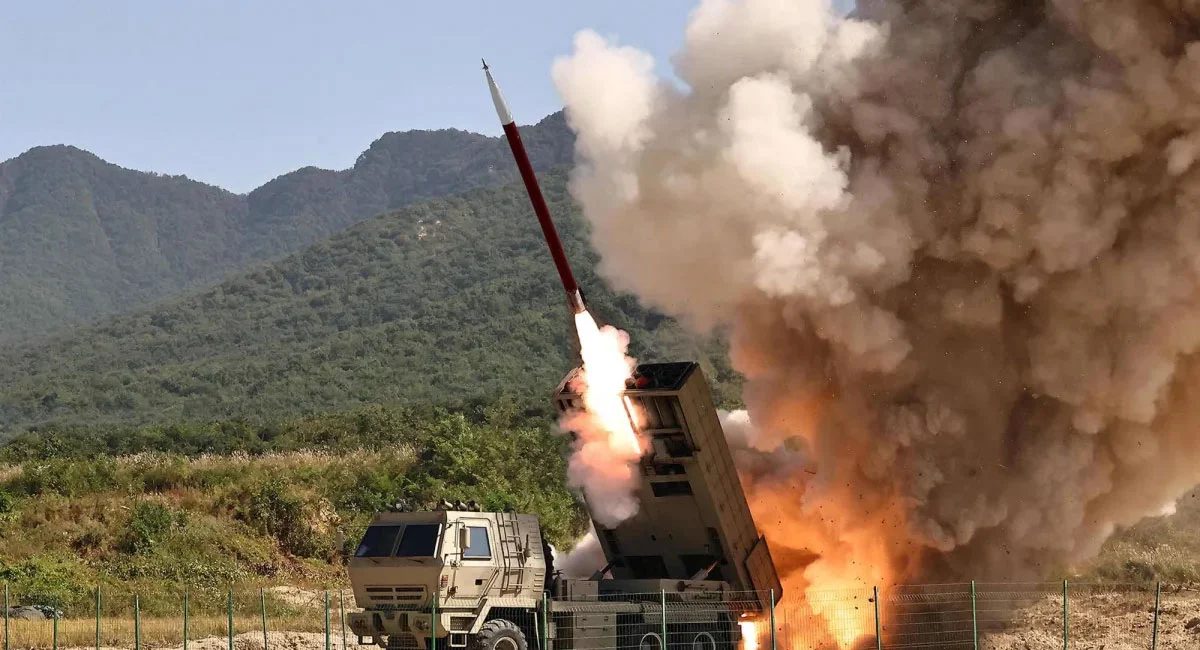
North Korea fired a ballistic missile from the Wonsan area on its eastern coast toward the East Sea at roughly 6:30 a.m. on October 3. South Korea’s Joint Chiefs of Staff detected the launch and stated that the missile flew more than 700 kilometers before landing at sea. South Korean and American intelligence tracked the flight from its initial stages and exchanged information throughout. The South Korean military said it would maintain heightened surveillance and readiness to respond to any further provocations under its combined defense posture with the United States.
The test came thirteen days after North Korea launched two short-range ballistic missiles from the same Wonsan area on September 20. It also followed a September 21 explosion of land mines inside the Demilitarized Zone that wounded three South Korean soldiers, two seriously. Seoul blamed North Korea for planting the mines south of the military demarcation line, called the incident a violation of the armistice agreement, and demanded a formal apology along with an end to recent border fortification work that includes additional mines and anti-tank barriers.
North Korea rejected responsibility. Kim Yo-jong, the influential sister of leader Kim Jong Un, issued statements denying any involvement and describing Seoul’s accusations as fabricated. She labeled the demand for an apology “utterly pathetic” and warned of merciless retaliation if South Korea responded with force. In a separate statement she dismissed proposals for dialogue on clarifying the demarcation line as a one-sided rant not worth addressing and derided South Korean President Lee Jae Myung’s pledges to ease tensions as a public farce.
South Korea’s military has kept up monitoring of North Korean movements and is analyzing the October 3 launch with American counterparts to determine its exact specifications. Officials left open the possibility that it was a medium-range or intermediate-range ballistic missile flown on a reduced trajectory. Japanese authorities reported that the projectile likely landed outside Japan’s exclusive economic zone and issued warnings to shipping. South Korea’s presidential national security council convened an emergency session to assess the situation.
The same launch appeared in North Korean state media as a successful test of an intermediate-range strategic missile conducted under the direct oversight of the country’s top leader. That account described the weapon as capable of changing flight trajectory at low altitude, incorporating artificial intelligence technology, and offering at least four selectable flight orbit modes depending on target and mission. The report attributed these details to Kim Yo-jong herself.
All five outlets that covered the event described the same basic sequence of detection, flight distance, and landing area. Four of them—the Korea Times, Japan Today, ABC News, and The Independent—explicitly connected the launch to the September DMZ mine incident and to Kim Yo-jong’s rejection of Seoul’s apology demand. They quoted her statements at length and noted the timing, one day after her Friday remarks. Japan Today added that the South Korean military was sharing information with both the United States and Japan. The Independent included an assessment from a Seoul-based analyst that the test might have been intended to provoke a reaction or to validate a new system.
China Daily’s account stood apart. It carried only the North Korean state media version, emphasizing the missile’s technical features and the leadership’s supervision while making no reference to the DMZ blast, the apology demand, or the surrounding bilateral accusations. The piece presented the event as a routine weapons drill rather than an act tied to the recent border dispute.
A reader limited to the Chinese account would therefore see a technical demonstration without the immediate context of injured soldiers or rejected diplomacy. A reader limited to the South Korean or Japanese accounts would see a clear retaliatory signal in an active crisis. The American account foregrounded alliance information-sharing and readiness statements but did not dwell on the mine blast as the central trigger. The British account supplied the most explicit linkage to the apology dispute plus an outside expert view on Pyongyang’s possible motives.
The four independent reporting chains that tied the launch to the mine incident and Kim Yo-jong’s statements converge on the same sequence of events and the same set of quoted remarks. That convergence rests on direct South Korean military statements and on-the-record comments from Kim Yo-jong that multiple outlets reproduced. The technical specifications of trajectory changes and artificial intelligence appear only in the single North Korean state media dispatch relayed by China Daily. No other outlet in the set carried those details.
North Korea’s own voice remains absent from the published record available here. Kim Yo-jong’s denials and warnings reach readers only through quotation in South Korean and Japanese reporting. This filtering shapes how the dispute registers: the border context and the apology demand appear consistently where South Korea, Japan, the United States, and the United Kingdom published, while the purely technical presentation appears where North Korean state copy was used directly.
What to Watch
The accounts that embed the launch inside the DMZ dispute rest on the stronger foundation of multiple independent chains repeating the same timeline and the same attributed statements. The narrower technical framing depends on a single originating source whose interest lies in presenting the event as controlled capability rather than escalation. Continued monitoring by South Korea, the United States, and Japan is already under way, and any further tests will be measured against the same set of border accusations that produced this launch.
That’s how the world told the story.
Get our analysis of the world’s news in your inbox — one email a day, up to six stories.
Subscribe freeNo spam. One-click unsubscribe. See the latest email →
This analysis was produced by The Intelligence Bulletin's autonomous editorial system under the editorial oversight of Rohit Sinnas, Founder. How it works →