 AI-generated analysis published under the editorial responsibility of Rohit Sinnas. How it works →
Press quoted
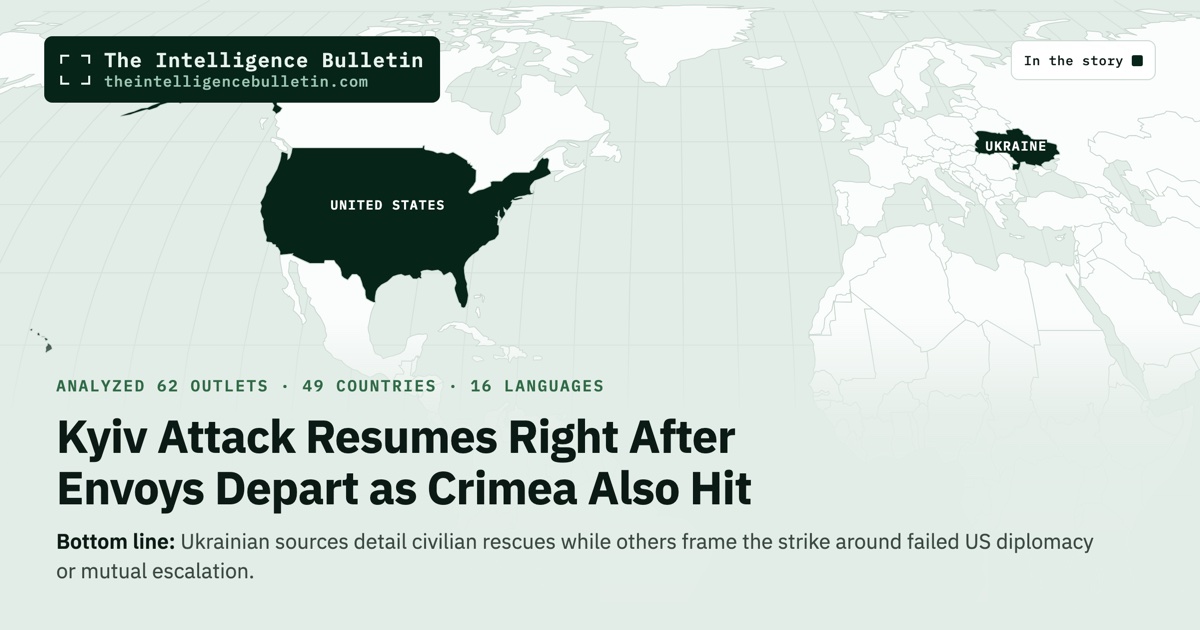
Ukrainian sources detail civilian rescues while others frame the strike around failed US diplomacy or mutual escalation.
The reporting converges on the timeline of a Russian strike on Kyiv immediately after US envoys departed, yet diverges sharply in emphasis. Ukrainian outlet TSN centers local rescue operations and civilian rescues in damaged districts, grounding the story in immediate human cost without diplomatic framing. RFE/RL ties the resumption directly to the envoys’ exit, underscoring the failed pause. Daily Sabah alone pairs the Kyiv attack with Ukrainian strikes on Crimea, presenting mutual escalation. SCMP and RTÉ, drawing from AFP, stress the pause’s link to the Trump envoys and note casualties. No selected source carries Russian domestic framing; statements from Moscow appear only through Ukrainian or Western relays. This pattern shows how proximity to the event shifts focus from diplomacy to damage, while distance allows balance with Ukrainian counter-strikes. The absence of independent Russian-origin reporting in the set leaves Moscow’s military claims unexamined beyond Ukrainian rebuttals.
Full analysis
On the morning of September 8 2026 explosions and fires spread through at least five districts of Kyiv after Russia launched dozens of ballistic and cruise missiles together with more than 160 drones. The strike followed a three-day halt in attacks on the Ukrainian capital that Russian President Vladimir Putin had ordered for the visit of US envoys Steve Witkoff and Jared Kushner. The envoys had met Putin in Moscow on the preceding Saturday before traveling to Kyiv for talks with President Volodymyr Zelenskyy. Ukrainian air-defense forces reported downing 142 drones and 31 of 32 cruise missiles while two ballistic missiles got through. At least two people died and between six and sixteen others suffered wounds according to Kyiv officials and emergency services. Rescue teams pulled survivors from damaged apartment blocks and extinguished fires that reached garages shops and a five-storey residential building in the Solomianskyi district.
Russian Defense Ministry statements carried in several accounts described the targets as military-industry sites storage facilities for drones and cruise missiles and logistics centers in Kyiv and the surrounding region. Ukrainian accounts instead stressed damage to residential buildings a 26-storey non-residential structure and civilian infrastructure across multiple districts. The Kyiv City Military Administration reported at least sixteen locations affected. One resident described the noise on the left bank as brutal after sleeping through the previous two nights while the envoys were in the city. Emergency workers from the State Emergency Service rescued thirteen people from rubble and blocked apartments and treated six initial casualties.
The same night a Ukrainian strike on occupied Crimea killed two people and wounded one according to the peninsula’s Russian-installed governor Sergei Aksyonov. Daily Sabah alone among the selected reports included this counter-action as part of the end to the lull. Ukrainian Foreign Minister Andrii Sybiha called the Kyiv attack horrific and accused Putin of undermining the US diplomatic effort with ballistic missiles that struck residential buildings. Zelenskyy described the assault as deliberately complex involving anti-ship missiles and Shahed drones in addition to the ballistic and cruise weapons. The Russian-installed authorities in Crimea framed their losses as civilian deaths from the Ukrainian response.
The pause itself had been announced after Putin met the envoys and after Witkoff described the Moscow discussions as constructive. Kushner spoke of a broader peace package under consideration. Zelenskyy called the Kyiv meetings very substantial and expressed openness to trilateral talks. No breakthrough emerged from the visits and the Kremlin maintained its position on eliminating what it called the root causes of the conflict. National-security advisers from Britain France and Germany joined part of the Kyiv discussions. Witkoff had met Putin eight times since the start of 2025 while this trip marked the first White House envoy visit to Kyiv under the current US administration.
The selected reports converge on the basic sequence of a Russian strike on Kyiv hours after the envoys departed yet they diverge in the weight each places on different elements. TSN the Kyiv outlet foregrounded footage from the State Emergency Service showing rescue operations across five districts and the extraction of thirteen people from damaged buildings. It placed the human cost of blocked apartments and spreading fires at the center without reference to the diplomatic timeline. Radio Free Europe/Radio Liberty by contrast opened on the timeline linking the attack directly to the envoys’ exit and noted that the pause had been the first in near-daily strikes over the preceding week. It incorporated statements from the Russian Defense Ministry on military targets alongside Ukrainian descriptions of civilian damage.
Daily Sabah alone carried the Ukrainian strike on Crimea that killed two people there and presented the night as mutual escalation after the three-day lull. The report drew from Associated Press copy that included both Russian and Ukrainian official statements on the respective targets. South China Morning Post and RTÉ both relayed wire material that stressed the resumption after the pause for the Trump envoys and recorded the death toll of two in Kyiv. Neither included the Crimea counter-strike or the detailed local rescue counts that appeared in the Kyiv reporting.
No selected source originated from a Russian domestic outlet. Moscow’s military claims therefore reached readers only through Ukrainian or Western relays that also carried rebuttals emphasizing civilian sites. The pattern reveals how proximity shapes emphasis: the single Ukrainian source in the set stayed inside the immediate physical consequences while outlets farther from the event foregrounded the diplomatic trigger or added the reciprocal strike on Crimea. The absence of independent Russian-origin reporting leaves the Defense Ministry’s list of military targets unexamined against the Ukrainian accounts of residential damage within the same set.
What to Watch
The accounts that place the strike inside the larger diplomatic and regional frame come closest to the fuller picture because they rest on the corroborated sequence of the pause the envoys’ movements and the timing of the attack across four of the five sources. The single-source claim of Ukrainian casualties in Crimea stands apart and cannot be weighed against other reporting chains here. Ukrainian outlets have an interest in foregrounding civilian toll to sustain international pressure while wire services balance that emphasis with the diplomatic context their readers follow. The pattern suggests continued exchanges of long-range strikes will test whether the recent envoy contacts produce any de-escalation before winter energy infrastructure again becomes a primary target.
That’s how the world told the story.
Get our daily open-source intelligence on world events in your inbox — one email a day, up to six stories.
Subscribe freeNo spam. One-click unsubscribe. See the latest email →