 AI-generated analysis published under the editorial responsibility of Rohit Sinnas. How it works →
1Iran Ties Nuclear Inspections to Final Deal as U.S. Warns Talks Could Collapse
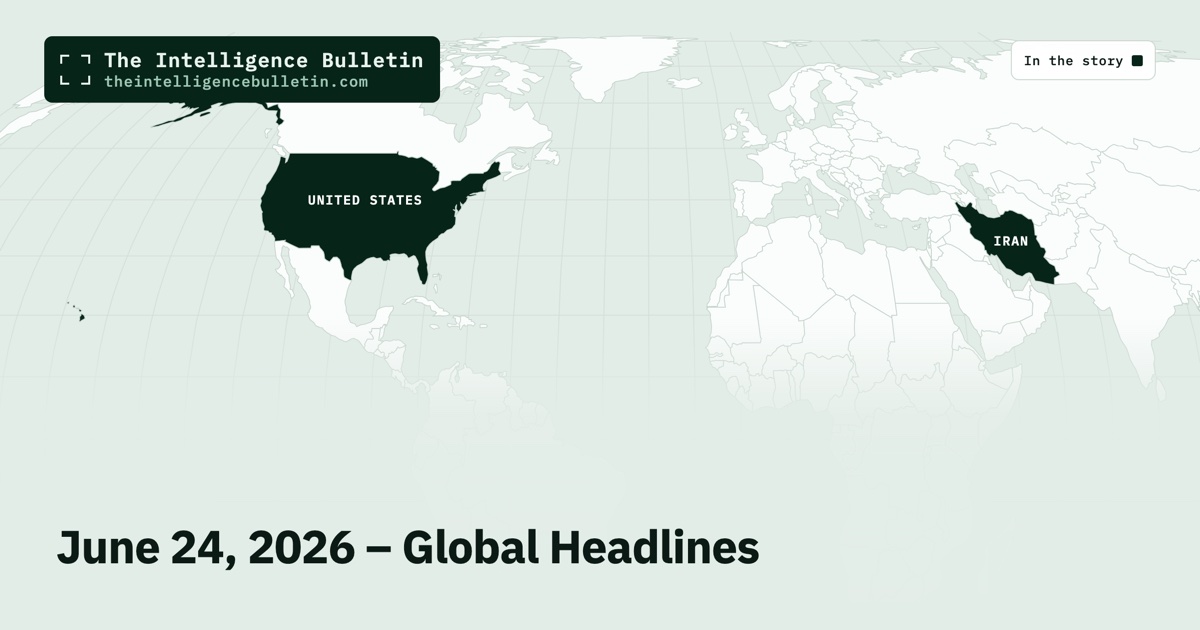
The Iranian diplomat’s blunt rejection of IAEA assurances cuts to the core of the standoff: Tehran views inspections not as a near-term deliverable but as leverage tied to a completed deal. The Leader Telegram’s AP dispatch leads with this rebuttal, underscoring Iran’s insistence on sequencing that protects its position before any further concessions. In contrast, Middle East Eye’s live update highlights Grossi’s press conference pledge that inspections “will indeed take place” soon, framing the story around procedural progress under the interim accord rather than the dispute. Merkur.de, drawing on Washington Post reporting, casts the episode as bilateral escalation between Trump and Tehran, detailing Vance’s milestone claim, Iran’s counter on damaged sites and escrow funds, plus side disputes over missiles and Lebanon stabilization. This German lens places the inspection row inside a wider pattern of contradictory statements that risk derailing the 60-day talks. The shared factual backbone—Vance’s assertion, Iran’s denial, Grossi’s timeline—reveals a U.S.-Iranian interim accord already straining under mismatched expectations on verification timing and fund oversight, with each outlet foregrounding the actor whose stance best fits its audience’s regional priorities.
2Nigerian coverage splits on whether US ISIS sanctions strengthen ties or expose vulnerabilities
Nigerian coverage of the latest US sanctions on local bureaux de change for ISWAP financing reveals a telling split inside one country rather than across borders. This Day and its AllAfrica repost frame the move as evidence of deepening Washington-Abuja ties that give Nigeria new tools against Lake Chad terrorists while also warning that informal finance remains vulnerable. Leadership.ng instead opens with the designations raising concern among security experts about Nigeria’s already battered international image and the need to prosecute the named individuals to restore partner trust. This Day itself balances the sanctions description with National Security Adviser Nuhu Ribadu’s remarks on shared threats and practical cooperation with the UK and US. The common factual core across all three pieces is identical: names addresses passports and the precise role of the three BDCs as conduits. What differs is whether the story is told as an opportunity to tighten an existing partnership or as fresh proof that terrorist financing networks still reach into Nigeria’s financial system. That internal contrast underscores how even aligned governments weigh the same sanctions differently depending on whether the emphasis falls on joint success or domestic exposure.
3US sanctions GAESA military firms and Castro in-law to choke regime revenue
The sanctions announcement drew near-universal factual agreement across outlets but sharp tonal splits emerged in how the targeting of GAESA and the Castro family was contextualized. Ecuador’s Expreso reported the designations with clinical precision naming the specific GAESA-linked financial and logistics arms plus mining and steel firms and the family member without editorial overlay. Cuban state-aligned coverage instead opened with Havana’s accusation of a crime against the Castro environment while the opposition Diario de Cuba shifted blame squarely onto Marco Rubio as the personal architect. This convergence on the who and what reveals the story’s core as a deliberate escalation of pressure on military-run economic pillars that control significant Cuban GDP yet the framing fault line tracks domestic political utility: neutral Latin American reporting treats it as another chapter in US-Cuba economic isolation while Cuban voices weaponize the personal element to rally against Washington. The result underscores how sanctions on GAESA continue to serve as both policy lever and propaganda flashpoint with foreign investors now explicitly warned to vet ties to Havana.
4Indian Coverage Treats Iran’s Funeral Invitation to Modi as Standard Protocol After US Peace Deal
Indian coverage treats the invitation as a straightforward diplomatic courtesy extended by Pezeshkian amid post-war stabilization. Every outlet supplies the same core facts drawn from Tehran sources: the July timeline, the locations tied to Khamenei’s life, and the expected scale of mourning that could rival Khomeini’s 1989 funeral. The shared decision to embed the invitation inside the wider US-Iran peace agreement and the questions surrounding Mojtaba Khamenei’s health shows how New Delhi’s press sees the event through the lens of regional realignment rather than internal Iranian succession drama. Minor headline differences—newsx.com pairing the invitation with the ceremony announcement, indiatvnews.com foregrounding the exact July 5-9 window, businesstoday.in keeping the sources phrasing tight—do not alter the underlying consensus that this is a low-stakes protocol move for India at a moment when energy markets and West Asia security are settling after months of conflict. No outlet speculates on Modi’s attendance or links the gesture to India’s energy imports or Chabahar port interests; the uniformity itself signals that Indian editors view the story as confirmation of continued bilateral contact rather than a pivot point.
5Moscow and Minsk to Confer on Zelensky’s Drone-Equipment Deadline
Both the Romanian and Serbian reports open with the same core Kremlin message: Zelensky’s deadline for Minsk is an unacceptable threat to Belarusian independence, yet Moscow expresses full confidence that Minsk can handle it alone. The shared detail that Putin and Lukashenko will address the matter directly in coming days underscores the personal channel between the two leaders rather than any institutional response. Romanian coverage lingers on the technical specifics of the relay systems mounted on communication towers that enable Shahed drone navigation near the Belarus border, reflecting Bucharest’s longstanding focus on sovereignty violations in the neighborhood. Serbian reporting adds context on Belarus’s repeated public refusals to send troops into Ukraine while still hosting Russian nuclear weapons, framing the episode as another test of how far Minsk will be drawn into direct confrontation. The near-identical sourcing from Kyiv Independent and the matching condemnation language reveal that outlets in Bucharest and Belgrade are reading the same signals from Moscow about alliance management. What stands out is the absence of any speculation about escalation or Ukrainian follow-through; both pieces treat the ultimatum primarily as a diplomatic probe that Russia is already channeling back into the Putin-Lukashenko relationship.
That’s how the world told the story.
Get our daily open-source intelligence on world events in your inbox — one email a day, up to six stories.
Subscribe freeNo spam. One-click unsubscribe. See the latest email →