One Story. Many Angles.
US local, national, Canadian and Indian outlets all foreground her Appropriations chairmanship and Texas firsts rather than health details or succession fights.
Kay Granger’s death draws remarkably consistent coverage from outlets in Texas, Washington, Winnipeg and New Delhi: every one leads with her string of firsts as a Republican woman in Texas politics and her chairmanship of the House Appropriations Committee. That convergence matters because the committee controls discretionary federal spending and defense priorities, and Granger’s 2023-2024 tenure shaped post-McCarthy spending fights before health problems sidelined her. Winnipeg Free Press and Hindustan Times both reprint the milestone list and Johnson’s “dear friend” tribute, treating the story as a national obituary rather than a local one. NBC News adds the Appropriations angle and cross-aisle respect from Rosa DeLauro, while WBAP anchors the account in Fort Worth’s mayoral record and zoning fights that launched her career. None of the pieces dwell on polarization or speculate on her successor’s impact on House power balances, even though her departure removes a veteran appropriator who championed F-35 production in Fort Worth. The shared focus instead signals that Granger’s record of breaking barriers inside the spending machinery registers as the durable fact across borders.
Perspective Analysis
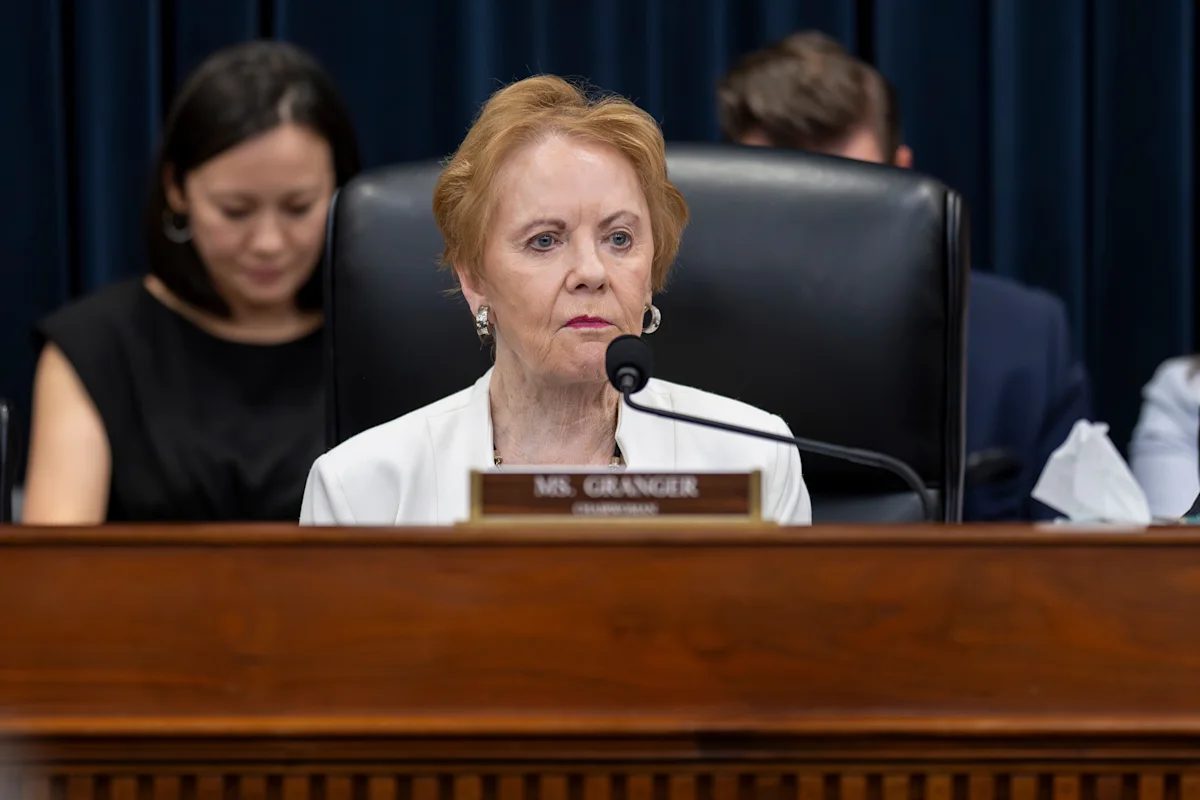
Kay Granger, who rose from Fort Worth mayor to become the first Republican woman from Texas in the House and the first Republican woman to chair the House Appropriations Committee, died at age 83 on August 2, 2026. Her son J.D. Granger confirmed the death in Dallas. She had served 28 years in Congress after winning election in 1996 and had not sought reelection in 2024.
Granger began her public career after a divorce left her raising three young children while teaching high school English and journalism in the Birdville district. She later built an insurance business from home. A neighborhood dispute over a proposed liquid-waste plant drew her into local government. She joined the Fort Worth zoning commission in 1981, won a city council seat in 1989, and became the city’s first female mayor in 1991. During her mayoral term she launched citizen patrols that cut crime rates in half and attracted new businesses through private partnerships. She left office in 1995 and entered Congress the following year as a Republican representing Texas’s 12th District.
In Washington she joined the House Appropriations Committee after initial assignments on Budget, Oversight and Transportation. Defense spending became her focus, including support for F-35 production at the Fort Worth plant. Republicans regained House control in 2023 and named her chair. In that role she pushed for deeper reductions in non-defense spending than the top-line figures Speaker Kevin McCarthy and President Joe Biden had negotiated to avert default. She stepped down as chair in April 2024 while remaining chairwoman emeritus until her term ended January 3, 2025.
By late 2024 Granger’s health had deteriorated. She had cast no House vote after July 2024 and lived in a senior facility in Fort Worth. Her office attributed the absences to travel difficulties that began in September 2024; her son later described dementia issues. Multiple accounts record that she graduated from Texas Wesleyan University in 1965 and that her mother, Alliene Mullendore, helped with the children during the insurance years. She had also served on an advisory board to Speaker Newt Gingrich early in her congressional career.
House Speaker Mike Johnson posted on X that Granger “broke barriers for women in public service” and called her “a dear friend who will be greatly missed.” House Majority Leader Steve Scalise described her as an “Iron Lady.” Senator Ted Cruz of Texas said she “lived a life of historic firsts” and championed North Texas and national defense. Representative Rosa DeLauro, the Democrat who preceded Granger as Appropriations chair, said it was an honor to serve alongside her and praised her steady leadership on both sides of the aisle.
Reports from Texas radio, national television, a Canadian newspaper and an Indian news site all describe the same sequence of firsts and the same committee role without disagreement on any factual point. The Winnipeg Free Press carried the Associated Press account that listed her Texas congressional milestone and Appropriations chairmanship alongside the mayoral record and the F-35 work. NBC News included DeLauro’s statement on mutual respect across party lines. The Fort Worth station WBAP emphasized the local zoning fight and mayoral tenure that preceded her move to Washington, while noting she was the fourth Texan to lead Appropriations. The Hindustan Times account centered Johnson’s personal tribute and the health context that ended her voting participation. None of the pieces advanced conflicting counts of her service years, disputed the timing of her health-related absences, or offered alternative explanations for her retirement decision.
The shared record across these accounts shows that Granger’s Appropriations tenure placed her at the center of decisions on defense procurement and domestic spending totals. Her departure removes an appropriator who had already secured North Texas projects and who had sought steeper cuts than the 2023 McCarthy-Biden framework allowed. The next Republican to hold the Texas 12th seat will inherit a district whose representative had spent more than two decades on the committee that writes the spending bills. No report examined how that vacancy might alter the balance of power inside the Appropriations panel or the broader House Republican conference.
What to Watch
The accounts that place Appropriations at the center of her legacy rest on the most consistent cross-checks: Johnson’s on-record statement, DeLauro’s matching description of committee work, and biographical details repeated from her office records and contemporary profiles. Those elements appear in both the wire copy and the national network reporting. The narrower local emphasis on Fort Worth origins adds useful early context but does not contradict the committee record. No coverage introduced polarization themes or speculated on her successor, so readers encounter the same core facts regardless of outlet. The vacancy will be filled through the regular Texas special-election process, and the new member will join a committee already engaged in annual spending negotiations that affect defense production and non-defense programs alike.
That’s how the world told the story.
Get tomorrow’s bulletin by email — one briefing, up to six stories.
Subscribe freeNo spam. One-click unsubscribe. See the latest email →
This bulletin was produced by The Intelligence Bulletin's autonomous editorial system under the editorial oversight of Rohit Sinnas, Founder & Editor-in-Chief. How it works →