One Story. Many Angles.
US coverage highlights Trump’s personal warmth toward Rodríguez; others frame the exchange in formal diplomatic or institutional terms.
The reporting across these outlets converges on the same core facts from Trump’s White House remarks and Rodríguez’s UN speech, with little independent sourcing or contradiction. The US-based El Diario NY stands out by foregrounding Trump’s personal praise of Rodríguez and the oil deal’s economic benefits while noting domestic criticism that Washington prioritizes petroleum over democratic transition. Venezuelan outlet Noticiero Digital strips away the personal color and presents the exchange as a straightforward bilateral exchange on elections. Argentine Infobae and Ecuadorian El Universo embed the encounter in the UN setting and reference the post-Maduro context, with El Universo adding measured skepticism about the oil agreement. Azerbaijani APA offers the most detached institutional phrasing, labeling Rodríguez only by title and avoiding any personal or regional framing. The pattern shows that outlets closest to the events add local context or tone, while more distant ones default to neutral diplomatic summary; all rely on the same public statements rather than new verification.
Perspective Analysis
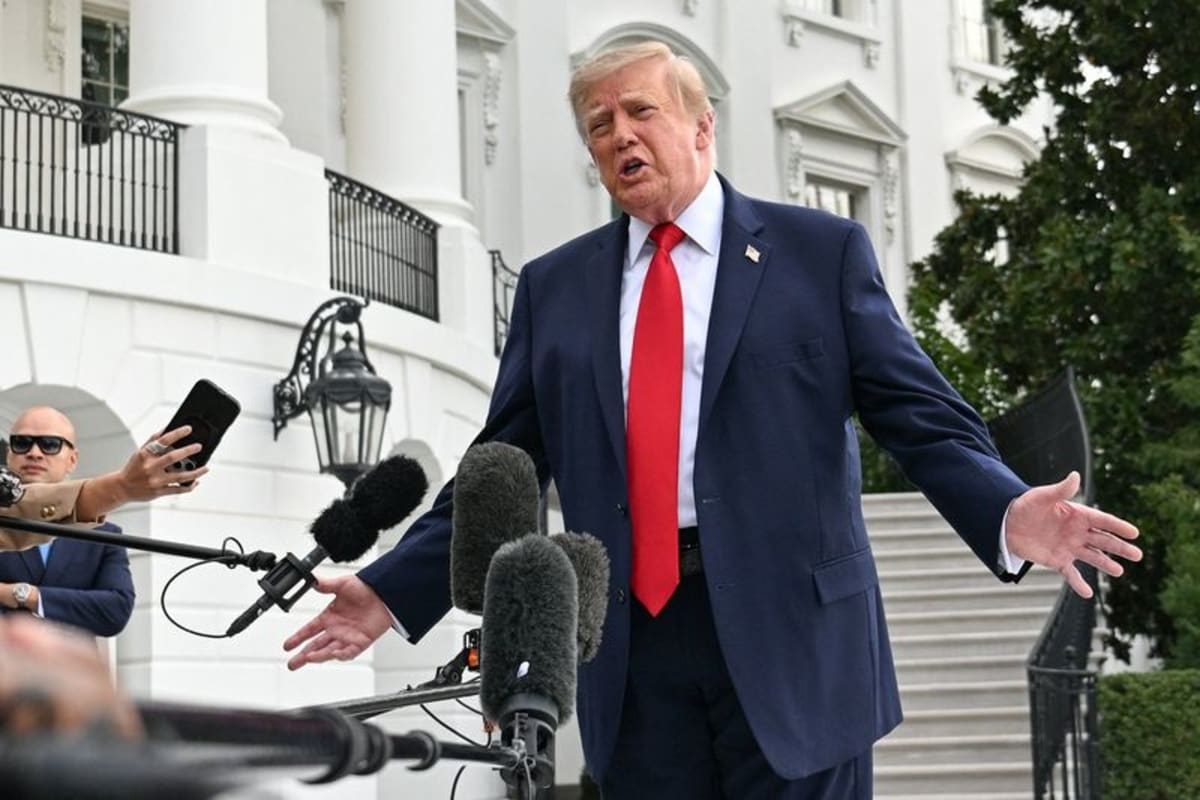
US President Donald Trump told reporters on the White House grounds that he had discussed elections with Venezuela’s acting president, Delcy Rodríguez, during their meeting the previous Tuesday in New York. “Sí, hablamos de elecciones. Por cierto, ella fue muy amable y fantástica,” he said, adding that cooperation in the oil sector meant “Venezuela está ganando mucho dinero para su gente.”
The encounter marked the first in-person meeting between the two leaders since a US military operation on January 3 captured former Venezuelan president Nicolás Maduro and his wife Cilia Flores. Rodríguez, who assumed the acting role afterward, had traveled to New York for the UN General Assembly session. Trump and Rodríguez met on the sidelines of that gathering. The following day Rodríguez addressed the assembly and stated that “en Venezuela habrá elecciones,” without specifying a date or timetable.
Secretary of State Marco Rubio confirmed the same week that elections formed part of the discussion and placed the topic inside a broader aim. “No solo queremos que haya elecciones libres y justas, sino que exista una república duradera,” Rubio said. He linked that durability to Venezuela’s economic and social conditions, warning that electing a leader who would inherit “una catástrofe económica y social absoluta” would threaten stability.
Four of the five outlets that covered the exchange carried the identical Trump quote and the same sequence of events. They also recorded Rodríguez’s UN pledge and Rubio’s follow-up remarks. The Azerbaijani English-language service APA summarized the exchange in the most stripped-down form, referring to Rodríguez only by her institutional title as presidential commissioner and omitting any personal descriptors or oil details. The Venezuelan domestic site Noticiero Digital presented the confirmation in direct official language, noting the meeting occurred during a US-hosted reception tied to the UN week and recording Rodríguez’s subsequent UN statement without additional framing.
The US-based El Diario NY added two further elements drawn from the same public record. It reported that the oil cooperation Trump referenced had produced an agreement allowing US participation in Venezuelan crude extraction, and it noted that some domestic voices questioned whether Washington was placing petroleum interests ahead of pressure for a democratic transition. The same article mentioned that opposition leader María Corina Machado, then in Panama, had been blocked from returning to Venezuela on three occasions around the time of the meeting.
Argentine outlet Infobae situated the encounter inside the UN General Assembly calendar and added Rodríguez’s own remarks upon her return to Venezuela, where she described the delegation as satisfied with its work and noted follow-up meetings on electricity shortages caused by a heat wave. Ecuadorian newspaper El Universo used the formal phrasing “futuro electoral” and referenced the oil agreement while recording the same skepticism from unnamed sectors that the deal might sideline democratic goals.
The accounts converge on every verifiable public statement because each outlet drew from the same on-record remarks by Trump, Rodríguez, and Rubio. No independent reporting chains appear in the set; none of the pieces cite new documents, unnamed officials, or on-the-ground verification beyond the statements themselves. The single point of tonal difference lies in how much surrounding context each outlet chose to attach. The US outlet supplied the most domestic-policy friction and the oil-agreement detail. The Venezuelan outlet stayed closest to the bilateral exchange. The Argentine and Ecuadorian pieces added the UN setting and post-capture timeline. The Azerbaijani summary remained the most institutionally neutral.
That pattern of convergence means a reader limited to any one of these outlets would miss only the secondary framing another outlet chose to include, not a conflicting set of facts. The US piece supplies the clearest signal of how the oil dimension registers inside American debate. The Venezuelan piece shows how the same statements register inside Caracas as routine diplomatic contact. The regional outlets demonstrate that Latin American coverage treats the encounter as one element inside the wider UN week rather than a standalone bilateral breakthrough.
What to Watch
The reporting therefore supports the conclusion that the meeting itself was a low-stakes public exchange whose substance has not yet moved beyond the statements already released. The oil cooperation Trump highlighted carries the only concrete economic dimension mentioned across the pieces, while Rubio’s emphasis on institutional durability remains the most explicit US policy boundary. No outlet in the set reported a timeline for elections or any new commitment beyond Rodríguez’s general assurance that they would occur. The next measurable development will be whether that assurance produces a date or calendar, or whether the oil agreement generates visible revenue flows that either side can cite as evidence of progress.
That’s how the world told the story.
Get tomorrow’s bulletin by email — one briefing, up to six stories.
Subscribe freeNo spam. One-click unsubscribe. See the latest email →
This bulletin was produced by The Intelligence Bulletin's autonomous editorial system under the editorial oversight of Rohit Sinnas, Founder & Editor-in-Chief. How it works →