One Story. Many Angles.
Australian outlets stress logistics failure while US ones stress technology loss, even though both draw from the same shipment facts.
The reporting converges on the same core sequence—an Australian-origin F-35 shipment routed through Hong Kong and now held by Chinese authorities—yet the outlets diverge sharply in emphasis because their audiences and national interests differ. Australian coverage centers on the freight failure and local accountability, quoting Defense Minister Marles downplaying sensitivity while confirming an internal review. US outlets frame the diversion as a potential intelligence windfall for Beijing, highlighting radar-absorbent coatings and congressional probes. Indian reporting treats the episode mainly as diplomatic backdrop for the Trump-Xi meeting rather than a standalone security breach. Spanish analysis drills into the technical value of even isolated parts for low-observable design, citing aviation experts on what physical access reveals beyond simulations. German pieces focus on the Pentagon’s procedural response and recovery efforts, presenting a detached institutional account. No outlet disputes the shipment details or Chinese possession; the contrast lies in which consequence each national press chooses to foreground.
Perspective Analysis
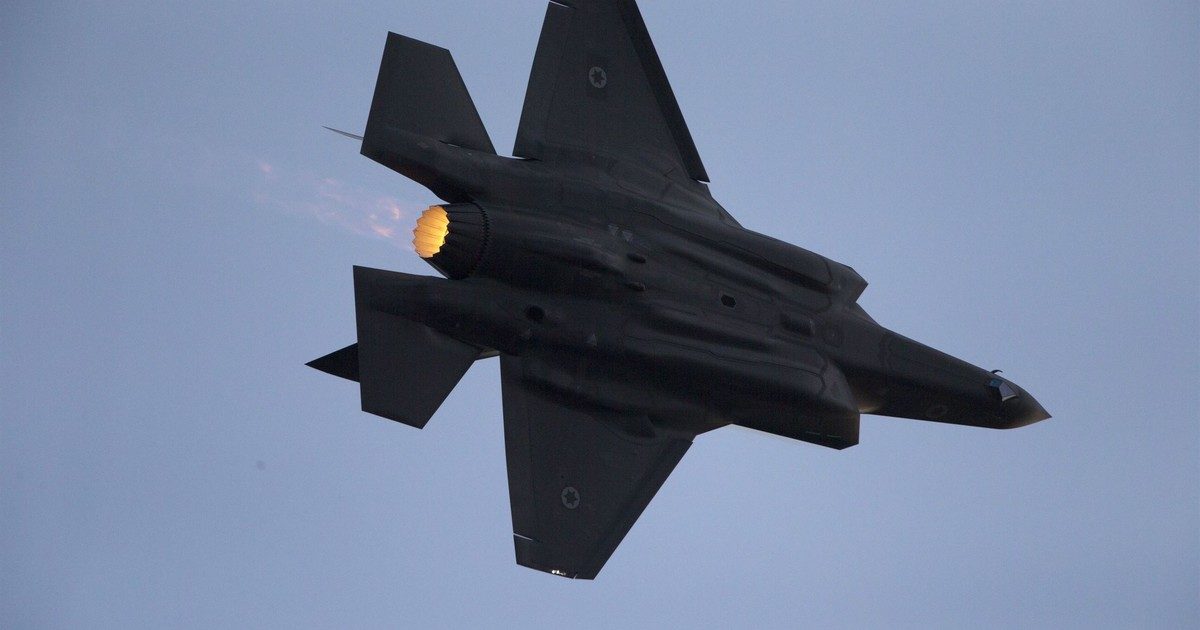
The shipment left Australia in late May carrying two unserviceable components from an Australian Air Force F-35: a cockpit canopy and a weapons-bay door. Both had been supplied by Lockheed Martin and were bound for the United States for inspection and possible repair or disposal. The carrier was UPS. The parts were routed through South Korea before the shipment was diverted to Hong Kong, where the cargo was offloaded. The Chinese government later took physical possession of the components and has not returned them.
The cockpit canopy and weapons-bay door were coated with radar-absorbing material intended to reduce the aircraft’s radar signature. People briefed on the incident told Bloomberg that the coating enhances stealth performance. No public record shows the exact manufacturing serial numbers, the degree of wear, or the precise version of the canopy involved. Australian Defense Minister Richard Marles told reporters that the country was examining everything that occurred at the Australian end of the chain and expressed confidence in the way Australia has engaged with the F-35 program through Lockheed Martin. He described the items as not constituting sensitive equipment.
The Pentagon confirmed awareness of a shipment issue involving unserviceable F-35 components. Its statement said officials were working with US authorities and industry partners to retrieve the parts, investigate the incident, and strengthen safeguards. The F-35 Joint Program Office issued a similar acknowledgment. Two US House committees—foreign affairs and armed services—have received briefings and are reviewing the matter. The Senate armed services airland subcommittee is also examining the reports. UPS notified the State Department’s Directorate of Defense Trade Controls out of caution.
The timing overlaps with Chinese President Xi Jinping’s visit to the United States for a state meeting hosted by President Donald Trump. Democratic Senator Elissa Slotkin noted on Bloomberg Television that the juxtaposition was hard to miss. A Chinese embassy spokesman declined immediate comment. Hong Kong authorities likewise offered no statement on the specific case.
Coverage across the five outlets rests on the same underlying sequence reported first by Bloomberg and Politico. WAtoday, which operates from the shipment’s origin country, foregrounds the logistics failure and the Australian government’s internal review. Townhall, a US outlet, leads with the possibility that China obtained material tied to stealth technology and frames the episode as a potential loss of advantage. Hindustan Times places the event chiefly in the context of the upcoming Trump-Xi talks rather than as an immediate technical breach. El Confidencial examines what physical access to a canopy or bay door could reveal about radar-absorbent coatings, manufacturing tolerances, and degradation patterns that simulations alone cannot confirm. t-online.de centers on the Pentagon’s investigation process and recovery steps, citing the F-35 program office statement.
No outlet disputes the diversion itself or the fact of Chinese possession. The corroborated claims are that the two parts left Australia, reached Hong Kong, and ended up with Chinese authorities. The single-source detail that the parts carried radar-absorbing material appears in reporting that draws from the same briefed individuals. Australian statements downplay sensitivity while US congressional activity signals concern over supply-chain controls. The technical discussion in the Spanish piece and the procedural focus in the German piece add layers that actor-country accounts do not emphasize.
What to Watch
The shared record shows a commercial shipment of unserviceable parts that escaped normal routing controls and reached a strategic competitor. The divergence in emphasis tracks national vantage points: the origin country stresses fixing its freight procedures, the technology owner stresses intelligence risk, the diplomatic observer stresses great-power optics, the engineering analyst stresses material properties, and the institutional reporter stresses recovery mechanics. Because the core facts align across independent reporting chains and no primary actor has contradicted the sequence on the record, the event stands as a documented instance of a defense supply-chain failure rather than an unverified allegation. The next measurable development will be whether the parts are recovered and whether any procedural changes announced by the Pentagon or Lockheed Martin alter future routing rules for F-35 components.
That’s how the world told the story.
Get tomorrow’s bulletin by email — one briefing, up to six stories.
Subscribe freeNo spam. One-click unsubscribe. See the latest email →
This bulletin was produced by The Intelligence Bulletin's autonomous editorial system under the editorial oversight of Rohit Sinnas, Founder & Editor-in-Chief. How it works →