One Story. Many Angles.
Outlets agree on the handover mechanics but split on whether it mainly serves Turkish anti-PKK aims or Iraqi sovereignty restoration.
The reporting shows a pragmatic bilateral deal resolving a decade-old sovereignty dispute over the Bashiqa base, with the handover explicitly conditioned on Iraqi security gains in Sinjar rather than a unilateral Turkish concession. Turkish coverage frames the step as advancing Ankara’s long-term goal of a PKK-free zone through coordinated disarmament, while Gulf and Qatari outlets emphasize Baghdad’s restored control and reduced foreign presence. European reporting highlights the move’s potential impact on counter-militia efforts and regional stability without dwelling on domestic Turkish politics. The Hong Kong source treats it as a brief power-balance adjustment. All independent accounts converge on the same joint statement details and timeline vagueness, with no contradictions emerging across the chains. The absence of Iraqi domestic reporting leaves the deal’s reception inside Iraq unvoiced, underscoring how the event reached global audiences primarily through Turkish, Gulf, Qatari, European and Asian lenses rather than the principal actor’s own press.
Perspective Analysis
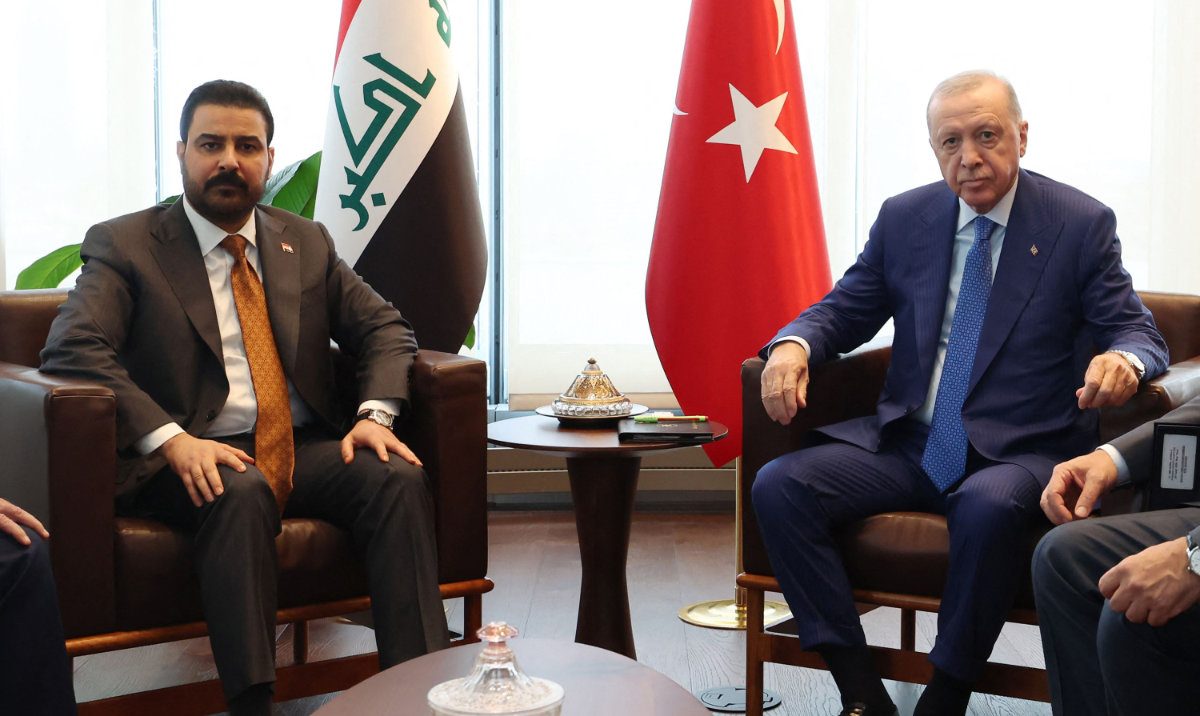
Turkish President Recep Tayyip Erdogan and Iraqi Prime Minister Ali Al Zaidi met on the sidelines of the United Nations General Assembly in New York on September 23. Their joint statement announced that Turkish forces would gradually hand over the Bashiqa-Zilkan military camp in northern Iraq to the Iraqi federal government. The transfer depends on Iraqi progress in establishing full state authority in the Sinjar district and ending the presence of outlawed foreign armed elements there. The same statement recorded agreement to deepen security cooperation between the two countries and to speed up work on the Development Road project linking Iraq to Europe through Turkey.
The Bashiqa-Zilkan camp sits northeast of Mosul in Nineveh province. Turkey established it in late 2015 under an agreement with the Kurdistan Regional Government to train local forces against Islamic State fighters who had seized Mosul the previous year. Iraqi authorities at the time viewed the deployment of several hundred Turkish troops as a violation of sovereignty. The base later faced attacks, including one in 2017 by Islamic State and another in 2021 by Iran-backed groups. Turkey continued to use the site to coordinate operations against the Kurdistan Workers’ Party, or PKK, whose fighters have maintained positions across the border in Iraq.
The September 23 announcement ties the camp handover to recent Iraqi moves in Sinjar. Iraqi officials have reported steps to bring armed structures in the district under central control and to collect weapons. The joint statement does not name any specific group but refers to outlawed foreign armed elements, a phrasing that Turkish domestic reporting links directly to the PKK and its affiliates. No timetable for the transfer appears in the statement; the document says only that the handover will follow an agreed mechanism and schedule once Iraqi security measures advance.
The five outlets that published accounts of the announcement all drew from the same joint statement. They agree that the leaders discussed bilateral trade and investment in addition to security. Four of the five also record the commitment to accelerate the Development Road project. The accounts differ mainly in the weight each places on the Sinjar clause and the historical background of the base.
Turkish reporting from Haberler presents the decision as a concrete step toward Ankara’s stated goal of a region without PKK structures. It describes the base as having served since 2015 as a coordination point for Turkish operations against the group and notes that the transfer is framed in Ankara as contingent on visible disarmament progress by PKK elements inside Iraq. The piece situates the move inside a longer sequence of Turkish-Iraqi security talks that began in 2022 and includes reference to a 2024 military cooperation memorandum that had already shifted some base management functions to Iraqi forces.
The National, published in the United Arab Emirates, foregrounds the stabilizing effect for northern Iraq and the reduction of a Turkish military presence that had long been a point of friction with Baghdad. It notes the original 2015 deployment and the sovereignty dispute that followed, then presents the current agreement as part of wider efforts to consolidate state control. The account also records the leaders’ agreement on trade and the Development Road without additional emphasis on PKK disarmament timelines.
Al Jazeera’s English service stresses the restoration of Iraqi federal authority over northern areas and the potential easing of tensions with Kurdish groups. It links the Sinjar provisions to recent Baghdad efforts to assert control along the border zone and describes the base transfer as addressing a longstanding flashpoint between neighbors. The piece places the agreement inside a context of cross-border operations that had previously targeted PKK positions in Sinjar.
Die Zeit, drawing on agency material, highlights the strategic location of the base near Mosul and its implications for counter-militia efforts in Sinjar. It notes the presence of Yazidi armed groups in the district and recent Iraqi announcements that some of those groups had agreed to disarm. The German account frames the transfer as a response to Iraqi security advances rather than a unilateral Turkish move.
The South China Morning Post carried a concise agency dispatch that records the handover announcement and the meeting in New York but adds little further context or interpretation.
No Iraqi domestic outlet appears among the published accounts. The event therefore reached international readers through Turkish, Emirati, Qatari, German and Hong Kong reporting chains, none of which originated inside Iraq itself. The joint statement supplies the only primary text available across all five pieces.
The core factual spine of the story holds across every independent reporting chain: the leaders met, the statement was issued, the handover is described as gradual and conditional on Sinjar measures, and additional cooperation on security and the Development Road project is recorded. No outlet contradicts another on these points. Differences appear only in emphasis. Turkish coverage supplies the most detailed domestic security rationale for the timing. Gulf and Qatari accounts foreground Iraqi sovereignty gains. European reporting adds context on militia disarmament in Sinjar. The shortest account offers no distinctive framing at all.
What to Watch
The corroborated joint statement provides the strongest warrant for what actually occurred. Turkish domestic framing supplies useful context on Ankara’s stated objectives but does not alter the conditional, bilateral character of the deal. The absence of Iraqi domestic reporting leaves open how the agreement is presented to Iraqi audiences, yet the statement itself was issued jointly and carried in outlets from multiple countries. The next observable steps will be whatever Iraqi security measures in Sinjar are announced next and whether any public schedule for the base transfer follows.
That’s how the world told the story.
Get tomorrow’s bulletin by email — one briefing, up to six stories.
Subscribe freeNo spam. One-click unsubscribe. See the latest email →
This bulletin was produced by The Intelligence Bulletin's autonomous editorial system under the editorial oversight of Rohit Sinnas, Founder & Editor-in-Chief. How it works →