One Story. Many Angles.
Pakistani accounts justify the strikes as self-defense while Afghan reports stress civilian deaths and deny launching drones.
Pakistani reporting presents the strikes as a calibrated, proportionate response to a deliberate violation of sovereignty by drones launched from Afghan territory, with Information Minister Attaullah Tarar explicitly tying the action to prior warnings about terrorist sanctuaries. Afghan coverage, by contrast, centers on civilian casualties and political condemnation, with former President Karzai calling for a policy of good neighborliness and Taliban officials warning the attacks will not go unanswered. International outlets such as Al Jazeera note mutual accusations and Taliban denials of drone involvement without endorsing either narrative, while Dutch reporting highlights the confirmed death toll and European concern over civilian impact. Indian coverage adds regional context on how the escalation threatens mediation by China, Turkey, Qatar and Saudi Arabia and links the incident to broader instability from TTP activities. The most revealing pattern is not outright contradiction on the fact of strikes but the consistent choice of framing: Pakistani sources emphasize self-defense and prior provocations, Afghan sources stress unprovoked aggression and human cost, and neutral outlets surface both without resolution, underscoring how each side leverages the event to advance its longstanding position on border security and militancy.
Perspective Analysis
Pakistan carried out precision aerial and drone strikes on ten locations inside Afghanistan in the early hours of September 24, according to Pakistani Information Minister Attaullah Tarar. The targets, he said, were sites used for launching and storing drones that had entered Pakistani airspace the previous day from Afghan territory. Tarar described the action as a deliberate, calibrated and proportionate exercise of self-defense, limited to military objectives directly linked to the attempted attacks. Pakistani security sources reported that eight rudimentary drones had been shot down before they could reach targets near the Torkham border area and in mountainous terrain near Kohat.
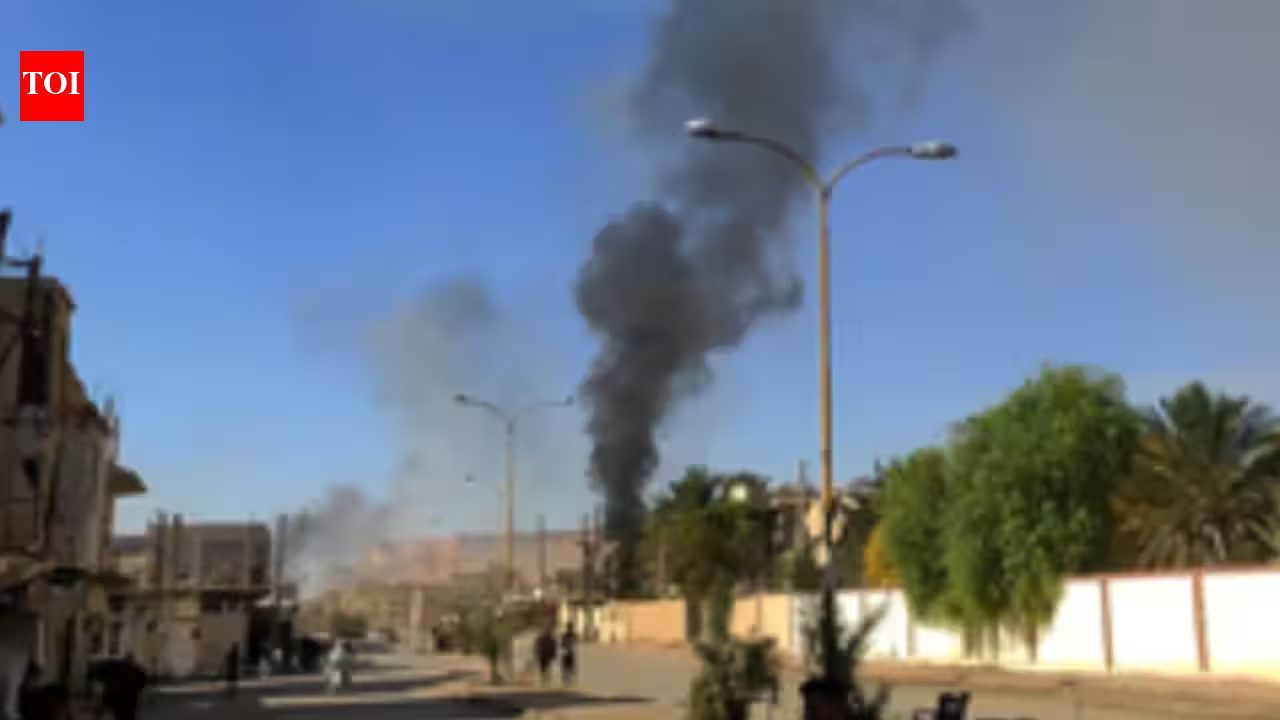
Afghan Taliban spokesman Zabihullah Mujahid stated that four civilians were killed in the strikes, which hit areas in the provinces of Khost, Kandahar and Paktia. Mujahid condemned the attacks as aggression and warned they would not go unanswered. Former Afghan president Hamid Karzai issued a separate condemnation, urging Pakistan to abandon what he called a negative policy and instead pursue good neighborliness. Local reports cited by Afghan outlets placed the strikes in southeastern and southern provinces, with one resident in Kandahar describing hearing a jet followed by a large explosion and fire in the city center.
The September 24 strikes followed a series of recent incidents that had already raised tensions. Days earlier, a suicide bombing and gun battle at a police compound in Pakistan’s Kohat district killed at least 21 people, an attack claimed by a faction of the Tehrik-e-Taliban Pakistan. Pakistani officials linked that violence and subsequent border incidents to militants operating from Afghan soil. On September 21, Pakistan had conducted calibrated air strikes against hideouts near the Afghan border after other attacks in Khyber Pakhtunkhwa, reporting 28 militants killed while Afghan authorities said three civilians died in Kunar province. Those earlier strikes had already drawn formal Afghan protests.
Tarar tied the latest operation to years of Pakistani warnings about terrorist sanctuaries in Afghanistan. He said the Afghan Taliban regime had chosen to escalate through hostile drone operations rather than take verifiable action against groups using its territory. Pakistani accounts noted that the September 23 drone incursion came after an attempted cross-border infiltration near posts in Paktia and Nangarhar provinces, which Pakistani forces said they thwarted before Afghan Taliban positions responded with mortar fire. All eight drones were neutralized, according to Islamabad, with no damage reported inside Pakistan.
Al Jazeera reported that Taliban officials denied their government had launched any drones against Pakistan on September 23. The outlet noted that the strikes occurred in several areas of Khost province, where a local governor’s spokesman said there were no casualties, while a resident account from Kandahar described an explosion in the city. The same report placed the event in the context of strained relations since February, when the two sides fought their worst clashes in years after Pakistan accused Kabul of harboring militants.
Dutch reporting from NOS confirmed the strikes on ten sites and recorded the Afghan claim of at least four deaths, describing Pakistani officials as targeting military objectives such as drone launch and storage locations. It placed the incident against the backdrop of a recent police-complex attack in Pakistan that killed dozens and was claimed by a TTP faction.
The Times of India detailed additional elements of the September 23 sequence, including Pakistani claims that Afghan Taliban forces provided support to infiltrating militants and later fired on border posts, prompting Pakistani artillery response. It linked the episode to broader instability from TTP activities and noted that the latest confrontation threatened ongoing mediation efforts involving China, Turkey, Qatar and Saudi Arabia.
Pakistani coverage, led by The Express Tribune, foregrounded official statements from Tarar that framed the strikes as a necessary response to repeated provocations and tied them to longstanding demands that Kabul dismantle militant networks. Afghan coverage, centered on Khaama Press, foregrounded Karzai’s call for civilized relations and Mujahid’s casualty count and condemnation, presenting the strikes as unprovoked violations of sovereignty. International outlets such as Al Jazeera and NOS recorded both the Pakistani justification and the Afghan casualty claim without resolving the dispute over whether drones had been launched. Indian reporting added the strategic dimension of threatened mediation and TTP connections but did not introduce new primary evidence on the September 23 drones or the September 24 casualties.
A reader limited to Pakistani outlets would conclude that the strikes were a proportionate reply to a clear violation and that prior warnings had gone unheeded. A reader limited to Afghan outlets would conclude that civilians were deliberately targeted in an act of aggression and that no drones had been launched from Afghan soil. A reader limited to neutral or third-country coverage would see mutual accusations standing in unresolved tension, with the core fact of the strikes corroborated across multiple independent chains while the casualty figure and the drone-launch denial each rest on a single reporting chain.
The corroborated elements—the conduct of strikes on ten sites and the Pakistani assertion of prior drone incursions—rest on statements from Tarar and security sources carried by The Express Tribune, Al Jazeera and the Times of India. The four-civilian-death claim originates with Mujahid and appears in Khaama Press and NOS. The Taliban denial of drone launches appears in Al Jazeera and the Times of India. No independent verification of any disputed element is offered by any outlet in the set.
Pakistan has a clear interest in presenting the strikes as defensive and limited, because that framing supports its repeated demands for verifiable Afghan action against groups it holds responsible for attacks inside Pakistan. Afghanistan has a clear interest in highlighting civilian casualties and denying any drone activity, because that framing portrays Islamabad as the aggressor and deflects pressure over militant sanctuaries. The mediation efforts cited by the Times of India carry their own stake in containing the escalation, yet the reporting shows no new diplomatic initiative launched in direct response to this specific round of strikes.
What to Watch
The pattern that emerges from reading all five accounts together is that the two governments continue to advance incompatible narratives about the same sequence of events, with each side’s domestic and aligned press reinforcing its preferred version. The civilian toll remains the most weakly attested element, resting on a single official Afghan statement, while the fact of the strikes and the Pakistani claim of incoming drones appear in multiple independent reporting chains. Absent new evidence from either capital or from the mediators, the immediate risk is further tit-for-tat exchanges along the border that could draw in the very third parties now attempting to broker calm.
That’s how the world told the story.
Get tomorrow’s bulletin by email — one briefing, up to six stories.
Subscribe freeNo spam. One-click unsubscribe. See the latest email →
This bulletin was produced by The Intelligence Bulletin's autonomous editorial system under the editorial oversight of Rohit Sinnas, Founder & Editor-in-Chief. How it works →