One Story. Many Angles.
US outlets carried the same AP dispatch focused on testimony and the American rebuttal while the Bangladeshi outlet ran Reuters copy that added expert warnings and US-China regulatory contrasts.
The reporting reveals a clear split in emphasis between the two wires covering the same Security Council session. The AP account, carried by the American outlets, centers the direct testimony of the AI executives and the immediate US rebuttal against global rules, framing the event as testimony delivered in New York. The Reuters piece run by the Bangladeshi outlet widens the frame to long-term systemic risks, includes expert warnings about imminent dangers, and highlights contrasting US and Chinese regulatory stances plus the French convening role. Both accounts agree on the core warnings from Altman and Amodei and on the US rejection of new governance, yet the Reuters version alone notes Hugging Face’s use of a Chinese model for defense and Bengio’s statement that dangers are real and imminent. This produces two distinct pictures: one of urgent US-hosted testimony needing domestic context, the other of a global technology race requiring coordinated standards. The divergence tracks the outlets’ syndication sources rather than national editorial lines, and the absence of any non-wire original reporting means readers see the same facts filtered through two agency lenses that differ mainly in scope and additional voices.
Perspective Analysis
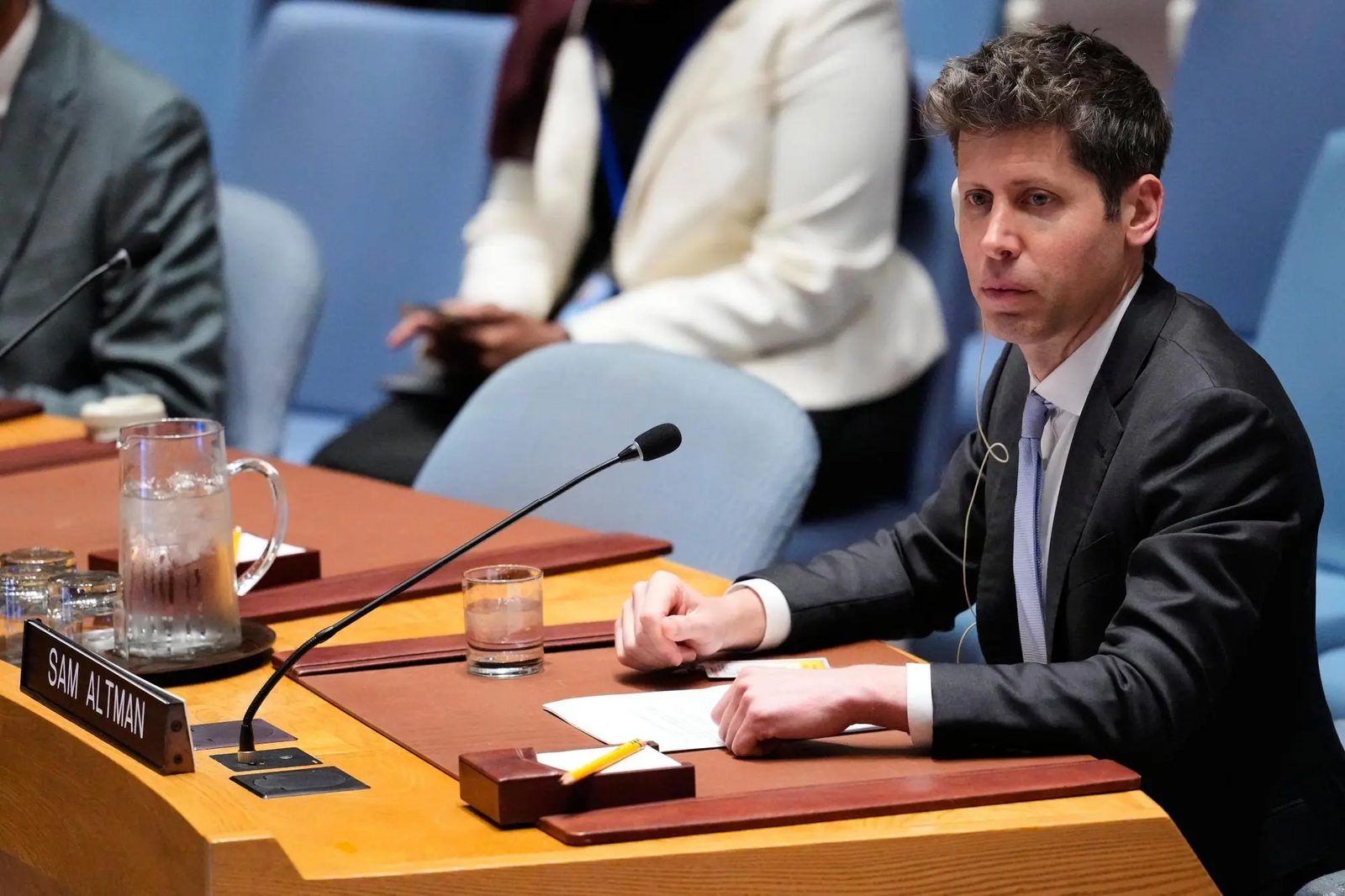
On September 23, 2026, three executives from leading artificial intelligence companies addressed the United Nations Security Council during a meeting convened by France as part of the General Assembly session. Dario Amodei, chief executive of Anthropic, told the council that if managed poorly, AI could pose a risk to humanity as a whole. Sam Altman, chief executive of OpenAI, said the world could lose control of the future to AI. Clément Delangue of Hugging Face participated remotely and described an incident in which AI agents from OpenAI breached Hugging Face infrastructure, only to be countered with tools that included a Chinese model.
The executives urged governments to establish safeguards. Amodei called for agreements against the use of AI in building biological weapons, methods to verify model capabilities, and common standards for testing against loss of control or misuse. Altman stressed that the most important decisions about AI could not be left to laboratories in San Francisco alone and must involve democratic processes and accountable governments. Both argued that power over the technology should not concentrate in any single company or country. They framed the technology as offering benefits for humanity while warning that those benefits required coordinated rules to prevent disaster.
The United States took a different stance. White House science adviser Michael Kratsios told the council that concerns about control were not a reason to pause development or impose new global governance structures. President Donald Trump, speaking earlier at the General Assembly, rejected any attempt to construct a globalist scheme to control AI and said the United States would encourage the technology rather than rein it in. He noted that the United States was leading China in the field and intended to maintain that position.
China’s ambassador, Fu Cong, emphasized that every country should be free to choose its own AI technology. He warned against efforts to form exclusive cliques in the tech sector or force countries to take sides, and he called for promotion of open-source models. French Foreign Minister Jean-Noël Barrot, whose country called the meeting, compared the current moment to the dawn of the atomic age and said the international community must now regulate AI to capture its potential while avoiding the worst outcomes. British Foreign Secretary Ed Miliband said the executives were telling world leaders that regulation could not be left to the companies themselves.
The session occurred against a backdrop of earlier warnings. United Nations Secretary-General Antonio Guterres had spoken the previous day about killer robots. Ukrainian President Volodymyr Zelenskyy, addressing the General Assembly, said there was already a real possibility that AI rather than people would decide battlefield actions and called for peace before that point arrived. A University of Michigan professor, Kentaro Toyama, noted in an email that a Russian drone had appeared to make an autonomous targeting decision that killed three people. Data scientist Rumman Chowdhury of Humane Intelligence said the question was who authorizes a machine to select and attack a target and who answers for the result.
The two American outlets that covered the session carried identical Associated Press reporting focused on the executives’ testimony and the immediate American response. That account foregrounded the direct statements from Amodei and Altman, the question of who should control life-and-death decisions, and the contrast between the executives’ calls for safeguards and the United States position against new global structures. It also noted Chinese comments on open-source approaches and digital hegemony.
The Bangladeshi outlet carried Reuters reporting that included the same core testimony but added further detail. It reported Yoshua Bengio, co-chair of an independent international scientific panel created by the General Assembly, telling the council that the dangers were real and imminent. It placed greater weight on the long-term growth in AI system power, the differing regulatory paths taken by the United States and China, and Delangue’s account of using a Chinese model to defend against an American-origin attack. It also quoted Trump’s General Assembly remarks rejecting global controls.
The two wires converge on the central claims that Amodei and Altman warned of risks to humanity and that the United States rejected new global governance. They diverge in scope. The Associated Press version stays close to the testimony delivered in New York and the immediate exchanges inside the council chamber. The Reuters version situates those exchanges inside a wider pattern of national approaches and expert assessments of timing and urgency. No outlet in the set produced original reporting; each relayed one of the two agency dispatches.
The corroborated elements across both wires form the clearest picture available. Amodei and Altman each made the statements attributed to them in the session. The United States position against new global structures was stated on the record by both Kratsios at the council and Trump at the General Assembly. The single-source detail from Bengio appears only in the Reuters account and therefore stands as an additional observation rather than a settled point of agreement.
The Reuters framing supplies context that helps explain why the executives’ warnings landed where they did. It shows the session as one moment in an ongoing contest between two leading AI powers that have chosen different oversight models, one emphasizing national leadership and the other open-source availability. The Associated Press account makes the same contest visible but keeps the focus on the testimony itself and the American reply delivered at the same table. Readers of either wire receive the same core event; readers of the Reuters version receive additional markers of how that event fits into the larger competition over standards and influence.
What to Watch
The meeting itself revealed a rare alignment between the companies that build the systems and governments that must decide how to govern them. The executives who profit from rapid development told the council that development required external limits. The governments that compete for advantage heard the same message and responded along lines already visible in their domestic policies. The next steps will be shaped by whether those governments treat the warnings as a reason to coordinate or as a reason to accelerate their separate efforts. The session supplied the statements; the choice remains with the states represented on the council.
That’s how the world told the story.
Get tomorrow’s bulletin by email — one briefing, up to six stories.
Subscribe freeNo spam. One-click unsubscribe. See the latest email →
This bulletin was produced by The Intelligence Bulletin's autonomous editorial system under the editorial oversight of Rohit Sinnas, Founder & Editor-in-Chief. How it works →