One Story. Many Angles.
Chinese sources treat the visit as routine diplomacy while others frame it as a test of China’s mediator role amid faltering regional talks.
The reporting converges on the basic itinerary but diverges sharply on stakes. Chinese state media presents the visit as standard bilateral engagement strengthening ties ahead of the Xi-Trump summit, with no mention of sanctions pressure or mediation hopes. Turkish and Omani outlets echo the summit-prep framing while noting regional tensions and prior meetings. Hong Kong and Qatari coverage instead highlight faltering Middle East diplomacy and explicitly question whether China can or will act as peacemaker, citing Xi’s recent BRICS remarks and Iran’s nuclear file. This split reveals how proximity to Beijing shapes emphasis on routine cooperation versus distance from it invites scrutiny of China’s limited appetite for entanglement. The absence of any Iranian outlet in the set leaves Tehran’s own expectations unvoiced here, yet every account still relies on Chinese announcements for the core facts. The result is a narrow consensus on logistics that masks deeper disagreement over whether the talks represent quiet coordination or a signal of diplomatic isolation.
Perspective Analysis
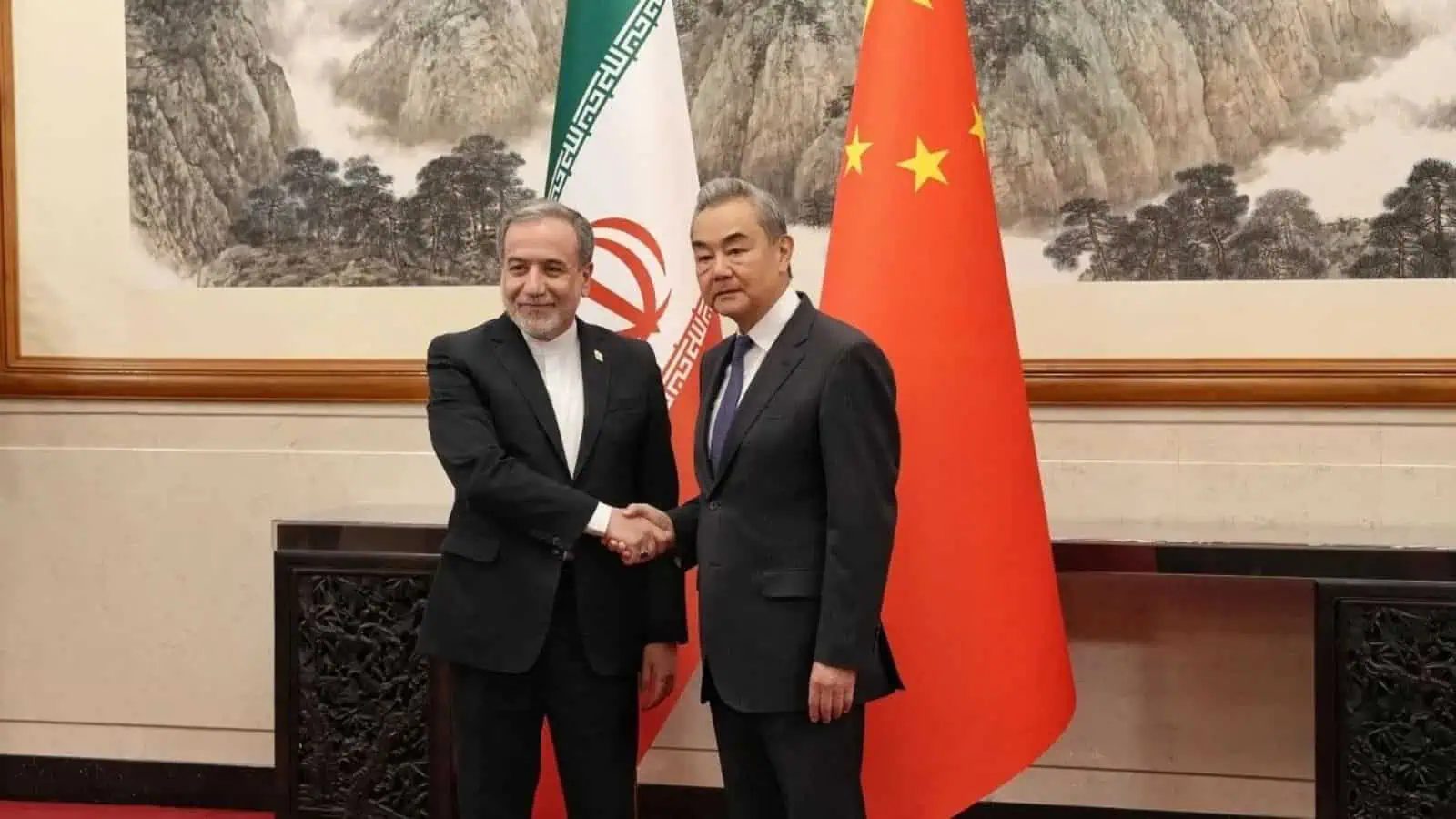
Iranian Foreign Minister Abbas Araghchi will arrive in Beijing on September 16 for talks with his Chinese counterpart Wang Yi. China’s Foreign Ministry announced the visit on September 15, stating that the member of the Political Bureau of the CPC Central Committee and Minister of Foreign Affairs Wang Yi will hold discussions with Araghchi. The timing places the meeting one week before Chinese President Xi Jinping’s scheduled September 24 visit to the United States, where he is expected to meet President Donald Trump.
This marks Araghchi’s second trip to Beijing since the end of February, when the United States and Israel began their military confrontation with Iran. His previous visit occurred in May, also shortly before a Trump trip to China. The September 16 talks follow earlier encounters between the two foreign ministers, including a pull-aside on the sidelines of the Shanghai Cooperation Organisation Foreign Ministers’ Meeting in Kyrgyzstan in July and another during the BRICS Summit.
Background to the visit includes Iran’s participation in the 18th BRICS Summit in New Delhi, where President Masoud Pezeshkian led the delegation. Pezeshkian called on BRICS members to take practical measures against unilateral sanctions and urged the group to address global conflicts, including the situation in Palestine. The New Delhi Declaration adopted at the summit expressed deep concern over escalating tensions in West Asia and called for maximum restraint, protection of civilians and infrastructure, and respect for sovereignty. It also stressed maintaining the flow of global trade, supply chains, and energy. On the sidelines, Pezeshkian met Indian Prime Minister Narendra Modi to discuss bilateral relations and West Asia developments, with Modi highlighting the need for peace and stability along with freedom of navigation in the Strait of Hormuz.
China has described its own position in the broader conflict as that of a neutral party seeking an end to hostilities. In his address to the BRICS summit in New Delhi earlier in the week, Xi urged the bloc to act as peacemakers in the Middle East and said China was willing to work with others toward that goal. He promoted a four-point plan centered on peaceful coexistence, respect for national sovereignty, adherence to international law, and balancing development and security. Xi did not announce any specific imminent mediation initiative.
Araghchi is also expected to discuss Iran’s nuclear programme during the Beijing talks. Last week the United States and its European allies pushed the International Atomic Energy Agency board to refer Iran to the UN Security Council over its nuclear activities. China and Russia have opposed the referral and can veto any resulting measures. Western sanctions on Iran continue, including designations targeting companies and financial channels linked to Iranian oil purchases. China remains the largest buyer of Iranian crude and has continued those purchases despite US efforts to isolate Tehran. Reports have also surfaced of Chinese entities supplying high-resolution satellite images to Iran before an attack on a US military base in Jordan.
The five outlets that reported the visit within the 24-hour window from September 15 to 16 all drew the core itinerary from the same Chinese Foreign Ministry statement. China Daily limited its account to the announcement of the Wednesday visit and the planned talks with Wang Yi, presenting the event as a standard step in strengthening bilateral relations ahead of the Xi-Trump summit. Anadolu Agency and the Times of Oman similarly foregrounded the summit timeline and noted the prior Araghchi-Wang Yi meetings, while adding context on regional instability in West Asia and the BRICS background.
South China Morning Post and Al Jazeera placed the same facts against a wider frame of stalled Middle East diplomacy. Al Jazeera reported that analysts view China’s traditional caution against deep involvement in third-party conflicts as likely to limit any mediation role, even as Xi’s BRICS comments offered openings for de-escalation. It also noted divided reactions inside Iran, with former foreign minister Mohammad Javad Zarif welcoming the constructive initiatives and a Tehran professor describing perceptions of an explicit US-Iran mediation offer as over-interpretation.
A reader limited to Chinese state coverage would see only the logistics of a routine diplomatic exchange and the positive bilateral relationship. That account omits the nuclear referral, ongoing sanctions targeting Chinese-linked entities, and the explicit questions raised elsewhere about China’s willingness to move beyond general statements. Coverage from Hong Kong and Qatar, by contrast, supplies the immediate context of the US-Israel confrontation that began in February and the specific IAEA developments from the prior week. Turkish and Omani reporting sits between these poles, recording the summit schedule and regional tensions without probing mediation prospects.
The narrow agreement across all five outlets on dates and participants rests entirely on the single Chinese government announcement. No independent confirmation of the meeting’s agenda or outcomes appears in the set. The divergence centers on interpretation rather than disputed facts: whether the visit signals quiet coordination between Tehran and Beijing or a test of China’s appetite for regional brokerage. Al Jazeera’s account of China’s four-point plan and its record of avoiding entanglement draws directly from Xi’s BRICS remarks and analyst commentary, giving it the strongest textual warrant among the sources.
What to Watch
Chinese state outlets have an institutional interest in presenting diplomacy as stable and productive ahead of the Xi-Trump encounter. Outlets farther from Beijing have an interest in testing whether that stability extends to concrete mediation. The talks themselves are unlikely to produce a public mediation breakthrough, given China’s consistent pattern of promoting general principles while steering clear of binding commitments in third-party disputes. The more useful signal will come from whether the two sides announce any joint language on sanctions relief or nuclear safeguards, details that will only emerge after the meeting concludes.
That’s how the world told the story.
Get tomorrow’s bulletin by email — one briefing, up to six stories.
Subscribe freeNo spam. One-click unsubscribe. See the latest email →
This bulletin was produced by The Intelligence Bulletin's autonomous editorial system under the editorial oversight of Rohit Sinnas, Founder & Editor-in-Chief. How it works →