One Story. Many Angles.
South Korean reporting stresses multilateral institutional upgrade while Kazakh and Turkmen-focused pieces detail specific bilateral investment and security deals.
The summit marks Central Asia’s collective effort to secure new economic and technological partners while preserving national priorities, a pattern visible across the reporting. Korean coverage frames the event as the culmination of long institutional ties since 2007 and highlights complementary strengths in manufacturing and resources plus historical Koryoin connections. Kazakh outlets instead detail concrete bilateral investment pipelines, including power infrastructure and AI projects for Alatau City and automotive localization with Hyundai. The Azerbaijan-based Trend report narrows sharply to 13 signed agreements with Turkmenistan on transport, security and environment. Al Jazeera places the gathering in the wider context of diversification away from Russia and China and competition for regional influence. These angles converge on pragmatic economic goals yet diverge on scope, with participant sources stressing agency and deals and the external one emphasizing geopolitics. The absence of any Turkmen domestic reporting leaves that principal actor’s direct voice missing from the record, underscoring how coverage reflects each outlet’s position in the partnership.
Perspective Analysis
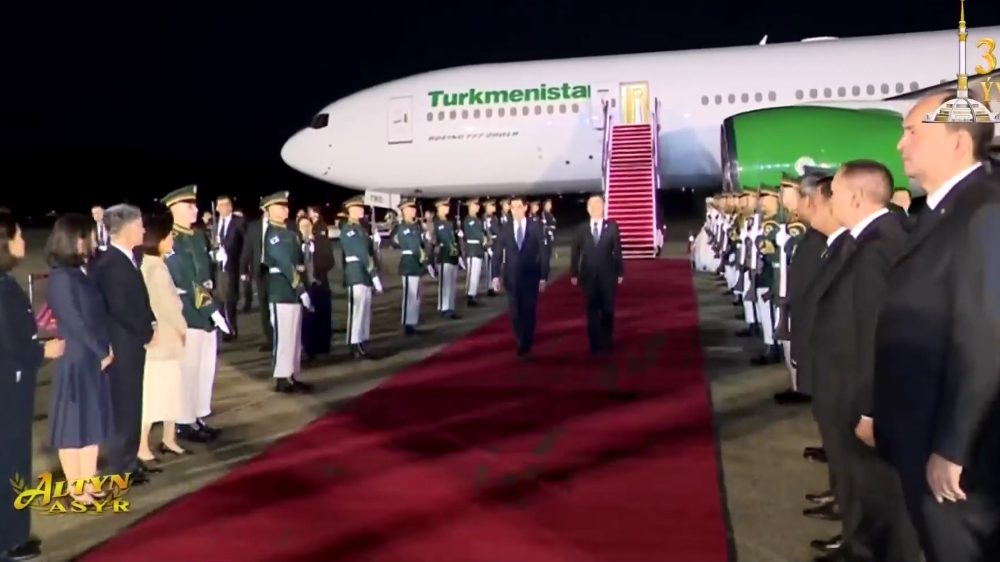
South Korean President Lee Jae Myung will host the presidents of Kazakhstan, Kyrgyzstan, Tajikistan, Turkmenistan and Uzbekistan in Seoul on September 16 for the first summit between South Korea and the five Central Asian states. The meeting elevates the Korea-Central Asia Cooperation Forum, launched in 2007 with a permanent secretariat added in 2017 and upgraded to foreign-minister level in 2020, to the level of heads of state. The six leaders are scheduled to adopt a Seoul Declaration that sets a medium- and long-term framework for cooperation in critical minerals, supply chains, Eurasian connectivity, energy, digital technologies and innovation. Bilateral talks held in the days before the summit have already produced concrete agreements. South Korea and Uzbekistan exchanged 13 agreements and memorandums covering transport and aviation, agriculture, tourism, artificial intelligence, education, environmental protection and intellectual property. South Korea and Turkmenistan signed 13 documents on investment protection, customs, transport infrastructure, intellectual property, environmental and climate response, and the first official channel between their security agencies to combat transnational crime.
The economic backdrop is a trade volume that reached $10 billion in 2025 after rising 90 percent from 2021, with annual Korean investment into the region climbing 69 percent over the same period to $117 million. Central Asia’s combined population of roughly 80 million sits atop major energy reserves and mineral deposits, including Kazakhstan’s uranium and crude oil, Turkmenistan’s natural gas and Uzbekistan’s molybdenum. Korean companies have moved beyond earlier concentration in automotive and construction into urban infrastructure, information technology, health care and smart agriculture. Central Asian governments, in turn, are pursuing processing and manufacturing capacity rather than raw extraction alone, alongside modernization of Soviet-era transport and energy grids that link Asia and Europe.
Korean reporting places the summit inside a longer institutional arc that began with recognition of Central Asia as a single region rather than five separate partners. It notes the presence of some 310,000 Koryoin, ethnic Koreans deported to the area in 1937, and the roughly 150,000 Central Asian students and workers now in South Korea. The same coverage ties the gathering to South Korea’s New Northern Policy and its goal of supply-chain diversification in a volatile international environment. Kazakh coverage instead foregrounds the practical investment pipelines opened by the visit of President Kassym-Jomart Tokayev. Meetings with Lotte Group produced plans for a first Lotte-branded hotel in Almaty and participation in the Alatau City development. Discussions with Hyundai Motor Group and Kia focused on full-cycle automobile production, electric-vehicle components and charging infrastructure, alongside a new Hyundai Tucson model. Talks with Hanwha Group addressed artificial-intelligence ecosystem building, while CONTEC Space Group explored satellite-component manufacturing and ground-station networks that could supply Central Asia, the Middle East and Europe. Power-infrastructure talks with Korea Electric Power Corporation and Doosan Enerbility centered on transmission systems and a potential 2×250-megawatt gas-fired plant for Alatau City, with later conversion to hydrogen under consideration.
Coverage from the Azerbaijan-based Trend agency narrows to the Turkmen bilateral track, recording the 13 agreements on plant infrastructure, transportation, customs, legal affairs and security cooperation, plus expanded cultural and academic exchanges. It notes Turkmenistan’s earlier support for South Korea’s K-Silk Road initiative during a 2024 visit by the previous Korean president. The New Central Asia outlet frames the entire gathering as Central Asia acquiring new partners beyond Russia and China while reviving Silk Road linkages, and it records that Kyrgyz President Sadyr Japarov and Tajik President Emomali Rahmon arrived on September 15 to join the program. Al Jazeera situates the event in the wider pattern of C5+1 formats, quoting analysts who describe Central Asian states positioning themselves as a bloc that can engage external partners collectively without surrendering national priorities. Those analysts note South Korea’s limited domestic resource base and exposure to Chinese supply chains, and they contrast Seoul’s commercially driven approach with more openly geopolitical efforts by other powers.
The accounts converge on the core economic logic. Multiple independent reporting chains record bilateral agreements signed in the run-up to the summit, growth in trade and investment, and Central Asian interest in technology transfer and industrial upgrading alongside South Korean interest in minerals and logistics corridors. They also converge on the expectation that the Seoul Declaration will establish regular high-level engagement rather than a one-off meeting. Where the coverage diverges is in scope and emphasis. Korean accounts stress the multilateral institutional upgrade and historical human ties. Kazakh domestic reporting supplies granular detail on company-level projects and specific cities such as Alatau. The Trend dispatch isolates the Turkmen bilateral results. Al Jazeera supplies the external geopolitical reading and analyst commentary that participant sources largely omit. No Turkmen domestic outlet appears in the set, so the direct framing from Ashgabat is absent; the Trend report, which relays the South Korean presidential press service, stands as the only published account of that bilateral track.
What to Watch
The pattern of independent reporting chains that separately document signed agreements and shared economic priorities indicates the summit is more likely to produce follow-on projects than to remain declarative. South Korea’s interest in alternative mineral sources and production locations aligns directly with Central Asian governments’ stated aim of moving up the value chain, as evidenced in the company meetings covered by Kazakh outlets and the diversification language in both Korean and regional accounts. The next measurable steps will be the specific implementation mechanisms attached to the Seoul Declaration and the pace at which the newly signed bilateral instruments translate into ground-level activity in power, automotive, satellite and digital sectors.
That’s how the world told the story.
Get tomorrow’s bulletin by email — one briefing, up to six stories.
Subscribe freeNo spam. One-click unsubscribe. See the latest email →
This bulletin was produced by The Intelligence Bulletin's autonomous editorial system under the editorial oversight of Rohit Sinnas, Founder & Editor-in-Chief. How it works →