One Story. Many Angles.
Outlets converged on the same Lithuanian-sourced facts instead of framing the event through competing national lenses.
Reporting across the source set converges on the same sequence of events with only minor differences in emphasis rather than substance. Lithuanian, Finnish, German, British and Turkish outlets all describe NATO jets intercepting the drone near Pratkunai village after an alert in Vilnius, cite the national crisis management centre as the primary source, and quote President Nausėda linking the readiness to Russian aggression against Ukraine. The Finnish and German pieces add the probable Belarus origin and note prior Baltic incursions, while the British account places the event alongside Poland’s simultaneous air activity. No outlet disputes the facts or introduces conflicting details; the Turkish agency report stays closest to the official Lithuanian statement. This uniformity indicates the story rests on a single originating chain of Lithuanian official and state-media reporting that independent outlets then relayed with their own framing. The absence of any Western or Russian outlet in the selected set leaves the Baltic and Western European perspectives unchallenged within the pool. What stands out is how consistently the incident is treated as evidence of NATO’s operational commitment on the eastern flank rather than an isolated local event or an escalation requiring new analysis. The shared choice to foreground allied unity over speculation about the drone’s purpose reveals that, for these outlets, the defensive response itself is the story worth carrying.
Perspective Analysis
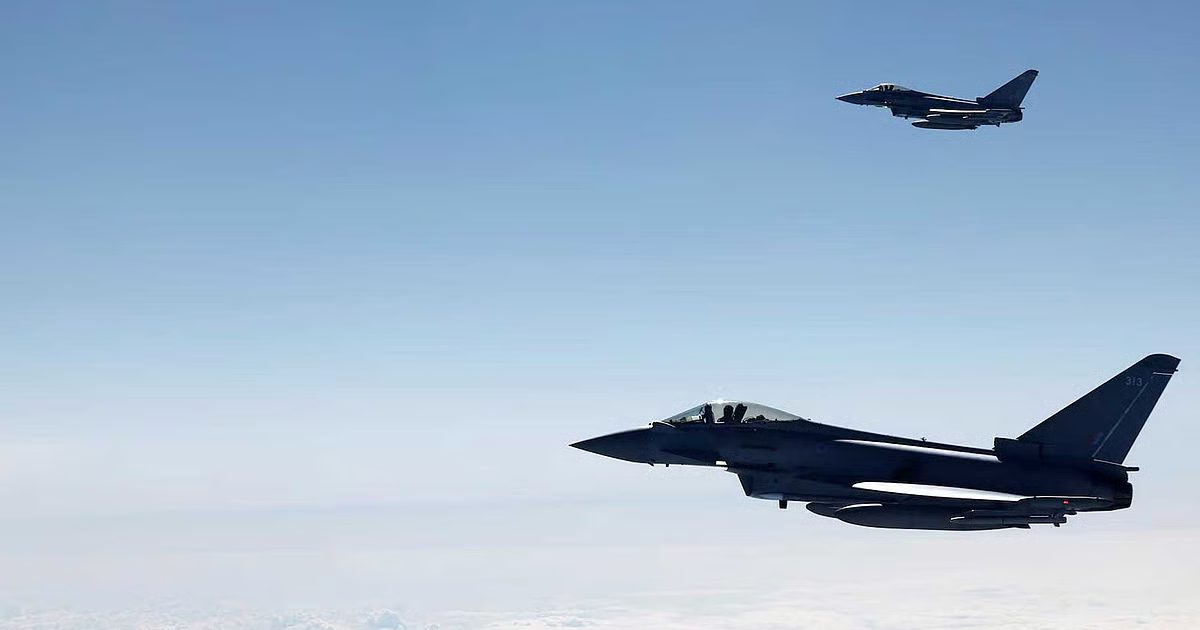
NATO fighter jets intercepted and destroyed a drone that crossed into Lithuanian airspace on the night of 14-15 September 2026. Lithuanian authorities placed the intercept near the village of Pratkunai, outside Kaunas in the central-southern part of the country. The national crisis management centre issued an alert for Vilnius and surrounding areas earlier that night and dispatched NATO aircraft after a possible drone sighting. Debris from the downed aircraft was later recovered on the ground. Lithuanian officials assessed that the drone had most likely entered from neighbouring Belarus and was heading west when it was engaged.
President Gitanas Nausėda stated that NATO jets had destroyed the drone and thanked the alliance for its rapid response. He connected the episode to what he described as Russia’s intensifying aggression against Ukraine and said such readiness remained vital for the region. Foreign Minister Kęstutis Budrys also thanked NATO partners whose presence, he said, helps protect Lithuanian skies and strengthens security. He called the episode the clearest demonstration of allied unity and resolve, sending the message that the alliance remains vigilant and prepared.
The same night, Polish forces conducted air operations described as preventive measures linked to Russian drone activity over Ukraine. Poland had recovered a suspected Russian military drone from the Baltic Sea the previous day near the northern coast. Lithuanian coverage placed the incident squarely inside national territory, noting the exact village and the recovery of wreckage. Neighbouring Finnish reporting added that the drone probably originated in Belarus and recalled earlier stray drones that had reached Baltic and Nordic airspace during the Ukraine conflict. German accounts situated the shoot-down inside the broader Russia-Ukraine war and recorded both the president’s and the foreign minister’s statements on NATO cohesion. British reporting linked the Lithuanian episode to Poland’s parallel moves and to the pattern of drone incursions that have affected the three Baltic NATO members since 2022. Turkish coverage stayed closest to the president’s public remarks without additional regional context.
No outlet in the set introduced conflicting details about the timing, location or outcome of the intercept. All five carried the core sequence drawn from the Lithuanian crisis management centre and the statements of the president and foreign minister. The Finnish and German pieces supplied the Belarus-origin assessment that Lithuanian authorities had relayed through Reuters. The British account alone juxtaposed the event with Poland’s air activity on the same day. The Turkish report reproduced the president’s words with the least surrounding analysis.
A reader limited to any single national outlet would miss the consistent emphasis on operational alliance response rather than on the drone’s possible purpose or on new escalation. Lithuanian domestic reporting foregrounds the airspace violation and local recovery of debris, leaving the wider Baltic pattern to background. Finnish coverage supplies the cross-border origin and earlier incidents that place the event inside a recurring regional problem. German framing ties the readiness directly to Russian actions in Ukraine. British reporting widens the lens to NATO-wide implications by including Poland’s moves. Turkish coverage isolates the official Lithuanian voice. None of these angles contradict one another; each simply selects a different slice of the same originating Lithuanian record.
The uniformity across the set indicates that the story rests on one primary chain of official Lithuanian statements and crisis-centre reporting, which independent outlets then carried with their own regional or alliance-level framing. No independent verification chain appears in the published pieces. The absence of any Russian or additional Western outlet in the selected coverage leaves the Baltic and Western European accounts without direct counter-narrative inside this pool. What the reporting consistently foregrounds is NATO’s demonstrated capacity to respond inside member airspace rather than speculation about the drone’s intent or payload. That shared choice treats the defensive intercept itself as the central fact, not an isolated local breach or the start of a wider confrontation.
What to Watch
The record therefore supports the view that the incident illustrates routine alliance air policing on the eastern flank rather than a novel escalation. The repeated incursions noted across Baltic reporting since 2022 have produced a standing NATO presence whose rules of engagement now include live intercepts. Lithuanian officials have an interest in presenting the response as evidence of alliance solidarity; outlets in neighbouring and more distant NATO members have an interest in reading the same episode as proof that the eastern flank remains defended. Both interests converge on the same published sequence. The next development most likely to follow is continued air policing activity rather than a change in alliance posture, because the reporting shows no claim that the drone carried explosives or that the incursion was deliberate. The concrete detail that travels across every account is the successful intercept near Kaunas, executed under existing NATO arrangements and publicly endorsed by Lithuanian leadership. That fact alone supplies the clearest available measure of how the alliance currently handles airspace violations on its eastern border.
That’s how the world told the story.
Get tomorrow’s bulletin by email — one briefing, up to six stories.
Subscribe freeNo spam. One-click unsubscribe. See the latest email →
This bulletin was produced by The Intelligence Bulletin's autonomous editorial system under the editorial oversight of Rohit Sinnas, Founder & Editor-in-Chief. How it works →