One Story. Many Angles.
Bulgarian coverage stresses repeated domestic failures while Russian coverage omits sabotage entirely and Austrian coverage names Russia in the headline.
Bulgarian reporting frames the latest blast as the newest chapter in a fifteen-year domestic pattern of unexplained fires and explosions at EMCO and related defence sites, some of which prosecutors have tied to Russian nationals and military intelligence without securing convictions. Russian coverage states only the basic facts of the fire and explosions at the Gorni Varpishta warehouse, omitting any reference to sabotage, Ukraine supply links or the owner’s accusations. Austrian reporting places the incident inside a wider European pattern of suspected Russian sabotage against facilities supporting Ukraine and headlines the question of Russian responsibility. BBC and SCMP reporting centre the official investigation, the company’s sabotage claim and the minister’s refusal to exclude outside interference, while noting the owner’s history of alleged targeting. The contrast reveals that outlets aligned with NATO or EU perspectives treat the sabotage theory as the live question under investigation, whereas the Russian source treats the event as an isolated industrial incident and the Bulgarian source treats it as evidence of long-standing unresolved security failures at home.
Perspective Analysis
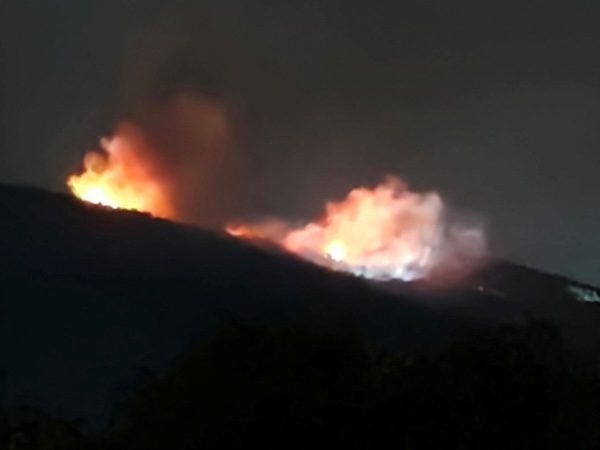
A fire broke out at an EMCO ammunition storage facility near the village of Gorni Varpishta in central Bulgaria on the night of 11-12 September 2026. Flames spread from one warehouse to others, triggering a series of explosions. The site held ammunition and gunpowder. Workers had already left for the day, and two guards evacuated safely. No one was injured. Regional governor Kristina Sidorova described the fire moving from hall to hall, with the final explosion occurring shortly before midnight. Authorities activated the BG-Alert system and cordoned off the area.
This marked the second such incident at EMCO facilities in just over a month. On 10 August a similar fire and series of explosions struck another company warehouse near Belitsa in Tryavna municipality. That blaze also caused no casualties, though it damaged stored ammunition. Both sites sit in the Gabrovo region. EMCO, a private Bulgarian defence firm, produces and stores weapons that have been supplied to Ukraine. The company is run by Emilian Gebrev, who has faced prior attacks.
EMCO issued a statement calling the latest fire sabotage. The firm pointed to more than ten comparable incidents at Bulgarian defence companies since 2011. It noted that the Gorni Varpishta facility had not been used for months and had passed a full compliance inspection only twenty days earlier. Human error, the company said, was ruled out. Bulgarian interior minister Ivan Demerdzhiev told reporters that investigators were examining possible outside interference while also reviewing storage conditions. He announced that every munitions warehouse in the country would now face security checks and that past cases at EMCO and other firms would be re-examined for patterns.
Bulgarian prosecutors have long connected several earlier explosions and fires to suspected Russian involvement. The 2011 blast at an EMCO warehouse near Lovni Dol destroyed export ammunition. Similar incidents occurred at VMZ Sopot facilities in 2015 and at an Arsenal site near Maglizh in 2020. In 2015 Gebrev, his son Hristo and production director Valentin Tahchiev were poisoned with an organophosphorus compound while in Bulgaria. Prosecutors charged three Russian nationals in absentia for the attempted murder and later expanded charges to six Russians accused of terrorism linked to the explosions. European arrest warrants were issued, yet no final court convictions have resulted. Evidence remains circumstantial, and courts have noted its limits. Separate fires at EMCO’s Karnobat site in 2022 and 2023 were also investigated as possible arson, though those probes were suspended without indictments.
Russian reporting on the September incident confined itself to the location, the timing and the sequence of fire and blasts. It quoted the regional governor on the spread of the flames but made no reference to sabotage claims, Ukraine supply links, Gebrev’s history or any pattern of prior attacks. Austrian coverage placed the event inside a broader European pattern of suspected sabotage against facilities supporting Ukraine and asked directly whether Russia stood behind the blast. British reporting recorded the company’s sabotage accusation and the minister’s refusal to exclude outside interference, while noting the owner’s earlier alleged targeting. Hong Kong reporting, drawing on agency copy, summarised the minister’s statements and the company claim without assigning responsibility.
The accounts diverge most sharply on context and causation. A reader limited to Russian sources would see only an isolated industrial accident at one Bulgarian factory. A reader limited to Bulgarian sources would encounter a fifteen-year domestic record of unresolved incidents at EMCO and related plants, with prosecutors repeatedly naming Russian nationals yet failing to secure convictions. A reader of Austrian coverage would encounter an explicit question of Russian responsibility framed against other recent European incidents. Western and Asian reporting occupies the middle ground, presenting the official investigation and the competing explanations without endorsing either.
The corroborated record shows repeated fires and explosions at EMCO sites, an owner who attributes them to sabotage, and an interior minister who treats outside interference as one live possibility while ordering wider security reviews. Prosecutor records establish charges against Russian nationals in earlier cases, but the absence of convictions leaves those links unproven. The company’s supply relationship with Ukraine supplies a plausible motive for external actors, yet the same record also shows multiple domestic investigations that have not produced perpetrators. Bulgarian coverage draws on the longest local prosecutorial timeline and therefore captures the pattern of unanswered questions most fully. Russian coverage omits that timeline and the supply context. Austrian coverage advances a Russia-specific hypothesis beyond what the minister or the company has stated on record.
What to Watch
The next developments will turn on whether the fresh investigation yields new physical evidence or witness statements that move beyond the circumstantial chains already examined. If prior cases are any guide, the outcome may again rest on whether Bulgarian courts accept the same limited identification methods that earlier appeals have questioned. For European defence planners the stakes lie in whether facilities producing or storing materiel for Ukraine can be protected at scale, regardless of who ultimately bears responsibility for any single blast.
That’s how the world told the story.
Get tomorrow’s bulletin by email — one briefing, up to six stories.
Subscribe freeNo spam. One-click unsubscribe. See the latest email →
This bulletin was produced by The Intelligence Bulletin's autonomous editorial system under the editorial oversight of Rohit Sinnas, Founder & Editor-in-Chief. How it works →