One Story. Many Angles.
Saudi outlets frame attacks as external threat requiring defense; Iraqi outlets frame them as internal political crisis requiring purges.
Saudi reporting centers on the pipeline shutdown as a precautionary defensive step against external aggression from Iraqi territory, with minimal emphasis on Baghdad’s internal response. Iraqi coverage instead highlights the political fallout inside Iraq, including the prime minister’s swift dismissal of a commander and border closure, framing the episode as a threat to improving Riyadh-Baghdad ties from Iran-aligned groups. The two Saudi outlets align closely on the attacks’ origin and injuries but differ in emphasis: one stresses official energy ministry statements on the shutdown, the other reports Iraq’s personnel changes as evidence of Riyadh’s pressure succeeding. Indian and Hong Kong reporting broaden the lens to energy markets and maritime security, noting the pipeline’s role bypassing Hormuz and the island seizure’s potential to choke Red Sea exports, details absent from actor-centric accounts. All independent chains corroborate the pipeline attacks, Iraqi origin claims, injuries, and Houthi island advance; the pattern reveals a split between regional actors treating it as bilateral security politics and outside observers treating it as an energy and shipping escalation. No outlet contradicts the core sequence, yet the omission of global price risks in Gulf papers and of Saudi restraint in some Indian framing shows how national stakes shape what receives prominence.
Perspective Analysis
Saudi Arabia shut its East-West oil pipeline on September 11 after drones struck sections in the Riyadh and Madinah regions the morning before. The Saudi Energy Ministry said several people were injured in the attacks and received medical treatment. Emergency teams assessed the line and the shutdown was ordered as a precaution, with further updates promised as needed. The ministry linked the strikes to earlier Houthi actions against southern Saudi targets that had already caused fires at oil facilities.
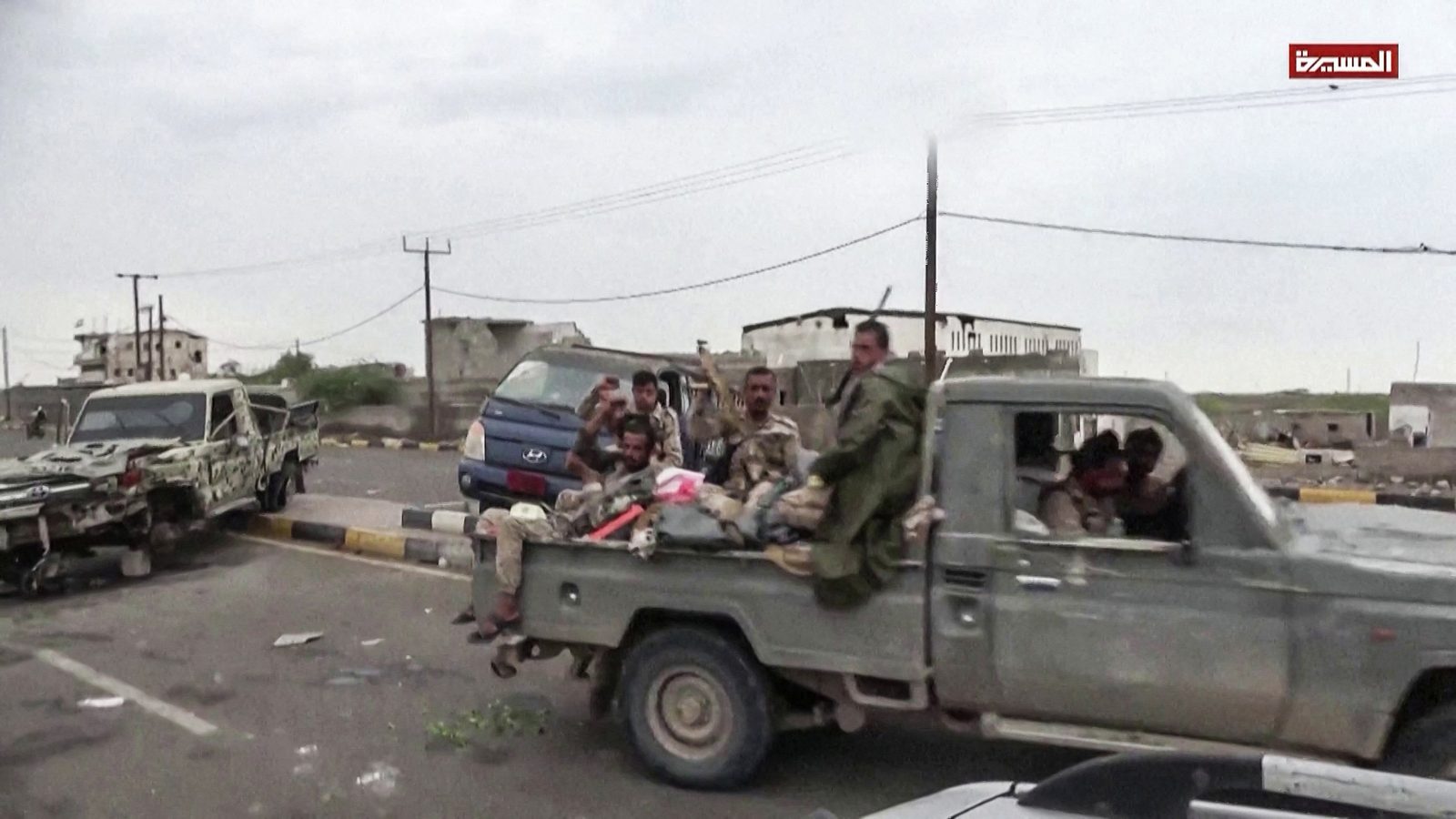
The same day brought another development at the opposite end of the Arabian Peninsula. Iran-backed Houthis reached Perim Island in the Bab el-Mandeb Strait, according to four Yemeni government sources. Earlier reports indicated government forces had withdrawn from the island and that Houthis had also taken the mainland coastal town of Dhubab facing it. The strait sits at the southern entrance to the Red Sea, a route Saudi crude has relied on more heavily since tanker traffic through the Strait of Hormuz was disrupted by the wider conflict.
Saudi statements identified the drones as coming from Iraqi territory, specifically tied to operations in Maysan province. Riyadh said it had chosen not to respond militarily at this stage after a request from Iraq’s prime minister, who asked for time to handle those responsible. Saudi Arabia reserved the right to act later if needed to protect its territory and infrastructure. The attacks wounded civilians in addition to damaging pipeline facilities, and the Saudi Foreign Ministry condemned them in strong terms.
Iraqi authorities moved quickly on their side. Prime Minister Ali al-Zaidi directed security forces to investigate and pursue legal action against anyone involved. Baghdad condemned the use of its territory and closed the Shalamcheh border crossing with Iran as a precaution. Security sources said a wider operation was underway to detain suspects. The government announced the immediate dismissal of the commander of Maysan operations after an investigation found the drones had launched from a site inside that province. Iraq emphasized it would not allow its land or airspace to serve as a launch point against neighbors and said it would not tolerate actions that harmed its relations with Gulf states.
The East-West pipeline runs roughly 1,200 kilometers from Saudi oil fields in the east to the Red Sea export terminal at Yanbu. In recent months it has carried between 4 million and 5 million barrels per day, an amount equal to roughly 4 to 5 percent of global supply. The line gained added importance once Hormuz traffic was curtailed, offering an alternative export path that avoids the narrower northern strait. Satellite imagery showed fires and smoke at pumping stations along the route after the strikes.
Saudi coverage placed the pipeline shutdown at the center and described the attacks as external aggression requiring defensive measures. Arab News led with the Energy Ministry statement on the precautionary halt and injuries. Al Watan reported the same attacks but added the Iraqi commander dismissal and investigation, presenting Baghdad’s personnel changes as a direct result of Saudi pressure and as evidence that Riyadh’s restraint had produced results inside Iraq.
Iraqi reporting instead stressed the domestic political and security consequences. Iraqi News framed the episode as a fresh strain on improving Baghdad-Riyadh ties caused by Iran-aligned militias operating beyond central control. It detailed the prime minister’s orders, the border closure, and the investigation while noting that no Iraqi group had yet been formally named as responsible.
Outside the region, reporting connected the pipeline incident directly to the island seizure and its implications for shipping. The Times of India described both developments as tightening pressure on energy routes that had already shifted because of Hormuz problems, noting the pipeline’s daily volume and the risk of longer tanker voyages if the Bab el-Mandeb corridor became unusable. South China Morning Post, carrying a Reuters dispatch, focused on the Houthis’ move onto Perim as an effort to control a vital global trade lane amid the Iran-US confrontation, with less detail on the pipeline or Iraqi response.
The two Saudi outlets converged on the attacks’ origin, the injuries, and the precautionary shutdown, yet differed in how much space they gave Iraqi internal actions. Arab News stayed with Riyadh’s official energy and security statements. Al Watan incorporated the commander dismissal and Iraqi statements, showing Saudi diplomatic leverage at work. Iraqi coverage treated the strikes as a problem Baghdad had to solve internally to preserve relations, while the Indian and Hong Kong pieces treated the combined events as a single escalation affecting export volumes and tanker routing.
All independent reporting chains carried the same core sequence: the September 10 drone strikes on the pipeline, their attribution to launches from Maysan in Iraq, the injuries, the shutdown, Iraq’s dismissal of the commander and border closure, and the Houthi advance onto Perim. No account disputed those elements. The difference lay in what each set of outlets chose to foreground once those facts were stated.
A reader limited to Saudi papers would see a defensive infrastructure decision against external attack and, in one case, evidence that Riyadh’s patience had produced Iraqi concessions. A reader limited to Iraqi coverage would see a domestic crisis managed by Baghdad to protect its Gulf relationships. A reader limited to the Indian or Hong Kong accounts would see the pipeline and island moves together as a fresh threat to the 4-to-5-million-barrel daily flow now routed through the Red Sea. The regional accounts correctly identified the immediate actors and the restraint shown by Saudi Arabia; the external accounts correctly identified the scale of the energy corridor now at risk.
What to Watch
The broader stakes sit with the shipping lanes. The pipeline’s documented daily volume and its role as a Hormuz bypass give concrete weight to concerns about further disruption. The Houthi position on Perim adds a second chokepoint to one that already matters for Saudi exports. Regional capitals have immediate security and political incentives to present the episode in bilateral terms. Observers farther from the direct confrontation have less reason to narrow the frame and more reason to track the cumulative effect on global supply routes. The next moves will likely be measured in tanker schedules and any additional closures or seizures rather than in public statements alone.
That’s how the world told the story.
Get tomorrow’s bulletin by email — one briefing, up to six stories.
Subscribe freeNo spam. One-click unsubscribe. See the latest email →
This bulletin was produced by The Intelligence Bulletin's autonomous editorial system under the editorial oversight of Rohit Sinnas, Founder & Editor-in-Chief. How it works →