One Story. Many Angles.
Russian coverage asserts foiled terrorism while outlets elsewhere attribute the bomber claim solely to officials without confirmation.
Russian state-linked Pravda presented the National Anti-Terrorism Committee’s account as settled fact: a woman courier carrying an IED was stopped by a guard at a private event and the device detonated, killing her, the guard and one patron while injuring 21. It added unverified speculation from Telegram channels that the target may have been military officers. German outlet OTZ and Australian SBS relayed the same sequence but attributed every detail explicitly to Tass, RIA Novosti and the committee, avoiding any endorsement of the terrorism label. Israel’s Jerusalem Post carried the official numbers yet noted Kommersant reporting that the bomb may have been remotely triggered and the woman unaware she carried it, while adding context on FSB protection for senior officers after prior attacks blamed on Kyiv. Serbia’s Blic reported only the blast location, three deaths and 15 injuries from Tass, stating authorities had not identified the cause or motive. The pattern shows Russian outlets assert domestic security control through a foiled plot while others maintain distance from the bomber identification and external-threat framing.
Perspective Analysis
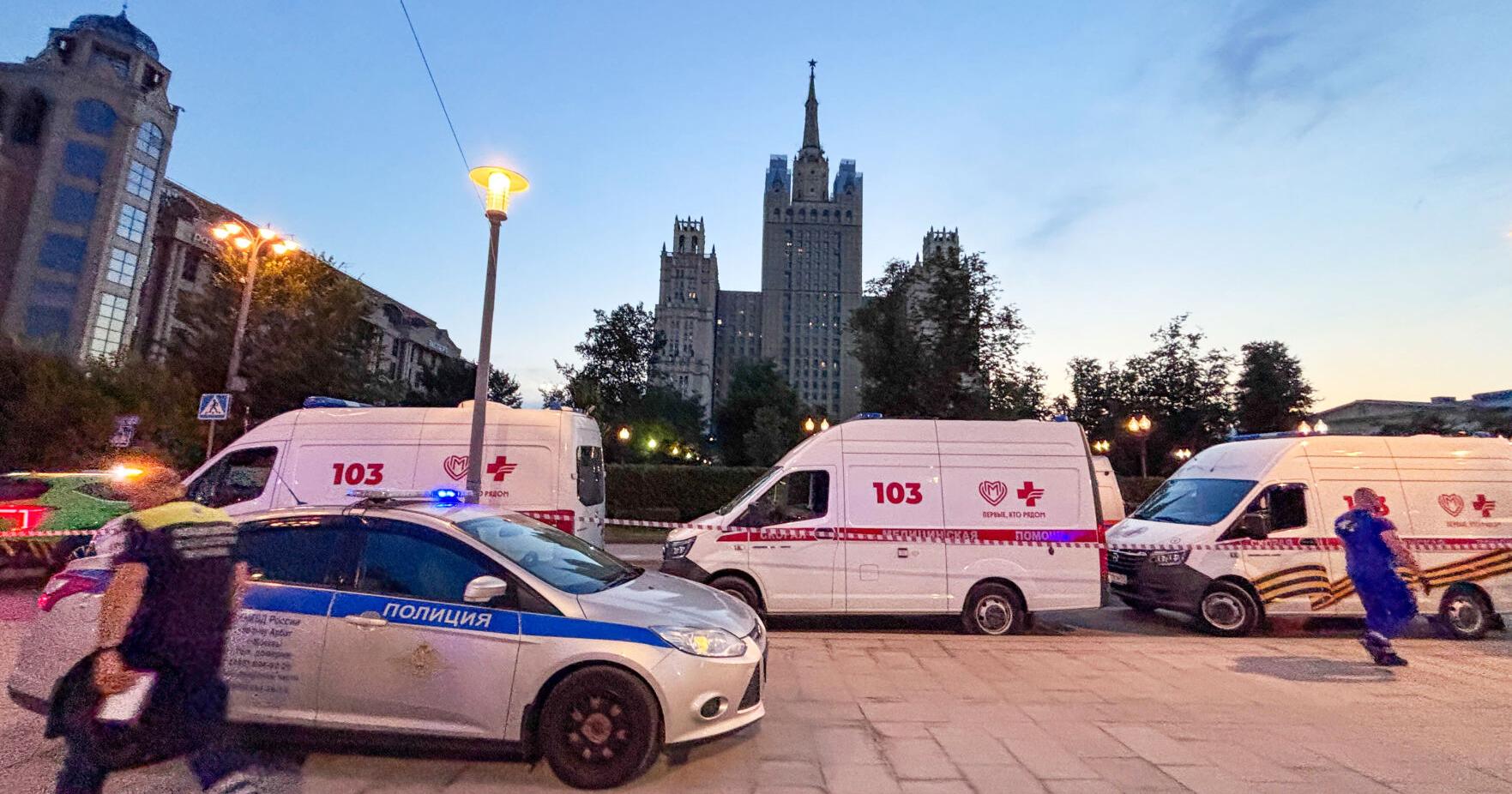
An improvised explosive device detonated outside the Balzi Rossi restaurant on Kudrinskaya Square in central Moscow on the evening of August 1, killing three people and injuring at least 21 others. Russian authorities said a woman carrying the device tried to enter the venue during a private event attended by roughly 50 guests. A security guard stopped her for inspection of a package she described as a gift, at which point the device exploded around 7:50 or 8 p.m. local time. The dead included the woman, the guard and one restaurant guest. The blast was powerful enough to scatter remains across the area, with reports of a severed hand found about 15 meters from the site. Investigators described the device as homemade with the force of roughly one kilogram of TNT and containing metal ball bearings to increase casualties.
The restaurant occupies space in one of Moscow’s Stalin-era high-rise buildings on Kudrinskaya Square, a location in the expanded city center near the Garden Ring. Emergency services responded quickly, extinguishing a fire that followed the blast and cordoning off surrounding streets. Several metro stations nearby continued normal operations, though some roads were closed and a scheduled cycling festival was postponed. The National Anti-Terrorism Committee stated that the incident constituted a terrorist attack. Moscow’s Investigative Committee confirmed the casualty figures and said the inquiry was ongoing. No official identification of the intended target or the organizers has been released.
Multiple accounts confirm the basic sequence of the woman being stopped at the entrance with the device. Russian authorities described the woman as attempting to bring the explosive inside. Reports from several outlets carried the same details on the three deaths and the injuries, which included traumatic brain injuries, penetrating wounds to the chest and abdomen, burns, limb trauma and blast effects. The venue had been booked for a private celebration, with some social media speculation that it involved a high-ranking military officer’s birthday, though authorities have not confirmed any specific guest list or motive.
Russian officials have not linked the blast to any named individual or group. One pro-war blogger suggested it might have targeted a senior aerospace forces commander, but that claim lacked supporting evidence and remained unverified. Investigators are examining whether the device was detonated remotely, which would mean the woman carrying it may not have known its contents. This possibility appears in reporting that draws on the Kommersant newspaper’s sources. The committee has classified the event as terrorism, yet it has avoided naming an intended target or confirming external involvement.
The accounts diverge on several points that affect how the incident is understood. One Serbian outlet reported three deaths and 15 injuries, citing the same Tass agency material used elsewhere, and stated that Russian authorities had not identified whether the cause was an accident, a crime or something else. It gave no details on a woman carrying a device or any terrorism classification. Other reports consistently listed at least 21 injured and described the committee’s terrorism determination. The lower injury figure and the absence of any bomber reference appear only in that single account.
An Israeli outlet added context about Russia’s FSB security service increasing protection for high-ranking military officials earlier in the year after a series of assassinations and attempts it attributed to Kyiv. That piece also noted the Kommersant reporting on possible remote detonation without the woman’s knowledge. A German regional outlet kept motive and perpetrator details tentative, saying political intent remained unclear and initially noting that a gas explosion had been considered before the committee’s statement. An Australian outlet repeated the sequence of the woman attempting to bring the device but attributed every element explicitly to state media and the committee without further endorsement.
The terrorism classification and the remote-detonation possibility rest on single reporting chains tied to Russian official statements and Kommersant sources. The core sequence of the woman stopped at the entrance with the device, the three deaths and the injuries above 20 appears across independent chains that all trace back to the same committee and agency releases. No outlet disputes the presence of an explosive device or the casualty counts in the higher range. The venue’s Italian restaurant setting and its location in a Stalin-era building receive mention in some accounts but not others.
Russian authorities have an interest in presenting the incident as a successfully disrupted plot that demonstrates effective domestic security measures. Outlets that maintain explicit attribution to state sources or note uncertainties reflect a choice not to adopt that classification without additional evidence. The single-source nature of the terrorism label and the remote-detonation detail means readers relying on one chain receive assertions that lack corroboration from separate reporting lines. The lower injury count in one account stands apart from the figure carried elsewhere and remains unexplained by any cross-check in the available material.
What to Watch
The corroborated elements on the detonation sequence and casualties provide the most reliable foundation for understanding what occurred. The terrorism designation and possible remote trigger warrant continued scrutiny because they originate from one side without matching confirmation from others. Further details from the Moscow Investigative Committee investigation will likely clarify whether the blast connects to prior incidents involving military targets or remains an isolated case. The pattern of how different outlets handled the official statements shows the limits of relying on any single chain when the underlying claims carry direct implications for assessments of Russian internal security.
That’s how the world told the story.
Get tomorrow’s bulletin by email — one briefing, up to six stories.
Subscribe freeNo spam. One-click unsubscribe. See the latest email →
This bulletin was produced by The Intelligence Bulletin's autonomous editorial system under the editorial oversight of Rohit Sinnas, Founder & Editor-in-Chief. How it works →