One Story. Many Angles.
Israeli coverage stresses joint planning; Iranian outlets highlight US internal divisions instead.
US and Israeli preparations for strikes on Iranian energy infrastructure reveal a sharper divide in regional coverage than the shared wire facts suggest. Jerusalem Post presents coordinated Israeli-US weighing of harsh options as a defensive step. Gooya instead spotlights Trump’s reported anger at internal administration splits and lack of clear strategy. Anadolu and Arab News stick to the CBS reporting of possible weekend action while noting Iranian threats. Times of Oman foregrounds the Iranian official’s dismissal of the plans as ‘madness’ and detailed retaliation warnings. The pattern shows outlets in direct proximity to the conflict emphasize readiness or internal friction, while others amplify the risk of blowback, exposing how energy stakes and proximity shape which part of the story each side chooses to foreground.
Perspective Analysis
US and Israeli officials have prepared detailed plans for strikes against Iranian power plants, refineries and electricity supply to Tehran, with possible action this weekend, according to multiple Western reports citing US sources. President Donald Trump has reviewed the options at Camp David but has not issued final authorization, leaving room for last-minute diplomatic progress to halt the campaign before markets open Monday. The targets center on energy infrastructure in what would mark one of the most intense phases yet in the ongoing US-Israeli operations against Iran. Israeli officials have been briefed and are coordinating with Washington, though one Israeli source told CBS News that no decision on full-scale operations had been conveyed and no formal request to join had been made.
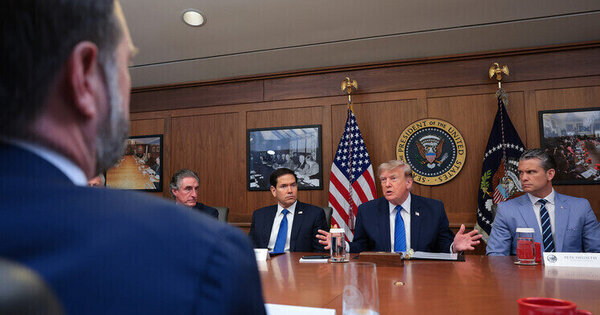
Trump addressed a Cabinet meeting at Camp David and stated that the United States would hit Iran very hard until Tehran reached the point where it could not take it anymore. White House spokeswoman Karoline Leavitt said the US would win and that Iran would not obtain a nuclear weapon on Trump’s watch. Pentagon spokesman Sean Parnell described the military as locked and loaded but declined to name specific targets ahead of a presidential decision. A separate Wall Street Journal account, also citing US officials, confirmed that the new attacks were authorized at the Camp David retreat and noted that Trump might pause operations and return to talks if Iran shows immediate diplomatic movement.
Iranian authorities responded through Tasnim News Agency that reports of the planned strikes amounted to recklessness. A senior security official said Tehran had prepared a comprehensive retaliation plan covering critical infrastructure in Israel and US energy assets across the region. The official asserted that Iran possesses both the capability and the will to carry out such strikes, pointing to performance during the prior 40-day phase of fighting as evidence. Iranian statements framed any attack on their energy sites as provocation that would trigger direct responses against American and Israeli energy facilities.
On the US side, reporting from NBC News relayed through Persian outlets described Trump as frustrated during a recent meeting. He reportedly expressed anger over the grinding nature of the conflict, the limited military options available, and the absence of a clear endgame or agreement with Iran. One participant described the president as exasperated that extracting concessions from Tehran had proven far more difficult than expected and that no coherent strategy existed for reaching a conclusion. The account noted tactical successes on the ground but warned of an emerging strategic failure without defined objectives, such as blocking nuclear progress, reopening the Strait of Hormuz, or dismantling missile and drone programs. White House and Pentagon spokespeople pushed back, with Leavitt stating Trump retained full confidence in his team and Parnell asserting that the defense secretary and senior commanders remained united on the Iran mission.
These reports sit inside a broader pattern of US-Israeli military pressure on Iran that has already produced repeated cycles of strikes and counter-strikes. Energy infrastructure has emerged as the immediate focus because strikes there carry direct consequences for global oil supply and because Iran has repeatedly threatened to close the Strait of Hormuz in response. The timing discussion around concluding operations before Monday trading reflects explicit concern over market disruption. Iranian warnings explicitly link any new energy strikes to retaliation against equivalent targets on the US and Israeli sides, raising the prospect of wider disruption to shipping lanes and regional production.
Coverage of these developments shows clear differences in emphasis rather than outright contradictions on the core facts. Jerusalem Post reporting presents the preparations as a joint Israeli-US calculation of harsh options against Iranian targets, underscoring coordination and readiness. Gooya, drawing on the NBC account, instead centers on the reported friction inside the Trump administration and the president’s dissatisfaction with the lack of a defined strategy. Anadolu Agency and Arab News both relay the CBS and WSJ details on possible weekend strikes, Iranian threats, and economic timing concerns, while Times of Oman leads with the Iranian official’s description of the plans as a kind of madness and the detailed list of retaliation targets.
The shared wire elements from CBS and WSJ appear consistently across the non-Iranian sources, establishing the basic timeline and targets as the most widely corroborated account. Where the accounts diverge is in what receives priority: coordinated planning versus internal US doubts, or Iranian retaliation capacity versus the risk of escalation. Iranian-sourced material does not dispute the existence of US planning but redirects attention to American policy disarray. Gulf outlets add explicit references to energy market fallout and Iranian vows without endorsing the defensive rationale advanced in Israeli coverage.
The account that aligns most closely with the verified reporting is the one that treats the strike preparations as real but conditional on Trump’s final decision and Iranian diplomatic movement. Multiple independent US sources confirm the planning stage while stopping short of execution. Iranian statements on retaliation are likewise direct and attributed to named officials rather than anonymous claims. The divergence on internal US divisions appears in reporting that cites administration participants, and spokespeople have not denied the underlying policy debates even as they reject characterizations of disunity at the top.
What to Watch
What happens next hinges on whether Trump authorizes the weekend window or pauses for negotiations. Any execution would test Iran’s stated readiness to strike back at energy assets, with immediate effects on oil prices and shipping through the Strait of Hormuz. The absence of final approval at this stage suggests the window for de-escalation remains open, but the detailed target lists and retaliation plans already in place indicate that further rounds of strikes and counter-strikes are the baseline expectation rather than an unlikely escalation.
That’s how the world told the story.
Get tomorrow’s bulletin by email — one briefing, up to six stories.
Subscribe freeNo spam. One-click unsubscribe. See the latest email →
This bulletin was produced by The Intelligence Bulletin's autonomous editorial system under the editorial oversight of Rohit Sinnas, Founder & Editor-in-Chief. How it works →