One Story. Many Angles.
Every outlet names the IRGC link and UK-Cyprus cooperation; only Cyprus Mail details the original Israeli intelligence role.
All five outlets report the same core facts from the UK police statement: the suspect’s identity, dates, base, IRGC link and extradition. Cyprus Mail alone foregrounds the timeline of the 2025 Cypriot arrest, Israeli intelligence tip-off and local court challenges, underscoring that Cyprus exercised sovereignty before handing the case to Britain. The Mirror and Azernews treat it as a straightforward UK-led counter-terrorism operation under the National Security Act, while Jerusalem Post and Hurriyet foreground the Iranian threat and base vulnerability. The pattern reveals not a split but convergence on operational partnership: Cypriot authorities acted on foreign intelligence, detained the man for a year, then facilitated extradition. This quietly strengthens the UK-Cyprus security relationship at a time when Akrotiri has already been targeted by Iranian drones.
Perspective Analysis
A British-Azerbaijani dual national held for more than a year in Cyprus now faces extradition to Britain on charges of conducting hostile surveillance at RAF Akrotiri and passing information to Iran’s Islamic Revolutionary Guard Corps.
Rashad Sultanov, 44, from Islington in north London, was first detained by Cypriot authorities in June 2025 after incidents at the base between May 11 and June 22 that year. Cypriot police acted on intelligence from a third country outside the European Union, later identified in reporting as Israel. Israeli Foreign Minister Gideon Sa’ar posted at the time that Cypriot and Israeli security services had thwarted a planned IRGC attack on Israeli citizens in Cyprus. Sultanov’s lawyer challenged the arrest in the Limassol district court and appealed to the Supreme Court, arguing that reliance on unverifiable foreign information violated EU standards and that the warrants rested on a fundamental error. The Cypriot courts upheld the detention, ruling that the foreign tip had been corroborated by physical monitoring of the suspect over a specific period and did not amount to vague allegations.
On July 17 this year Cypriot authorities re-arrested Sultanov to begin extradition proceedings. London’s Metropolitan Police announced the case on July 31, stating that Sultanov had carried out hostile surveillance at the prohibited Akrotiri base and shared the resulting information with the IRGC. Prosecutors authorised charges under sections 3 and 4 of the National Security Act, which carry a maximum 14-year sentence. Counter Terrorism Policing London commander Helen Flanagan said the case demonstrated that Britain could apply the Act overseas when its military bases faced hostile state activity, adding that extensive partnership work had taken place between British and Cypriot law enforcement agencies. The Crown Prosecution Service, National Crime Agency and Cypriot authorities continue to coordinate as the extradition moves forward.
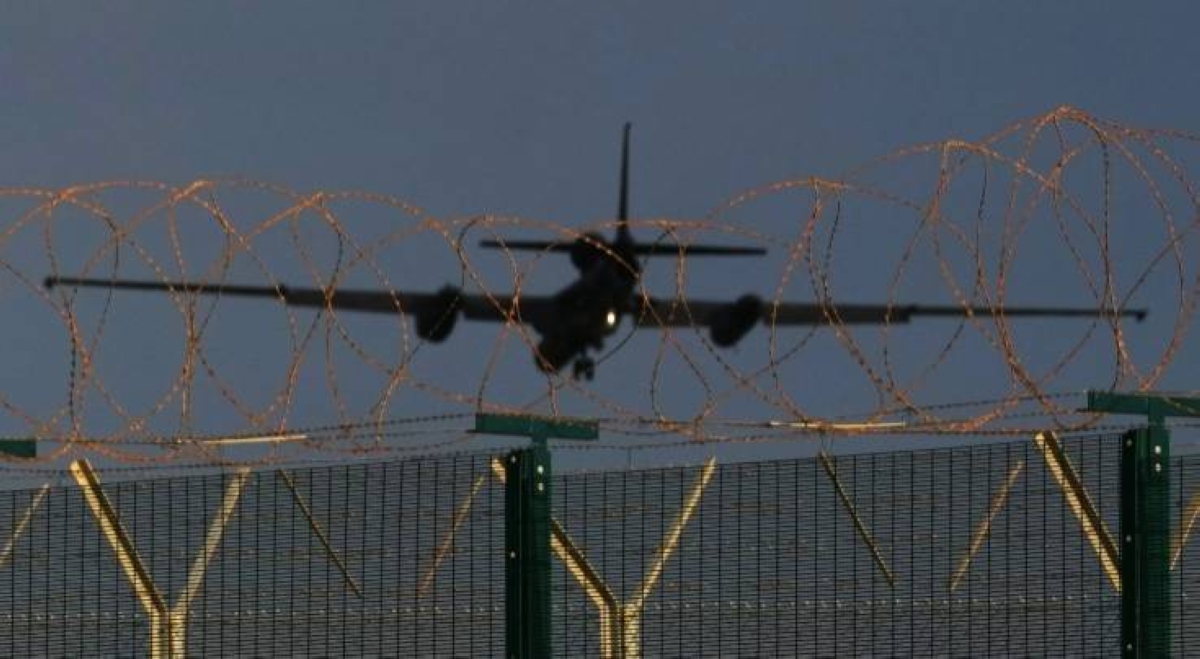
Akrotiri remains one of two sovereign British bases retained on the island after Cyprus gained independence in 1960. The facility has supported UK operations in Iraq, Syria and Yemen and was struck by an Iranian-made drone in March, causing minor damage early in the wider U.S.-Israeli confrontation with Iran. Britain recently banned the IRGC as a threat to national security, citing its role in proxy attacks across Europe that have increasingly targeted Jewish communities and regime opponents.
The reporting across the five outlets rests on the same police statement and agrees on the central sequence: the surveillance period, the IRGC connection, the July 17 arrest, and the ongoing extradition. No account disputes the existence of UK-Cypriot operational cooperation or the legal basis for the charges. Where the accounts differ is in the additional detail each includes. One report alone supplies the full 2025 Cypriot arrest timeline, the Israeli intelligence origin, the lawyer’s Supreme Court arguments, and the court’s confirmation that physical monitoring had verified the foreign tip. The remaining reports focus instead on the Metropolitan Police announcement, the suspect’s London address and occupation as a taxi driver, and the broader context of Iranian threats to Western facilities.
That convergence on the partnership itself carries weight. Cypriot authorities executed the initial detention, defended it through their own courts against challenges over foreign-sourced evidence, held the man for a year, and then enabled his transfer to British jurisdiction once the bulk of the intelligence concerned the Akrotiri base. The result is not friction between London and Nicosia but a practical demonstration of how the two governments handle extraterritorial security cases involving third-country intelligence. The eastern Mediterranean setting makes the cooperation more consequential: Akrotiri sits at the centre of UK power projection in the region, and Iran has already shown willingness to strike the facility directly.
The National Security Act’s first overseas application in this case also sets a precedent. British officials can now cite a working model for prosecuting hostile state activity against UK bases abroad through joint action with the host nation. For Cyprus the episode underscores that its own security services can act on external intelligence while retaining legal control until extradition is arranged. None of the coverage suggests the arrangement weakens either side’s sovereignty; instead it shows both exercising it in tandem.
What to Watch
The most complete account therefore comes from the reporting that alone supplies the Cypriot legal timeline and the Israeli intelligence trigger. That fuller record confirms the operational partnership described in the police statement rather than contradicting it. The episode is likely to encourage further quiet coordination between the two governments on base security, particularly as tensions with Iran persist and the IRGC continues to view British facilities as potential targets. Readers who see only the UK police announcement will understand the immediate charges; those who also see the Cypriot court record will understand how the case reached that point through layered intelligence and local judicial process.
That’s how the world told the story.
Get tomorrow’s bulletin by email — one briefing, up to six stories.
Subscribe freeNo spam. One-click unsubscribe. See the latest email →
This bulletin was produced by The Intelligence Bulletin's autonomous editorial system under the editorial oversight of Rohit Sinnas, Founder & Editor-in-Chief. How it works →