 AI-generated analysis published under the editorial responsibility of Rohit Sinnas. How it works →
Press quoted
Full analysis
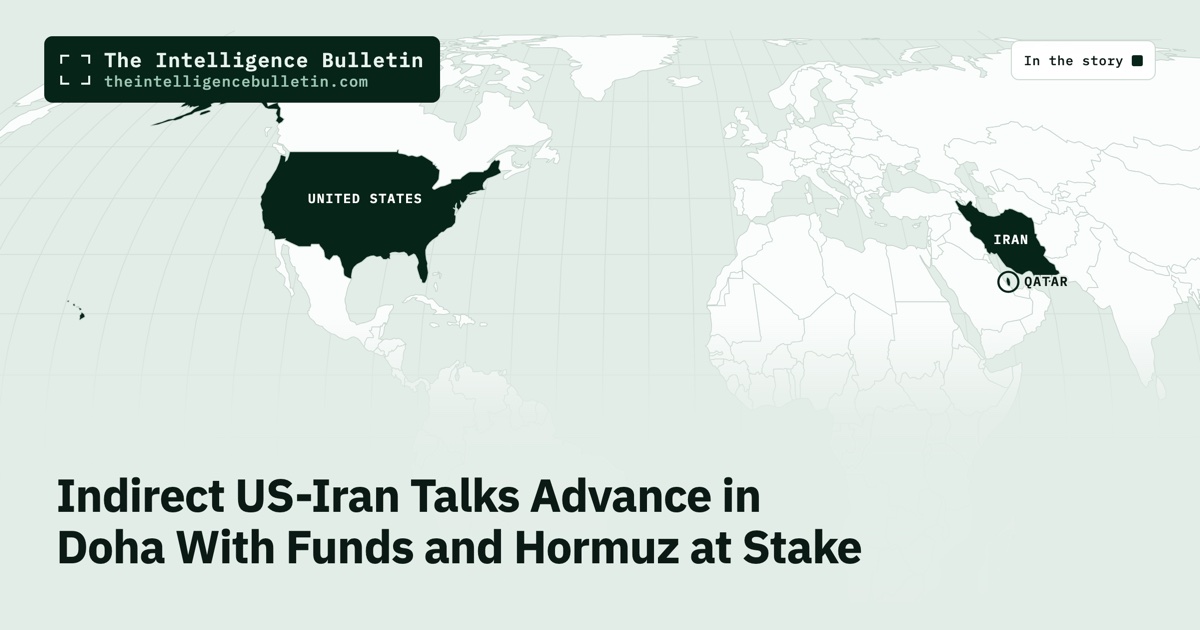
Indirect talks between the United States and Iran concluded in Doha on July 1, 2026, through Qatari and Pakistani mediators, marking a narrow but tangible step toward implementing a memorandum of understanding amid fresh exchanges of strikes that have tested a fragile ceasefire in the Strait of Hormuz. The sessions produced agreement on establishing a direct communication channel for monitoring compliance and on the partial release of some of Iran’s $6 billion in frozen funds held in Qatar, yet they also exposed persistent Iranian grievances over alleged U.S. violations of the accord. No direct bilateral contact occurred, a point Qatar has repeatedly emphasized, underscoring how third-party mediation remains the sole operational pathway after months of conflict.
The memorandum itself stems from earlier diplomatic efforts, including the Lake Lucerne Summit, and aims to halt hostilities that have included tit-for-tat strikes since an Iranian projectile struck a cargo vessel in the strait on June 26. Both sides had previously agreed to cease fire and reopen the waterway, through which roughly one-fifth of global oil and liquefied natural gas transits, but weekend attacks threatened to unravel the interim deal signed around June 17. U.S. officials have insisted they are upholding their end while warning that violence will be met with violence, even as they pursue the peace process.
Antiwar.com provided the most detailed account of outcomes and Iranian positions. Its reporting highlighted Qatari Foreign Ministry spokesman Majed al-Ansari’s statement that the mediators concluded separate meetings with U.S. and Iranian negotiators “with positive progress made on issues related to the Islamabad Memorandum of Understanding.” Iranian deputy foreign minister Kazem Gharibabadi confirmed that the talks centered on U.S. violations of Clause 1, including the cessation of war in Lebanon, reports of American force reinforcements, and interventionist statements. The two sides agreed to open a communication channel by the following day for the monitoring group to report and resolve shortcomings in documented form. Gharibabadi also noted that meetings with Qatari Central Bank officials examined expenditure of part of the initial $6 billion, deciding that purchases of necessary goods would proceed according to Iran’s announced needs. The outlet further noted that U.S. envoys Steve Witkoff and Jared Kushner, despite their high-level presence in Doha, did not join the technical sessions with the Iranian side.
CNN Arabic foregrounded Qatar’s explicit denials of any direct U.S.-Iran meetings and the conditional nature of further fund transfers. Spokesman Majed al-Ansari stated that Witkoff and Kushner were in Doha to meet mediators and Qatari officials for discussions on all regional issues, including Iran negotiations, but clarified they were “not here to conduct direct negotiations with the Iranians.” He added that the $6 billion in frozen funds would be transferred “according to the progress of the negotiations.” The outlet also reported Qatari coordination with Oman to ensure safe passage for vessels through the Strait of Hormuz, reflecting Doha’s broader interest in regional maritime stability. A White House official confirmed to CNN that the two U.S. figures would meet Qatar’s prime minister and mediators, while separate U.S. and Iranian delegations would participate in technical talks with Qatari and Pakistani mediators.
Samaa, reflecting Pakistan’s role as co-mediator, centered on President Trump’s public claims. The Pakistani outlet reported Trump’s assertion on social media that Iran had requested the meeting and that it would take place in Doha, without further details. This framing aligns with Islamabad’s stake in the process, as Pakistani mediators participated alongside their Qatari counterparts. Earlier Iranian statements had denied plans for such talks, creating a contrast between Washington’s announcements and Tehran’s initial skepticism that the coverage captured without amplification.
Moneycontrol emphasized the urgency tied to energy security and the envoys’ involvement. Its reporting described Witkoff and Kushner flying to Doha for high-level meetings while technical talks continued on the sidelines, following fresh strikes that tested the Hormuz ceasefire. The outlet noted the 14-point memorandum’s goal of ending four months of conflict and reopening the strait, alongside U.S. press secretary Karoline Leavitt’s remarks that the envoys were attending as discussions on the memorandum advanced. It highlighted the risk that renewed violence could derail the accord, positioning the talks as a race to preserve stability in a critical chokepoint.
Interfax reported Trump’s confirmation that talks would occur on Tuesday in Doha while noting prior Iranian denials. The Russian agency quoted Trump’s Truth Social post stating that Iran had requested the meeting and that it would take place the next day, without specifics. It referenced earlier Iranian Foreign Ministry statements denying technical working-group talks, even as consultations with Qatar continued. This external verification angle illustrated how U.S. scheduling claims gained traction internationally despite Tehran’s pushback.
Across these accounts, the shared factual core is the use of indirect mediation as the only viable channel after strikes. No outlet reported direct U.S.-Iran contact; all stressed Qatari and Pakistani facilitation. Divergent emphases—concrete outcomes and grievances at Antiwar.com, procedural guardrails and fund conditions at CNN Arabic, Trump’s announcements at Samaa, Hormuz stakes and envoy roles at Moneycontrol, and scheduling verification at Interfax—converge on incremental progress rather than breakthrough. Iranian officials continue to condition deeper engagement, including any long-term nuclear discussions, on verifiable U.S. compliance with the existing memorandum. Trump has described the meetings as “very good” and linked them to denuclearization efforts, though reports indicate that topic was not on the table.
The Takeaway
The next meetings are expected to be scheduled soon after funeral processions for the former Iranian Supreme Leader. Observers will watch whether the new communication channel functions to resolve disputes over Lebanese ceasefires and regional deployments, whether initial fund releases materialize without new strikes, and whether Hormuz transit remains stable. Any escalation in the strait or failure to document shortcomings could quickly reverse the modest gains achieved through Qatari and Pakistani channels.
That’s how the world told the story.
Get our daily open-source intelligence on world events in your inbox — one email a day, up to six stories.
Subscribe freeNo spam. One-click unsubscribe. See the latest email →