 AI-generated analysis published under the editorial responsibility of Rohit Sinnas. How it works →
1Trump’s tweet forces an Iranian walkout. Every outlet still treats the channel as intact.
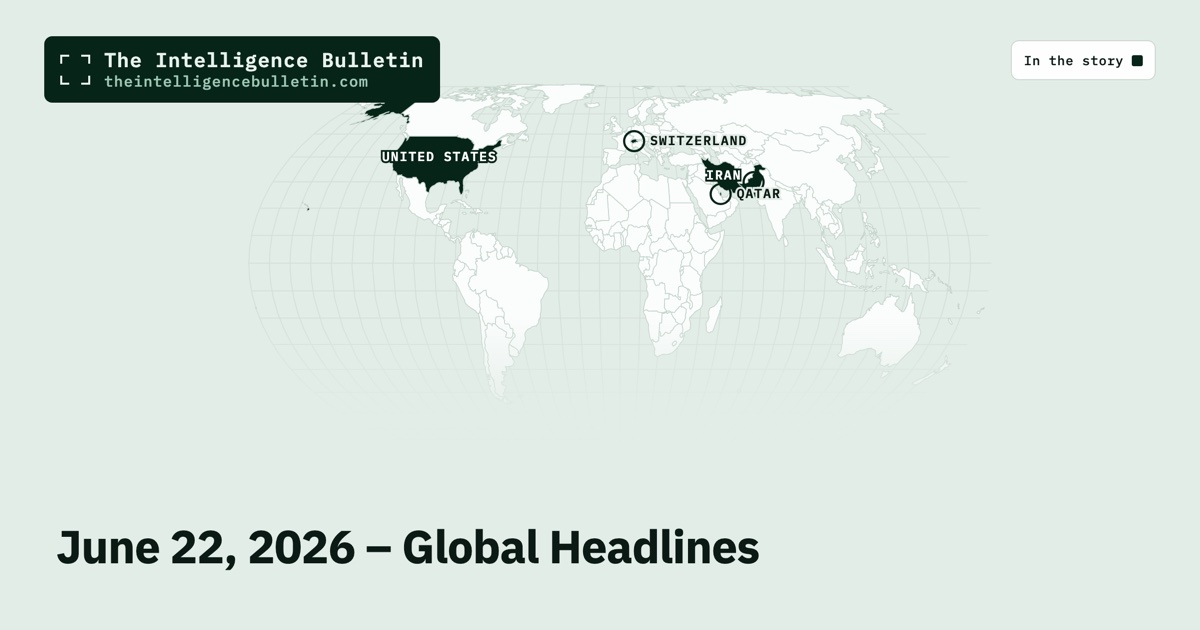
The Iranian walkout at Bürgenstock reveals how Trump’s social-media intervention can instantly override weeks of quiet shuttle diplomacy. Arabic CNN framed the episode as a live update from stalled talks, stressing the delegation’s abrupt departure and the mediators’ scramble to keep channels open. Albayan instead zeroed in on Axios-sourced details of movement between hotels, treating the threat itself as background to the logistical choreography. Aurora-Israel highlighted the Vance-Trump contrast, noting the vice president’s earlier on-site role before the public threat shifted control back to Washington. Across these accounts the common thread is continuity rather than rupture: the pause is presented as tactical, not terminal, and every outlet ties the episode to the same sequence of postponed Vance visits and Qatari groundwork that began on 19 June. That convergence suggests the outlets see the underlying US-Iran channel as durable enough to absorb presidential tweets, even while each tailors its emphasis to domestic audiences watching Hormuz and Lebanese security zones.
2Ukrainian strikes halt gasoline sales to Crimea residents after killing four
The shared reporting across outlets reveals a consistent focus on how Ukrainian strikes are now directly disrupting daily civilian logistics inside Russian-held territory rather than remaining confined to military assets. Times of Earth frames the event around the practical collapse of fuel distribution for residents, underscoring infrastructure fragility without broader geopolitical overlay. Calgary Sun instead centers the casualty count and its implications for Western-backed Ukrainian operations, treating the human toll as evidence of sustained pressure on Russian rear areas. Dunya News, meanwhile, isolates the energy-market angle, noting how even localized fuel pauses in Crimea could ripple toward South Asian importers already sensitive to Black Sea supply volatility. This convergence on the suspension of gasoline sales, rather than any single outlet’s preferred emphasis, signals that the strikes have crossed a threshold where they affect occupied civilian economies in measurable ways. The absence of claims about strategic breakthroughs or Russian retaliation in any of the three accounts further suggests the immediate story is one of incremental attrition on fuel access, not decisive battlefield shifts.
3German, French and Italian outlets reach the same verdict: Berlin and Paris are pooling tank ownership.
The deal’s most revealing feature is how little daylight exists between the three outlets on its core mechanics. All treat the 40% purchase as the decisive step that unlocks an IPO, and all locate the decision inside the existing KNDS joint-venture structure rather than as a new Franco-German initiative. What varies is the horizon each outlet chooses. The German-language Euronews piece anchors the story in Berlin’s industrial-policy calendar, noting how the stake aligns with Germany’s own procurement timelines and export-control rules. The English Euronews report, filed from the French side of the partnership, instead stresses the bilateral governance precedent: Paris and Berlin now hold symmetrical equity blocks inside the same legal entity. ANSA, writing for an Italian audience, folds the transaction into the larger question of whether further consolidation among the continent’s prime contractors will strengthen or dilute NATO-standard supply chains. The absence of any counter-narrative across the set is itself the signal. In a week dominated by Swiss nuclear talks and Ukrainian strikes on Crimea, the three outlets converge on a single conclusion: the KNDS restructuring is not a bilateral sideshow but the clearest current evidence that Europe’s two largest defense economies are willing to pool ownership before they pool requirements.
4Indian coverage places Katz’s Lebanon refusal inside Swiss Iran talks. Russian service leaves it on the ground.
Moneycontrol’s decision to fold Katz’s statement directly into the US-Iran nuclear talks at Bürgenstock reveals how New Delhi’s foreign-policy press now treats every Israeli move in Lebanon as leverage in the wider nuclear file. The outlet’s headline makes the Iranian ceasefire demand the operative context, positioning Israel’s refusal to withdraw as a potential spoiler rather than a standalone security claim. Arabic RT, by contrast, strips the story to Katz’s denial of restrictions and his pledge to stay put, reflecting Moscow’s preference for presenting Israeli military latitude as an operational fact rather than a diplomatic variable. This split is structural: the Indian source operates inside a narrative that already links Hormuz threats, Swiss mediation and Israeli battlefield posture, while the Russian Arabic service keeps the frame narrow to avoid diluting the message that Israel faces no external constraints. The result is two different maps of the same sentence—one that places Katz’s words inside the Swiss talks, the other that leaves them on the ground in southern Lebanon.
5Lebanon flags volatility and denials. Spain counts the MPs. Chile marks Monday.
The most striking element across these reports is how little they dwell on the substance of the Labour rebellion and how quickly they pivot to signals of imminent departure or outright denial. Lebanese coverage from Annahar leads with rumors of readiness to resign and immediately pairs them with a government-source rebuttal, reflecting a regional habit of scanning Western capitals for early signs of instability that could ripple through alliances or energy markets. Spanish outlets, by contrast, fixate on the numeric threshold—exactly one hundred MPs—as if the scale itself signals a parliamentary fracture that could soon reach Madrid through EU channels. Chilean reporting narrows further to the calendar, highlighting an expected Monday announcement, which suggests an audience attuned to the precise sequencing of political exits rather than their causes. None of the three accounts explores the underlying policy disputes or Burnham’s positioning; instead each extracts a single usable fact for its own audience: volatility, parliamentary arithmetic, or timing. That narrow extraction reveals more than the headlines admit. Foreign desks are treating Starmer’s difficulties less as a British domestic story and more as a data point in a wider pattern of Western leadership churn already visible in the same day’s Switzerland and Crimea dispatches.
That’s how the world told the story.
Get our daily open-source intelligence on world events in your inbox — one email a day, up to six stories.
Subscribe freeNo spam. One-click unsubscribe. See the latest email →