 AI-generated analysis published under the editorial responsibility of Rohit Sinnas. How it works →
1Trump Defends Iran Deal as G7 Leaders Signal Support
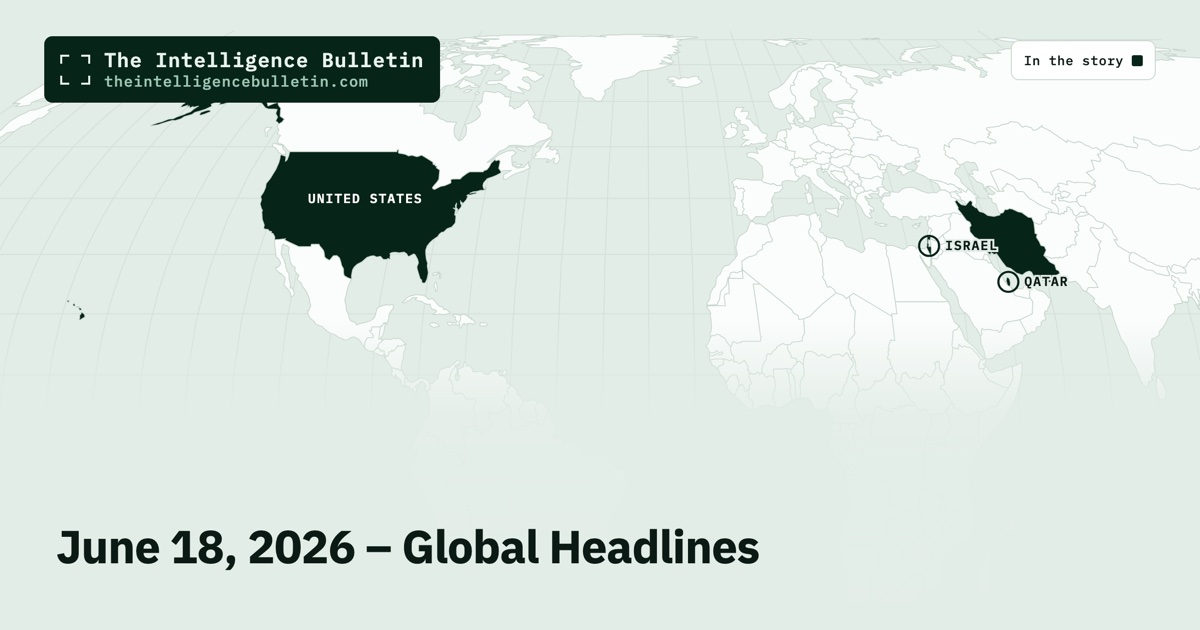
Fox News opens by highlighting the financial windfall for Iran, framing Trump’s defense as an exercise in semantics that downplays how the deal unlocks substantial funds Tehran could redirect. Arkansas Online instead leads with the collective G7 endorsement, treating the summit consensus itself as the central development rather than the domestic arguments over terms. This split reflects deeper structural incentives: Fox’s opinion format rewards scrutiny of any perceived concession to Iran given its conservative readership and long-standing editorial line on sanctions relief, while the regional paper draws on wire reporting that privileges the multilateral setting where the announcement occurred. The pattern echoes earlier TIB coverage of the same negotiations, where US outlets split between emphasizing Trump’s unilateral authority and the need for allied buy-in to make any agreement durable. Neither source lingers on the physical location at Versailles or the presence of other leaders such as Macron or Modi, suggesting the story’s gravitational pull remains the bilateral US-Iran axis rather than the broader summit choreography. What stands out is how little daylight exists on the basic facts of the signing itself; the divergence is almost entirely about which constituency each outlet assumes must be convinced next.
2Trump Signs US-Iran Deal at Versailles, Thanks Xi and Putin
The sudden appearance of the signed text at Versailles after weeks of drone strikes and frozen-asset warnings reveals how quickly the confrontation cooled once mediators reached Tehran. Benzinga captured Trump’s explicit thanks to Xi Jinping and Vladimir Putin for remaining neutral, framing the moment as a Washington success that avoided wider entanglement. Indian Express instead highlighted the reversal itself, noting how Trump walked back months of strike threats to accept a 14-point memorandum whose text he had refused to share with Israel. Samaa TV, reporting from Pakistan, led with Beijing’s welcome and its call for all parties to honor commitments, underscoring that enforcement now rests partly on Asian capitals rather than solely on the signatories. The convergence across these outlets shows the deal’s durability is already being measured less by its clauses than by whether Russia, China, and regional neighbors treat it as binding. That test began the same day the ink dried.
3Modi and Trump Discuss Trade, Defence at G7 Summit
Indian reporting on the Modi-Trump encounter at Evian consistently presents it as a platform for concrete bilateral deliverables even as the larger G7 agenda centred on the US-Iran deal. Prokerala.com hewed closely to the Ministry of External Affairs readout, listing trade progress and sector-wide cooperation without embellishment. Daily Pioneer shifted the emphasis to defence and maritime security, reflecting New Delhi’s long-standing priority on protecting Indian Ocean sea lanes amid ongoing Gulf tensions. Divya Bhaskar alone foregrounded Trump’s reported assurance that the United States would stand with India if attacked, injecting a personal security guarantee absent from the official summary. The shared decision across all three outlets to treat the bilateral meeting as an independent success story, rather than a footnote to the Iran agreement, reveals how Indian editors see the G7 primarily as an arena for advancing US-India defence and commercial ties. This framing aligns with India’s recent pattern of extracting tangible commitments from Washington while the United States pursues separate Middle East diplomacy. The absence of any reference to friction over the Iran text further underscores the priority placed on insulating the bilateral relationship from contemporaneous multilateral outcomes.
4Pope Leo XIV Welcomes US-Iran Deal at Vatican Audience
The Pope’s brief public endorsement arrived exactly as the US-Iran memorandum moved from Qatari-mediated talks in Tehran to formal signature at the G7 in France, turning a religious platform into an unexpected diplomatic amplifier. Turkish coverage through aa.com.tr framed the statement around concrete regional security gains, reflecting Ankara’s direct stake in containing spillover from the Strait of Hormuz incidents reported earlier in June. Italian outlet zazoom.it, situated near the Vatican, simply registered the Pope’s positive tone toward the United States and Tehran without additional regional gloss, underscoring geographic proximity rather than policy emphasis. Azerbaijan’s azertag.az limited itself to noting the welcome itself, consistent with a South Caucasus vantage that tracks great-power deals mainly for their effect on energy corridors and Russian-Iranian alignments. Across these accounts the common thread is the absence of skepticism: outlets from three different neighborhoods all treated the papal words as a straightforward diplomatic signal rather than a moral intervention, revealing how quickly the deal has shifted from contested flashpoint to accepted fact in capitals far from Versailles.
5Trump Warns Iran Deal Not Final, Threatens Renewed Strikes
The most striking element across coverage is how uniformly outlets treat Trump’s threat of renewed strikes as the live variable rather than the pact itself. Israel National News leads with the direct military phrasing “dropping bombs on their heads,” reflecting Israel’s security calculus that any US-Iran understanding remains subordinate to Tehran’s nuclear timeline. Anadolu Agency, by contrast, foregrounds the diplomatic status of the pact and Qatari mediation efforts still underway, consistent with Turkey’s regional interest in avoiding another round of Gulf escalation that could affect its own energy and refugee calculations. Deutsche Welle’s Swahili headline “Trump threatens Iran again” places the emphasis on recurrence, underscoring European concerns that Washington’s unilateral signaling could unravel the multilateral sanctions framework painstakingly rebuilt since 2018. Despite tonal differences the three accounts converge on the same underlying fact: the memorandum initialed at Versailles is treated by the US president as reversible. That convergence itself signals the structural reality that no regional actor yet regards the deal as durable enough to alter force posture or sanctions exposure. The June 13–17 progression from US drone intercepts in the Strait of Hormuz to this latest warning shows the pattern of kinetic pressure followed by verbal recalibration that has defined the current cycle.
That’s how the world told the story.
Get our daily open-source intelligence on world events in your inbox — one email a day, up to six stories.
Subscribe freeNo spam. One-click unsubscribe. See the latest email →