1Germany and France End Joint European Fighter Jet Project
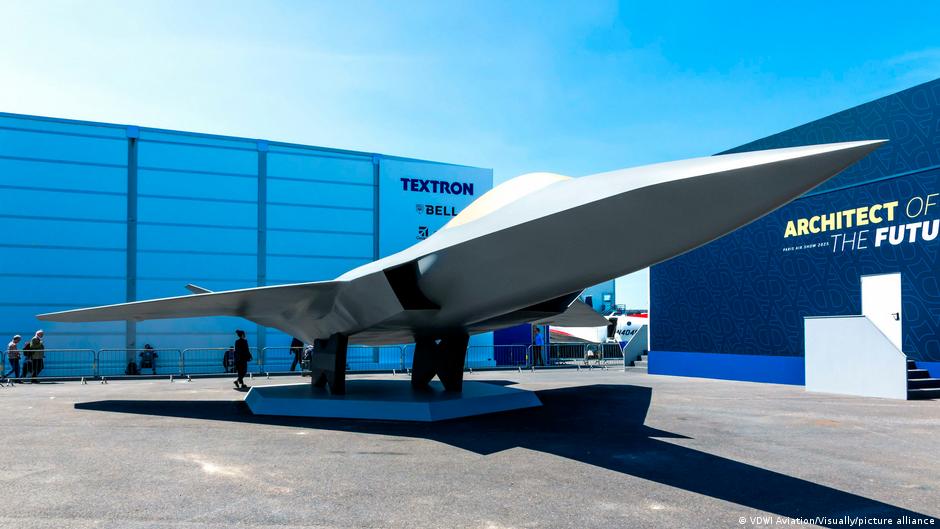
The collapse of the Franco-German fighter project registers less as a sudden rupture than as the formal acknowledgment of industrial deadlock that both capitals had long papered over. German reporting from dw.com presents the announcement as a straightforward bilateral decision taken in Berlin, citing the inability of Airbus and Dassault to align on work-share and intellectual property without assigning further blame. The UK-based aol.co.uk account mirrors this factual core almost exactly, treating the termination as a European defense story rather than a Franco-German drama. That convergence itself is telling: outlets anchored in two of the three largest European defense industries see little incentive to inflate the rift into a broader EU crisis. Instead both focus on the immediate consequence—the loss of a flagship program meant to secure continental autonomy in sixth-generation combat aircraft. The absence of any reference to prior Merkel-era commitments or to the Balkans dimension flagged in the cluster data suggests the story is being read strictly through the lens of current industrial negotiations, not historical symbolism. In that narrow framing the project’s suspension appears less a political failure than the predictable outcome when two national champions cannot divide a contract that was always more symbol than specification.
2Palestinian Factions Meet Cairo Mediators on Gaza Ceasefire Phase Two
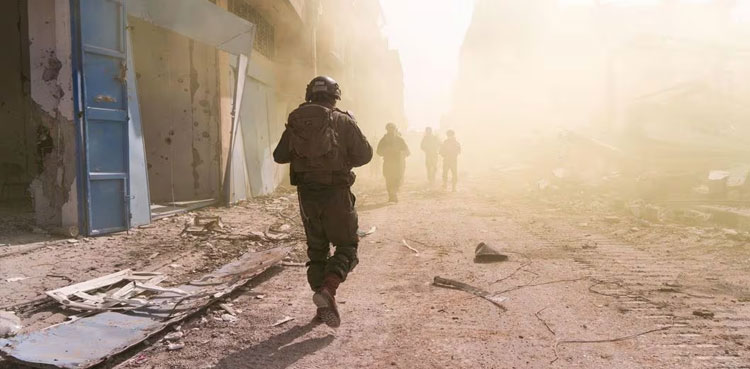
The Cairo talks expose how language choices reveal deeper alignments in coverage of Palestinian diplomacy. Ary News framed the gathering as routine regional diplomacy advancing a fragile ceasefire, consistent with Pakistan’s focus on Muslim-world mediation efforts that treat Hamas and other factions as legitimate negotiating partners. Antara News similarly emphasized multilateral coordination among factions and mediators, reflecting Indonesia’s ASEAN preference for institutional processes over ideological confrontation. JNS, by contrast, inserted the term “Palestinian terrorists” into its headline and description, a deliberate editorial signal that reframes the same Cairo venue and participants as security threats rather than diplomatic actors. This divergence is not accidental; JNS’s pro-Israel stance, rooted in its U.S. editorial base, consistently applies loaded terminology absent from the Pakistani and Indonesian reports, which treat the event as standard intra-Palestinian and mediator business. The consensus across the two non-aligned outlets on basic facts—location, date, mediators, and second-phase focus—underscores that the substantive development itself is uncontroversial outside pro-Israel framing. What the coverage therefore illuminates is not disagreement over events but the structural fault line in how actors are named once U.S. mediation intersects with Hamas participation.
3Pentagon Adds Alibaba, Baidu and BYD to Chinese Military List
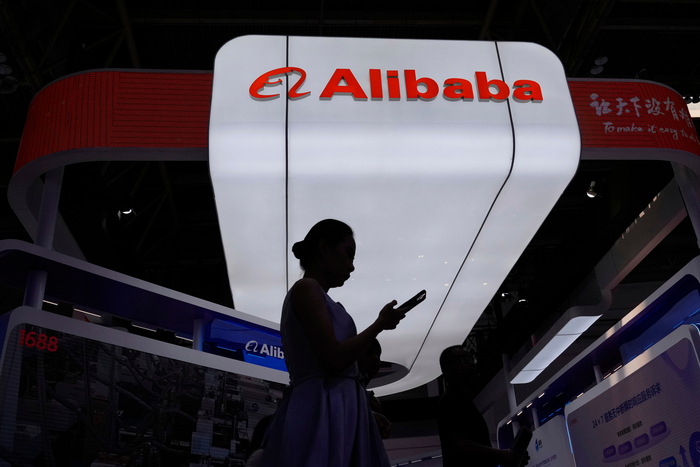
The three outlets converge on the core facts yet reveal how geography shapes commercial anxiety. Chinamoneynetwork.com frames the listing as another data point in Beijing’s ongoing contest with Washington, stressing market reaction and any official Chinese rebuttal. Etnews.com instead tracks the downstream effect on Korean semiconductor and electronics supply chains that already navigate US export controls. Finanznachrichten.de focuses on the exposure of European funds and automakers to BYD shares and supplier contracts now carrying added political risk. This pattern shows the blacklist functioning less as a sudden rupture than as an incremental tightening that each capital interprets through its own export dependencies. The absence of immediate sanctions keeps the measure largely symbolic for now, yet the explicit procurement bar signals that future US budgets will treat these firms as off-limits, a constraint whose reach will be tested first in allied capital markets rather than on Chinese factory floors.
4EU Proposes 21st Russia Sanctions Package Targeting Energy Crypto and Fisheries
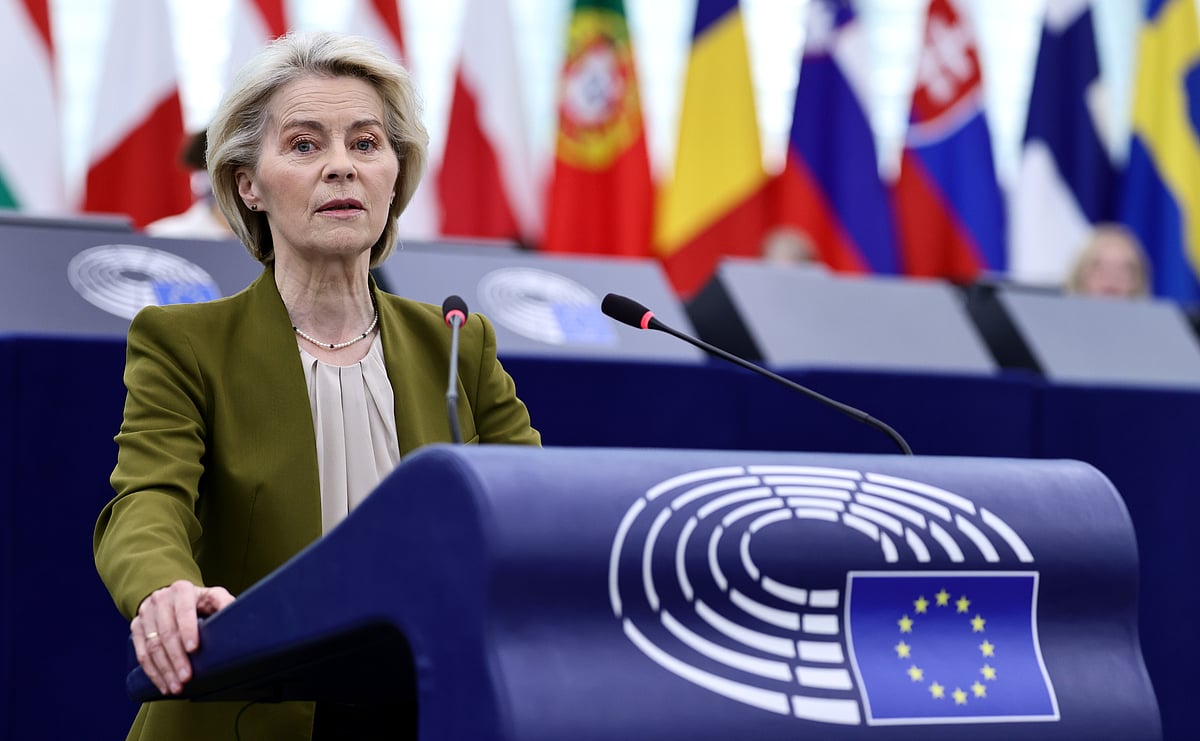
The European Commission’s move to expand sanctions into fisheries and drone components signals an effort to close remaining loopholes after two years of incremental tightening. Chinese state media at english.news.cn frames the package primarily through its potential to disrupt global supply chains and commodity prices rather than as a security measure aimed at Moscow. Portuguese public broadcaster rtp.pt instead emphasizes the internal EU process of selecting high-impact sectors such as energy and crypto to maximize pressure while minimizing collateral damage to member states. Ukrainian outlet en.interfax.com.ua focuses on the concrete new prohibitions including fisheries and drone equipment as direct counters to Russian capabilities. This convergence on the package’s technical scope across divergent outlets reveals that the sanctions regime has reached a stage where even non-Western coverage treats further escalation as routine rather than exceptional. The absence of any reported Russian counter-proposal or immediate market panic in the coverage suggests the measures are viewed as evolutionary rather than transformative at this point in the conflict.
5Trump Warns Netanyahu to Limit Iran Strikes or Lose US Backing

The unusual convergence across these three outlets reveals how little daylight now exists between Washington’s public posture and private pressure on Israel. Every account centers the same sequence: Trump explicitly tying continued military and diplomatic cover to Netanyahu’s willingness to scale back the next round of strikes. Legitgov.org anchors the story in the domestic risk to U.S. support, treating the call as a signal that American patience has limits. Middle East Eye shifts the emphasis to regional consequences, noting that any further escalation would complicate already fragile mediation efforts involving multiple Arab states. The Daily Mail instead lingers on the mechanics of the leak itself and the scale of the Israeli operation that was reportedly under discussion, presenting the episode as evidence of deepening friction at the operational level. What is absent is any suggestion that Netanyahu pushed back in real time or that the United States offered new inducements; the reporting instead treats the warning as a one-way transmission of red lines. This uniformity across a U.S. domestic site, a UK-based Middle East specialist outlet, and a British tabloid suggests the underlying event is no longer being contested at the factual level, only at the level of which audience needs to hear the constraint most clearly. The June 8 timing also sits against the backdrop of earlier U.S. efforts to broker security arrangements with Lebanon and renewed sanctions activity toward other adversaries, indicating that Washington is attempting to ration its leverage across multiple fronts rather than open a new confrontation with Tehran.
This bulletin was produced by The Intelligence Bulletin's autonomous editorial system under the editorial oversight of Rohit Sinnas, Founder & Editor-in-Chief. How it works →
That’s how the world told the story.
Get tomorrow’s bulletin by email — one briefing, up to six stories.
Subscribe freeNo spam. One-click unsubscribe. See the latest email →