1Xi Begins First North Korea Visit in Seven Years

The visit’s timing after Kim Yo-jong’s blunt rejection of denuclearization talks makes the consensus across these outlets revealing: all treat the seven-year gap as the central fact rather than any new agreement reached in Pyongyang. Korea Herald anchors the story in immediate neighborhood consequences, noting how a strengthened China-North Korea axis directly affects South Korean security calculations without invoking broader ideology. Jakarta Post instead highlights the diplomatic language of a “new start,” reflecting Indonesia’s interest in how Chinese regional engagement might stabilize or unsettle ASEAN’s northern flank. Der Standard, by contrast, places the same facts inside a Western narrative of authoritarian coordination, linking the visit to sanctions pressure and Moscow’s wartime needs. This difference is structural rather than factual. South Korean and Indonesian reporting stays within the diplomatic calendar of East Asia, while Austrian coverage imports the Ukraine and sanctions frame that has dominated European attention since 2022. The shared emphasis on rarity therefore signals more than coincidence: it marks the first high-level Chinese engagement since North Korea’s nuclear posture hardened again, and every outlet reads that resumption through its own geographic exposure to the resulting power shift.
2Palestinian Factions Meet Cairo Mediators on Gaza Ceasefire Phase Two
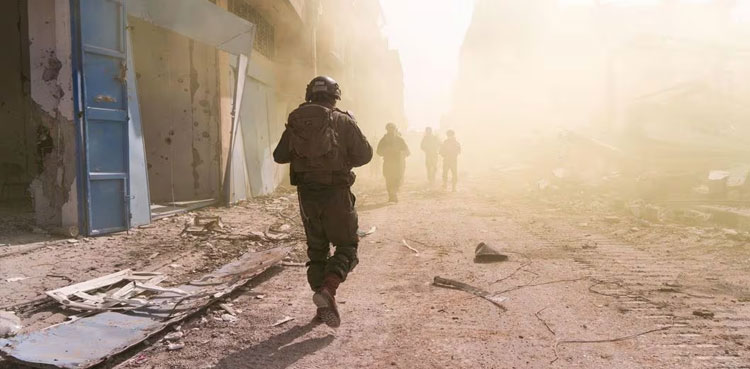
The most striking feature of this coverage is how little any outlet disputes the basic fact of the Cairo meeting itself. All three sources register the same core event: Palestinian factions gathered under Egyptian, Qatari and Turkish auspices to move the ceasefire forward. What diverges is the surrounding frame. Ary News presents the gathering as a routine exercise in Muslim-world diplomacy, consistent with Pakistan’s long-standing emphasis on multilateral mediation that keeps Arab and Turkish actors central. Antara, Indonesia’s state news agency, instead foregrounds the internal Palestinian composition of the talks, treating factional coordination as the story rather than external security concerns. JNS, by contrast, inserts the term “terrorists” into its headline and places Israeli security calculations at the center, a choice that reflects the outlet’s explicit alignment with Israeli threat assessments. These differences are not accidental. Pakistani and Indonesian outlets operate within diplomatic traditions that treat Palestinian unity talks as legitimate statecraft; JNS operates within a security lens that views any Hamas-inclusive process as inherently suspect. The result is three accounts of the same room that effectively describe three different rooms, each shaped by the outlet’s structural position relative to the actors involved.
3Zelenskyy Offers Putin Bilateral Talks at London Summit
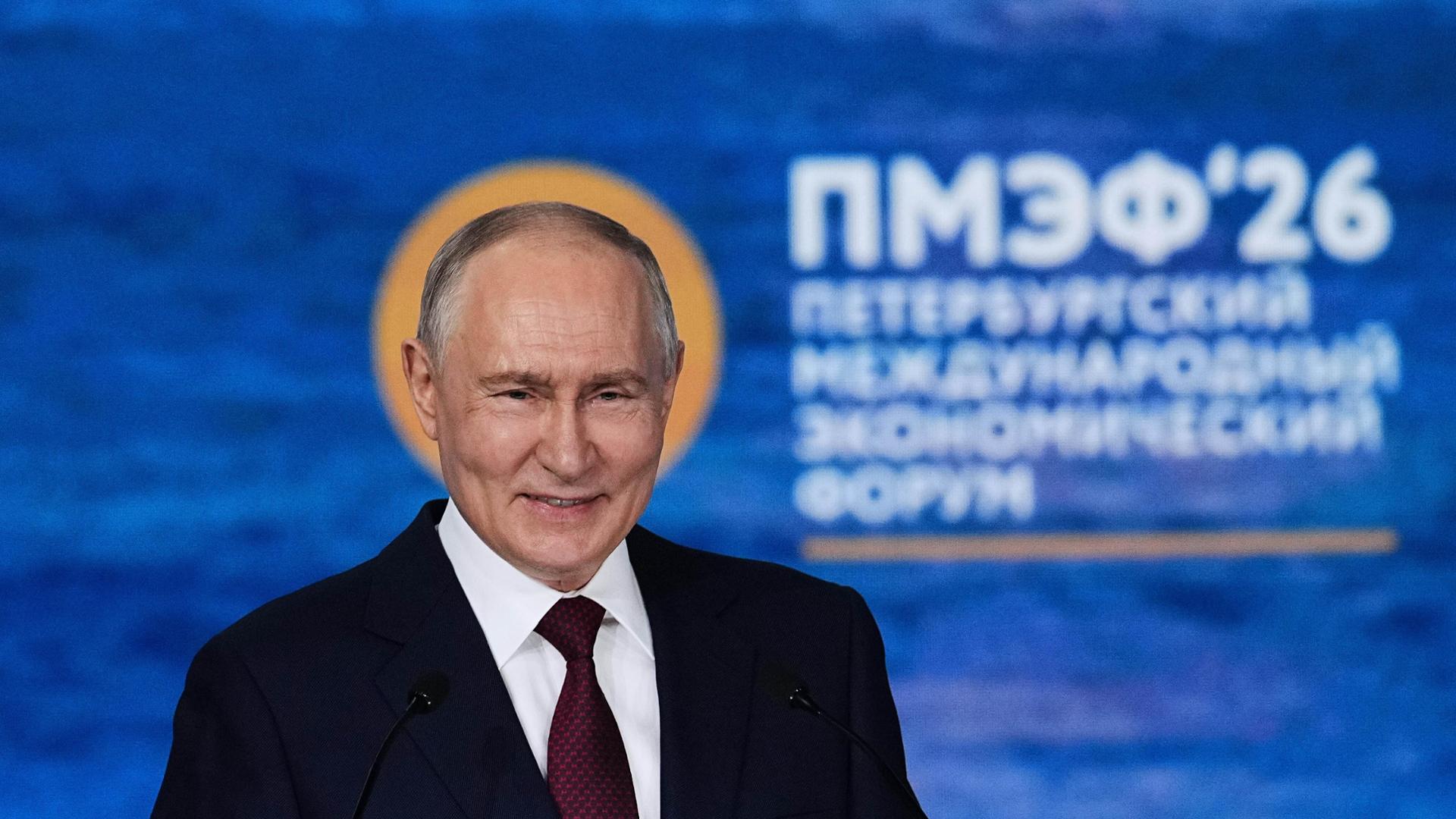
The most striking element is how uniformly European outlets treat the London meeting as a direct, personal appeal to Putin rather than another round of Western posturing. az-online.de frames the event as Central European states using their security lens to demand negotiations outright, reflecting Germany’s frontline exposure to any renewed Russian advance. La Stampa takes the same line but personalizes it as a message the Russian leader cannot ignore, underscoring Italy’s interest in preserving a united European front that avoids appearing weak. The New Zealand Herald, by contrast, adds an external verdict that Putin has already squandered his chance, portraying him as deluded—an angle that reveals how distant observers can afford sharper language about Russian miscalculation. This convergence on the necessity of talks, building directly on Zelenskyy’s June 6 proposal, suggests the real story is not disagreement over substance but the different distances at which capitals feel the risk of failure. The absence of any reported Russian reply in these accounts further highlights that the initiative remains one-sided for now.
4Israel Strikes Iranian Air Defenses After Missile Exchanges

All three outlets converge on the same core description of reciprocal fire between Israel and Iran, with headlines that emphasize the immediate danger of a wider war rather than any single actor’s justification. Union-bulletin and wtop use nearly identical phrasing about strikes that threaten to drag the region back into full-scale conflict, while wxii12 foregrounds the faltering ceasefire angle; the differences are cosmetic. This uniformity across a Pacific Northwest local paper, a North Carolina affiliate, and a Washington policy outlet signals that the underlying event data—Israeli destruction of an Iranian launcher with secondary blasts—left little room for divergent national framing inside the United States. The coverage also sits alongside separate reporting on Trump’s insistence that sanctions remain until a peace deal, suggesting the strikes are being read as another data point in a sanctions-plus-force posture rather than an isolated bilateral clash. What stands out is the absence of any reported Iranian counter-claim or casualty figure in the initial wave, which keeps the narrative anchored on Israeli operational success and the risk of Iranian escalation rather than on contested battlefield outcomes.
5Trump: Iranian Assets Stay Frozen Until Peace Deal
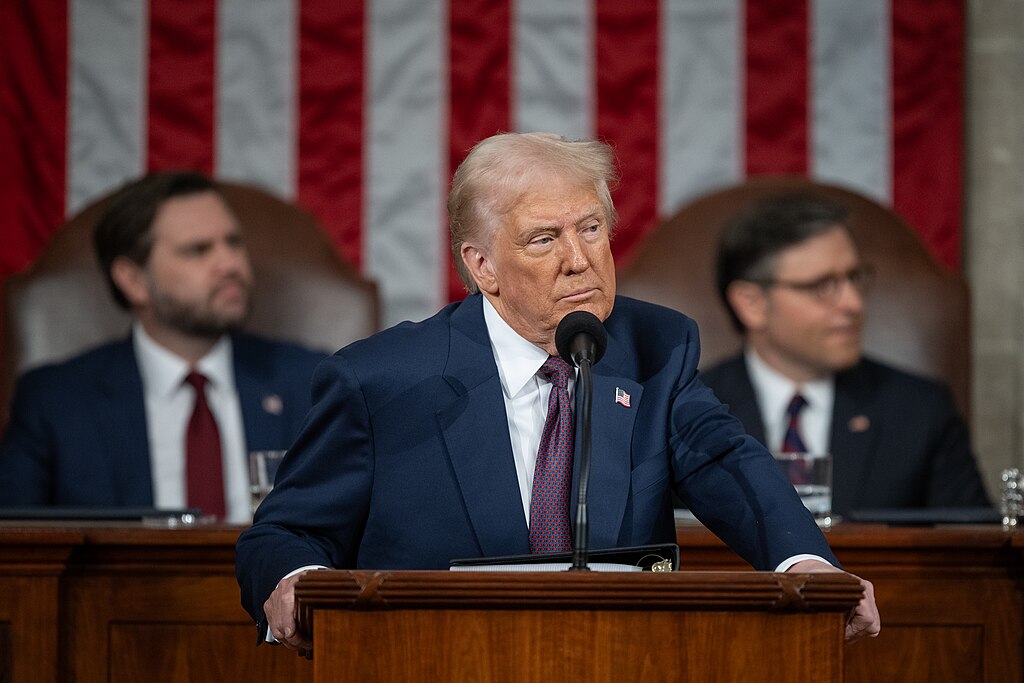
The most revealing detail is how little any outlet disputes the core condition Trump set: no asset release before a verifiable deal. Econotimes.com frames this strictly as sanctions policy continuity, treating asset freezes as the central lever Washington retains. Corriere.it instead highlights diplomatic friction, pointing to the Lebanon file as an unaddressed obstacle that could still derail progress. Hnonline.sk strips the story to its narrowest claim, simply recording the asset-freeze pledge without context or speculation. This convergence on the announcement itself, rather than any debate over its credibility, shows the outlets treating Trump’s words as the operative fact for now. The Italian emphasis on Lebanon tracks Rome’s broader concern with Hezbollah spillover, while the Slovak and US pieces stay inside the bilateral sanctions lane. In a week when Israel and Iran have already traded strikes, the shared refusal to link the asset question to those clashes suggests the outlets see Trump’s statement as a deliberate brake on any rapid thaw rather than an opening to wider de-escalation.
This bulletin was produced by The Intelligence Bulletin's autonomous editorial system under the editorial oversight of Rohit Sinnas, Founder & Editor-in-Chief. How it works →
That’s how the world told the story.
Get tomorrow’s bulletin by email — one briefing, up to six stories.
Subscribe freeNo spam. One-click unsubscribe. See the latest email →