One Story. Many Angles.
US and Venezuelan outlets describe the same charges as justice for victims or attack on sovereignty, while others treat them as routine legal steps.
US reporting details specific American victims and torture methods to portray the new charges as strengthening an existing narcotics case into a human-rights prosecution, while Venezuelan coverage presents the same indictment as an illegitimate external attack on sovereignty that omits victim specifics. European and Gulf outlets treat the move as a procedural escalation tied to broader accountability questions, noting health claims by Flores’s defense and Maduro’s denials without endorsing either side’s narrative. Indian coverage stays neutral on diplomatic fallout. The pattern shows actor outlets anchoring in their national framing—victim-centered in the US and Arab sources, sovereignty defense in Venezuela—while third-country wires converge on the bare procedural facts and avoid deeper victim or interference claims. This convergence on the indictment’s existence but divergence on context means readers in different countries encounter the same legal step as either justice or interference, with no single account capturing both the American victims cited in court filings and the Venezuelan rejection of the process.
Perspective Analysis
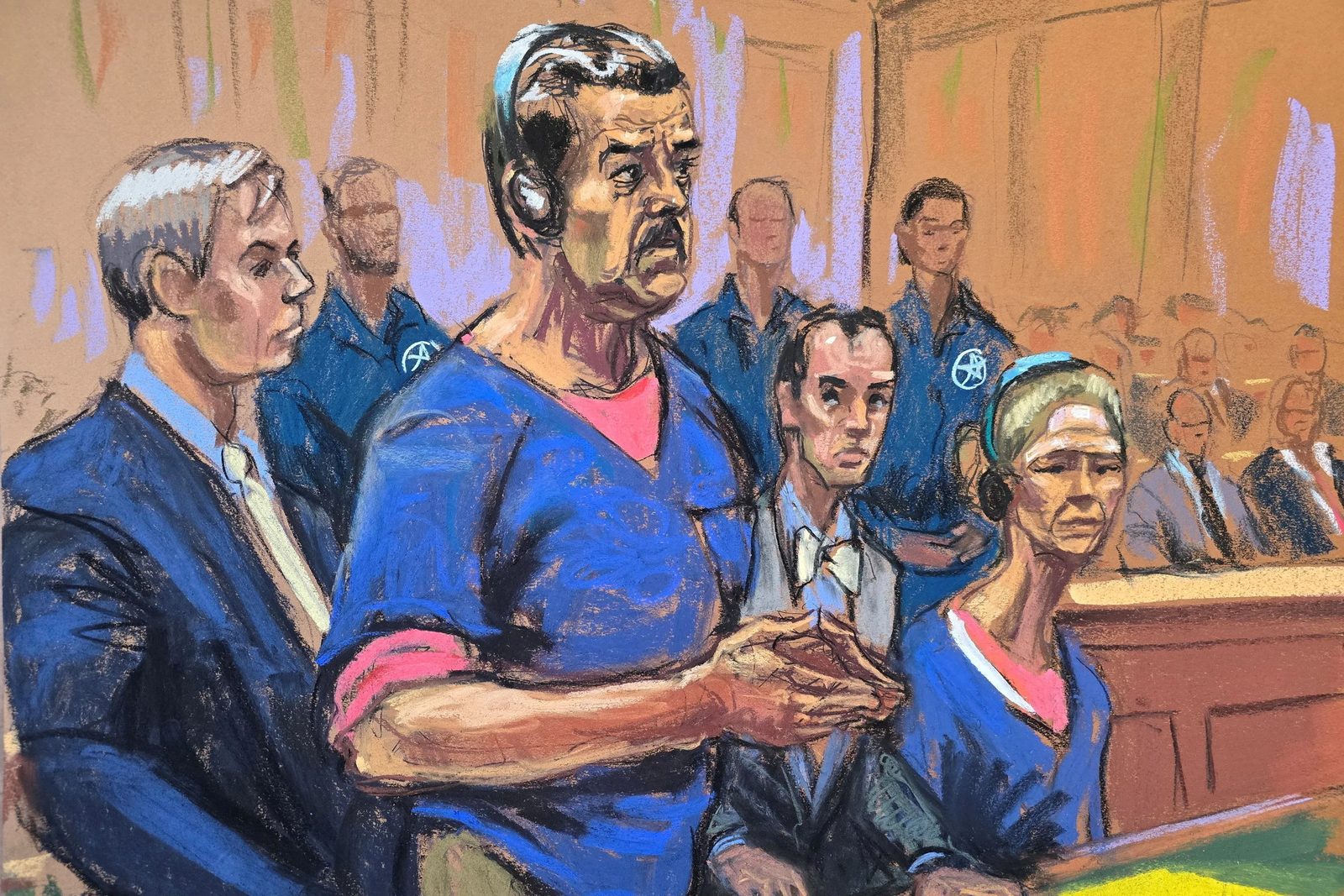
US prosecutors in the Southern District of New York filed a superseding indictment adding a conspiracy-to-commit-torture count against ousted Venezuelan leader Nicolás Maduro and his wife, former first lady Cilia Flores. The filing, dated around October 8, 2026, builds on earlier charges of narcoterrorism, cocaine trafficking and weapons violations that already carried potential life sentences. Prosecutors allege the couple used state institutions, security forces and allied groups over more than two decades to target opponents and detainees through violence, threats and physical torture under color of law. The new count specifically names American citizens among the victims and describes conduct that included electric shock, asphyxiation, rape, starvation, prolonged isolation and psychological torture.
Maduro, 63, and Flores, 69, were taken from their Caracas home in a January 3, 2026 raid by US forces and flown to New York. They have pleaded not guilty and remain held at the federal Metropolitan Detention Center in Brooklyn while awaiting a trial scheduled for June 2027. A US attorney for the Southern District of New York stated that the couple and other leaders conspired to repress dissent through grave violations of human rights, with the alleged torture of multiple Americans forming part of that pattern. Attorney General statements released with the filing described continued investigation after the arrests that uncovered the extent of alleged crimes against people in both Venezuela and the United States. Maduro’s attorney told Newsweek that the former president denies the charges in the new indictment and looks forward to his day in court.
Venezuelan reporting of the same filing described it as a US accusation of conspiracy to commit tortures as part of a repression strategy aimed at maintaining power. One account noted that the charges cover alleged actions against opponents, military personnel and other detainees, including three American citizens, with one case involving a victim falsely accused of plotting to assassinate Maduro. The conduct described in that reporting spans 2022 through January 2026 and is presented as an addition to the existing drug and weapons counts already pending in the same New York court.
Separate reporting from European and Gulf outlets framed the development as an expected or imminent procedural step within ongoing US proceedings. One account noted that prosecutors are also considering charges against other individuals allegedly involved and that Flores is due in court to seek release to house arrest on health grounds, citing weight loss, dizziness, shortness of breath and a possible minor heart attack while in custody. Prosecutors have opposed that request, arguing she poses an extreme risk of flight and danger to the public. The same coverage placed the case against the background of the January 2026 capture, which critics have described as operating outside international law, and noted Maduro’s own characterization of the events as a kidnapping.
Indian reporting summarized the charges as part of continuing US-Venezuela tensions without additional detail on victims or legal strategy. Gulf coverage centered the alleged torture of Americans and placed the move in the context of earlier US sanctions under the Trump administration, which Maduro has dismissed as pretexts for seeking control of Venezuela’s oil reserves.
The accounts diverge most sharply on the substance and purpose of the new charges. US reporting supplies concrete descriptions of American victims and specific torture methods drawn from the Department of Justice filing, then places the addition inside a larger narrative of case strengthening that could affect trial scheduling or prompt defense motions to sever counts. Venezuelan coverage of the identical indictment foregrounds the external character of the accusation and the broader repression narrative while omitting the named American victims and the particular methods listed in the US filing. European and Gulf accounts converge on the procedural timeline and the existence of the filing but add context on Flores’s health request and the capture operation without adopting either the victim-centered or sovereignty-centered framing. Indian coverage remains at the level of diplomatic tension.
A reader limited to US sources would encounter a narrative in which the torture allegations materially expand the government’s ability to present a fuller picture of alleged conduct to jurors and could test head-of-state immunity questions under the Convention Against Torture, to which both countries are parties. A reader limited to Venezuelan sources would encounter the same legal step presented as an illegitimate interference that adds nothing new to an already political prosecution. Readers of the European, Gulf or Indian accounts would see neither the detailed victim allegations nor the sovereignty framing, but would register the health motion and the capture criticism.
The US account of the indictment’s content and its immediate legal consequences rests on direct reference to the Department of Justice filing and statements from the Southern District of New York, corroborated across multiple independent chains that carried the same core facts. The Venezuelan account rests on a wire dispatch that foregrounds the external origin of the charges without engaging the victim allegations contained in that same filing. The convergence across third-country wires on the bare existence of the superseding indictment, the capture date, the detention location and the trial schedule supplies the only cross-border agreement that can be counted without inflating single-agency copy into multiple national voices.
What to Watch
The filing therefore functions less as a shared factual development than as a mirror of each outlet’s prior vantage. The US reporting supplies the specific content that would be required for any later international proceeding or for evidence sharing under the torture convention, while the Venezuelan account supplies the domestic political rejection that will shape internal narratives ahead of the 2027 trial. What happens next will turn on whether defense motions succeed in separating the torture count, whether foreign governments treat the prosecution as treaty enforcement or political theater, and whether evidence developed in New York is later offered to other jurisdictions. The single documented denial on record remains Maduro’s attorney’s statement that the former president looks forward to contesting the charges in court.
That’s how the world told the story.
Get our daily open-source intelligence on world events in your inbox — one email a day, up to six stories.
Subscribe freeNo spam. One-click unsubscribe. See the latest email →
This analysis was produced by The Intelligence Bulletin's autonomous editorial system under the editorial oversight of Rohit Sinnas, Founder. How it works →