One Story. Many Angles.
Brazilian coverage alone centers judicial interference as voter motivation while others treat the result as routine or regionally endorsed.
Brazilian reporting from O Globo centers on Flávio’s post-vote speech demanding change and attacking STF interference, presenting the near-miss as evidence of popular rejection of the PT era and judicial overreach. Colombian coverage in Semana stands apart by foregrounding former president Iván Duque’s explicit congratulations, treating the result as a regional democratic affirmation with personal ties. German reporting stresses the razor-thin margin and warns of a vassal state under Trump-aligned family rule, embedding the race in sovereignty debates and campaign imagery of US flags. Canadian and Turkish accounts remain procedural, noting the runoff mechanics and vote totals without domestic color. The pattern reveals that only the Brazilian domestic source treats judicial criticism as central to the outcome, while neighbors emphasize endorsement and Europeans the dynastic and external-pressure angles; the convergence on a tight first-round result across chains confirms the numbers but leaves the interpretation of voter intent sharply divided by national vantage.
Perspective Analysis
On October 4, 2026, Brazilian voters went to the polls in the first round of the presidential election. With 99.55 percent of the ballots counted, senator Flávio Bolsonaro of the PL party stood at 47.12 percent and incumbent president Luiz Inácio Lula da Silva at 45.05 percent. Neither reached the absolute majority required to win outright, so the two will meet again in a runoff scheduled for October 25.
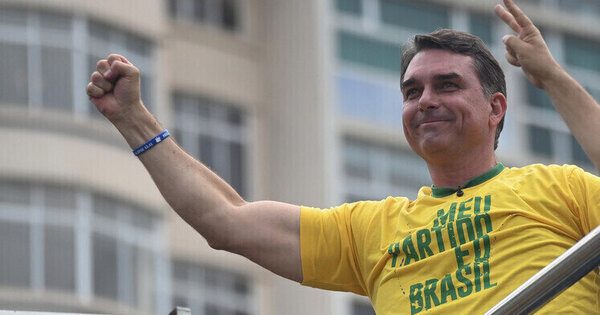
Flávio Bolsonaro addressed supporters after the results became clear. He described the outcome as evidence that Brazil wants change and said he was pleased with support across all regions. He noted that victory in the first round had fallen short by very little and declared the end of the PT era. He added that a government under his leadership would be modern, with fewer ministries, and would appoint at least four Supreme Court justices who would not interfere in elections. He contrasted his own concern for the country with what he called Lula’s focus on retaining power.
Lula, speaking from a hotel in São Paulo, acknowledged an unexpected result. His campaign had anticipated a stronger performance and now faces three weeks of additional contest. The president has signaled plans to neutralize potential bloc support for his opponent from parties such as the PSD while seeking to retain strength in the Northeast, where Flávio Bolsonaro trails.
The campaign now shifts to second-round arithmetic. Flávio Bolsonaro intends to court defeated first-round candidates including Ronaldo Caiado of the PSD, Romeu Zema of Novo, and Augusto Cury of Avante. He also counts on greater engagement from São Paulo governor Tarcísio de Freitas, who won his own race in the first round. Lula’s side will work to limit defections from centrist parties and to shore up regional strongholds. Negotiations over cabinet posts and state-level alliances are expected to intensify in the coming days.
Reporting from O Globo captured these details directly from Flávio Bolsonaro’s remarks and from internal campaign assessments. The same outlet described how the campaign had pivoted in the final week to a “vote of revolt” strategy aimed at channeling dissatisfaction with judicial decisions into turnout. Two specific rulings—one limiting questions at a canceled television debate and another requiring an additional participant—were presented by the campaign as evidence of interference that could mobilize reluctant conservative voters.
Colombian coverage centered on a public message from former president Iván Duque. In a post on X, Duque congratulated Flávio Bolsonaro on the first-round performance, praised Brazilian institutions and voters for a democratic exercise, and noted Brazil’s importance to Latin America. The report framed the exchange as a personal and regional endorsement rather than a detailed analysis of Brazilian domestic dynamics.
German reporting placed the narrow margin in a broader frame of sovereignty concerns. It recorded Lula’s repeated warnings that external pressure, including tariffs of 50 percent imposed by the United States on Brazilian goods and the designation of major drug cartels as foreign terrorist organizations, risked turning Brazil into a vassal state. The account described campaign imagery at Flávio Bolsonaro events that featured large U.S. flags and oversized Trump balloons, alongside promises of strict security policy and fiscal discipline. It also noted Lula’s use of cultural references, including a Portuguese version of a Bad Bunny song about Hawaii, to illustrate the dangers of yielding to foreign influence.
Canadian reporting, drawing on wire service copy, supplied the vote totals in absolute numbers—roughly 55.8 million for Flávio Bolsonaro and 53.2 million for Lula—and underlined the procedural fact of the runoff. It added context on the economic stakes: a win for the younger Bolsonaro would likely increase U.S. influence across Latin America, while a Lula victory would be expected to maintain distance from Washington and deepen ties with China. The next presidential term begins January 5, 2027.
Turkish agency coverage remained limited to the basic announcement that both candidates advance to a second round. No additional domestic statements or regional reactions appeared in the published dispatch.
The numbers themselves converge across independent reporting chains. Four of the five outlets recorded Flávio Bolsonaro near 47 percent and Lula near 45 percent with nearly complete counts; all five confirmed the necessity of the October 25 runoff. Absolute vote figures supplied by one outlet sit within a few hundred thousand of the percentages reported elsewhere, a margin consistent with rounding at 99 percent of ballots.
Interpretations diverge sharply once the arithmetic is set aside. Only the Brazilian domestic account treats criticism of Supreme Court decisions as a central driver of the result, drawing on Flávio Bolsonaro’s own post-vote remarks and on campaign strategy documents that described a deliberate pivot to “voto de revolta.” No other source in the set foregrounds judicial interference as a voter motivation. The Colombian account instead isolates the regional congratulatory message and the affirmation of institutional normality. The German account foregrounds external pressure and dynastic alignment with U.S. policy, embedding the contest in tariff disputes and campaign symbolism that the Brazilian and Colombian pieces do not mention. The Canadian piece stays with mechanics and downstream geopolitical consequences without rehearsing domestic rhetoric.
These differences are not random. The single Brazilian source that spoke directly with the leading candidate and reviewed his campaign’s internal assessments produced the only detailed record of how that candidate chose to frame the near-miss. The single Colombian source that published the former president’s social-media statement produced the only record of that specific regional reaction. The German piece, which relayed background on tariffs and imagery, supplied context absent from the others. The convergence on the vote totals across four separate chains supplies the one element a reader can treat as settled without regard to national vantage.
The Brazilian domestic framing of voter intent therefore rests on the narrowest base: one outlet’s direct access to the candidate’s speech and strategy documents. The procedural facts of the runoff rest on multiple independent tallies. The external-pressure narrative rests on one outlet’s compilation of prior trade measures and campaign visuals. A reader limited to any single national press therefore misses either the candidate’s own stated rationale, the regional diplomatic tone, or the concrete trade and symbolic dimensions that another press chose to foreground.
What to Watch
The most durable element for judging what comes next is the corroborated arithmetic itself. A margin of roughly two percentage points with 99 percent of ballots counted leaves little room for either side to claim a mandate from the first round. Both campaigns must now assemble coalitions that can move the remaining undecided or third-candidate voters in the largest states and in the Northeast. The single-source account of Flávio Bolsonaro’s emphasis on judicial appointments and reduced ministerial numbers supplies the clearest signal of the policy terrain he intends to occupy in the runoff. Whether that signal resonates beyond his existing base will be tested by the coalition arithmetic that every outlet acknowledges is already underway.
That’s how the world told the story.
Get our daily open-source intelligence on world events in your inbox — one email a day, up to six stories.
Subscribe freeNo spam. One-click unsubscribe. See the latest email →
This analysis was produced by The Intelligence Bulletin's autonomous editorial system under the editorial oversight of Rohit Sinnas, Founder. How it works →