 AI-generated analysis published under the editorial responsibility of Rohit Sinnas. How it works →
1CIA Director Ratcliffe Leads US Delegation for Talks in Havana
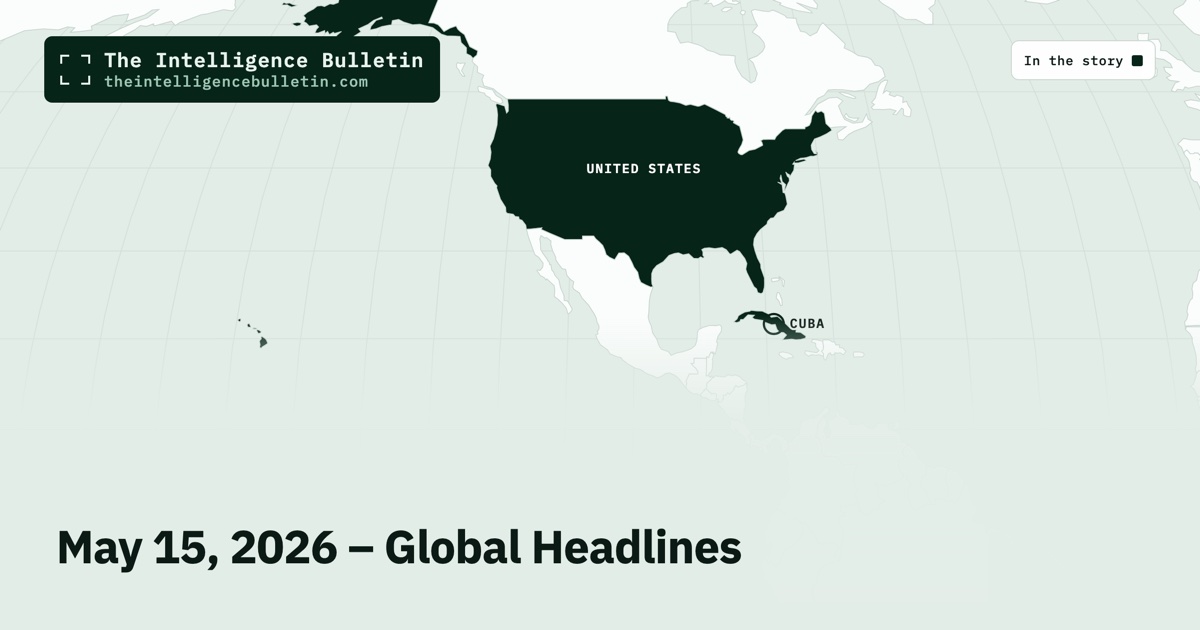
Coverage across the three outlets shows broad agreement on the basic facts of the meeting without significant framing splits. All report the U.S. delegation’s arrival and discussions on security cooperation, treating the event as a straightforward bilateral exchange rather than a major diplomatic breakthrough or security crisis. This convergence reveals the story’s limited immediate controversy and reliance on official Cuban and U.S. statements.
Their angle: The outlet frames the story as a formal U.S. delegation meeting in Havana focused on law enforcement and security cooperation.
What’s distinct: It aligns closely with the other sources on facts but emphasizes the delegation’s leadership without added regional context.
Why: Slovakia’s position as an EU member state produces standard international diplomatic reporting for a distant audience.
Their angle: The outlet presents the meeting as breaking news tied to the Trump administration’s outreach via the CIA director.
What’s distinct: It matches the factual baseline of other sources but adopts an alert-style emphasis on U.S. initiative.
Why: U.S. domestic focus on executive branch foreign policy actions shapes its straightforward delivery for an American readership.
Their angle: The outlet highlights the Cuban government’s official report of the CIA meeting in Havana.
What’s distinct: It aligns on core details but prioritizes the Cuban announcement over U.S. delegation framing.
Why: Mexico’s geographic and historical ties to Cuba lead to emphasis on regional governmental statements.
The collective coverage reveals a low-key, fact-based information environment where official statements from Havana and Washington drive reporting with minimal interpretive overlay. Convergence across distant outlets underscores the event’s clarity as a limited security dialogue rather than a geopolitical shift. A reader following only one country’s coverage would miss how the meeting fits into broader U.S.-Cuba patterns noted in non-U.S. sources. This story reveals routine bilateral security engagement amid ongoing regional tensions.
2Kremlin Announces Putin to Visit China to Meet Xi and Trump
All three outlets report the same core announcement with near-identical framing: Putin is traveling to China to join an existing Trump-Xi meeting. There is no meaningful divergence in emphasis, sourcing, or tone. PART 1: Coverage shows complete convergence on the diplomatic angle, with every outlet leading directly with the Kremlin statement and the three leaders’ names. PART 2: rpp.pe (Peru, Spanish) leads with the full list of leaders and notes Trump’s presence in China, reflecting a regional interest in how Latin America might be affected by U.S.-China-Russia dynamics. top24.mk (North Macedonia, Albanian) frames it as “after Trump, Putin’s turn,” emphasizing sequence and using local-language phrasing typical of Balkan outlets covering great-power moves. index.hr (Croatia, Croatian) keeps the headline concise and factual, consistent with its standard approach to international political news. All rely on the same Kremlin briefing as the sole source, with no additional local analysis or context added. PART 3: The uniform reporting indicates the story is a straightforward official announcement without disputed facts or competing narratives. A reader limited to any one language misses nothing substantive, as the outlets deliver essentially the same information drawn from the same origin.
Their angle: Leads with the full list of three leaders meeting in China.
What’s distinct: Broadly aligns with the others; slightly more explicit about Trump’s current presence.
Why: Serves Spanish-speaking Latin American audience interested in U.S.-China relations.
Their angle: Frames the visit as Putin following Trump to China.
What’s distinct: Broadly aligns; uses sequencing language common in regional coverage of great-power moves.
Why: Albanian-language outlet covering international diplomacy for Balkan readers.
Their angle: Short, factual headline focused on Putin’s upcoming travel.
What’s distinct: Broadly aligns; keeps tone concise and neutral.
Why: Croatian outlet delivering standard international political news.
3Thousands March in Jerusalem Flag Event Under Heavy Security
Coverage from the two Israeli English-language outlets shows strong convergence on framing the Jerusalem Day Flag March as a routine annual event requiring robust security management, with no reported incidents of violence. Both emphasize logistical details such as road closures and police deployment rather than political interpretation or regional implications. This agreement highlights how the story is treated as a domestic security and public order matter within Israeli media.
Their angle: Focuses on live updates of participant numbers and the procession route through Jerusalem.
What’s distinct: Broadly aligns with the other source in treating the event as a domestic security-managed gathering.
Why: Israeli outlet with domestic audience prioritizes real-time national event coverage due to geographic proximity.
Their angle: Emphasizes heavy security deployment and potential points of friction ahead of the march.
What’s distinct: Broadly aligns with the other source but highlights preparatory risk management over crowd celebration.
Why: Israeli English outlet with regional security focus reflects institutional emphasis on public order for local and diaspora readers.
The collective coverage reveals a consistent domestic lens on the march as a contained public event rather than an international flashpoint, underscoring limited external sourcing or diplomatic framing in Israeli English media. Convergence indicates broad editorial consensus on the story’s primary elements of turnout and security logistics. A reader following only one outlet would miss little substantive difference in facts but might overlook minor variations in emphasis on crowd size versus police preparations. This story reveals the event’s treatment as a predictable annual occurrence managed through established security protocols.
4Netanyahu Coalition Proposes Dissolving Israel’s Knesset for New Elections
Coverage across the three outlets converges on a factual report of the coalition’s procedural move to dissolve parliament and call snap elections. No significant framing splits appear; all treat it as a domestic Israeli political development without injecting security, diplomatic, or emotional angles. PART 2 — Per-source breakdown: actualidad.rt.com (Russia, Spanish) leads with the government coalition’s initiative to dissolve parliament, including the exact legislative steps involved and Netanyahu’s party role. It omits broader coalition context that Nordic outlets include but adds no unique Russian geopolitical framing. The structural reason is RT’s routine focus on parliamentary mechanics in foreign legislatures, consistent with its state-backed international coverage model. tidende.dk (Denmark, Danish) emphasizes Netanyahu’s own party submitting the dissolution proposal, detailing the timeline and required votes. It aligns closely with the others and includes no extra domestic Danish angle. The structural reason is the outlet’s standard neutral parliamentary reporting style for Nordic audiences following international politics. abcnyheter.no (Norway, Norwegian) frames it as the Netanyahu government directly proposing new elections, highlighting the coalition’s internal pressures leading to the step. It matches the factual core of the other reports without divergence. The structural reason is the Norwegian press’s convention of concise government-action summaries for foreign stories. PART 3 — Synthesis: The uniform emphasis on legislative procedure reveals an information environment where the event is treated as routine coalition politics rather than crisis. A reader following only one language’s coverage would miss no substantive facts but would see identical emphasis on the dissolution mechanism. The coverage collectively shows the story as a straightforward parliamentary maneuver driven by domestic instability.
Their angle: Reports the coalition’s formal proposal to dissolve the Knesset as a legislative step.
What’s distinct: Broadly aligns with the other sources on procedural facts.
Why: RT’s standard international parliamentary coverage pattern.
Their angle: Highlights Netanyahu’s party submitting the dissolution proposal with timeline details.
What’s distinct: Broadly aligns with the other sources on procedural facts.
Why: Nordic outlet’s neutral focus on foreign legislative actions.
Their angle: Frames the move as the government proposing new elections due to coalition issues.
What’s distinct: Broadly aligns with the other sources on procedural facts.
Why: Norwegian press convention for concise government-action summaries.
5Intercept Reports Flávio Bolsonaro Sought Film Funding
Coverage across the three outlets shows near-complete convergence on the core allegation from The Intercept Brasil report. All three lead with the claim that Flávio Bolsonaro sought funding for the film and cite the same evidence of messages audio and bank records. No outlet disputes the facts presented or introduces alternative framing such as security or diplomatic angles.
Their angle: The outlet presents the Intercept report as direct evidence that Flávio Bolsonaro solicited funds from banker Vorcaro for the film.
What’s distinct: It aligns with the other Brazilian source in focusing on domestic political implications rather than international framing.
Why: As a Portuguese-language Brazilian outlet it serves readers with strong interest in local political accountability following past corruption probes.
Their angle: The outlet summarizes the story as an ongoing investigation into Flávio Bolsonaro regarding film financing.
What’s distinct: It adopts a neutral international-news tone and omits Brazilian-specific financial details present in the domestic sources.
Why: Italian-language aggregation prioritizes brevity for readers outside Brazil with limited prior context on the actors involved.
Their angle: The outlet highlights the R$134 million figure and released audio as central elements of the Intercept disclosure.
What’s distinct: It mirrors the other Brazilian source in emphasizing monetary specifics while converging on the same core facts.
Why: Regional Brazilian outlets routinely amplify concrete figures from investigative leaks to meet audience expectations for accountability reporting.
The uniform reporting reveals an information environment in which the Intercept disclosure is treated as authoritative across languages and borders. Convergence indicates the story rests on verifiable records rather than contested claims. A reader limited to one language would miss only minor phrasing differences but would still receive the same factual core. This coverage collectively shows how a single investigative report can set the global frame for a Brazilian political allegation when evidence is released publicly.
That’s how the world told the story.
Get our daily open-source intelligence on world events in your inbox — one email a day, up to six stories.
Subscribe freeNo spam. One-click unsubscribe. See the latest email →